The illusion of spontaneity
A screen fight may last only seconds. A character falls, another reacts, and the scene moves on. The audience should be able to follow the action without noticing the preparation behind it. For the people making the scene, however, those few seconds are a sequence of specific movements, positions and cues. Each person needs to know not just what happens, but when it happens and where everyone else will be.
That planning serves the story as well as the people performing it. A stunt that is difficult to read can leave viewers confused about who did what. Rehearsal gives performers and filmmakers room to adjust the action until its cause and effect are clear. The aim is not simply to make a movement look bigger; it is to make the moment believable from the camera’s point of view.
Rehearsal turns an idea into a repeatable sequence
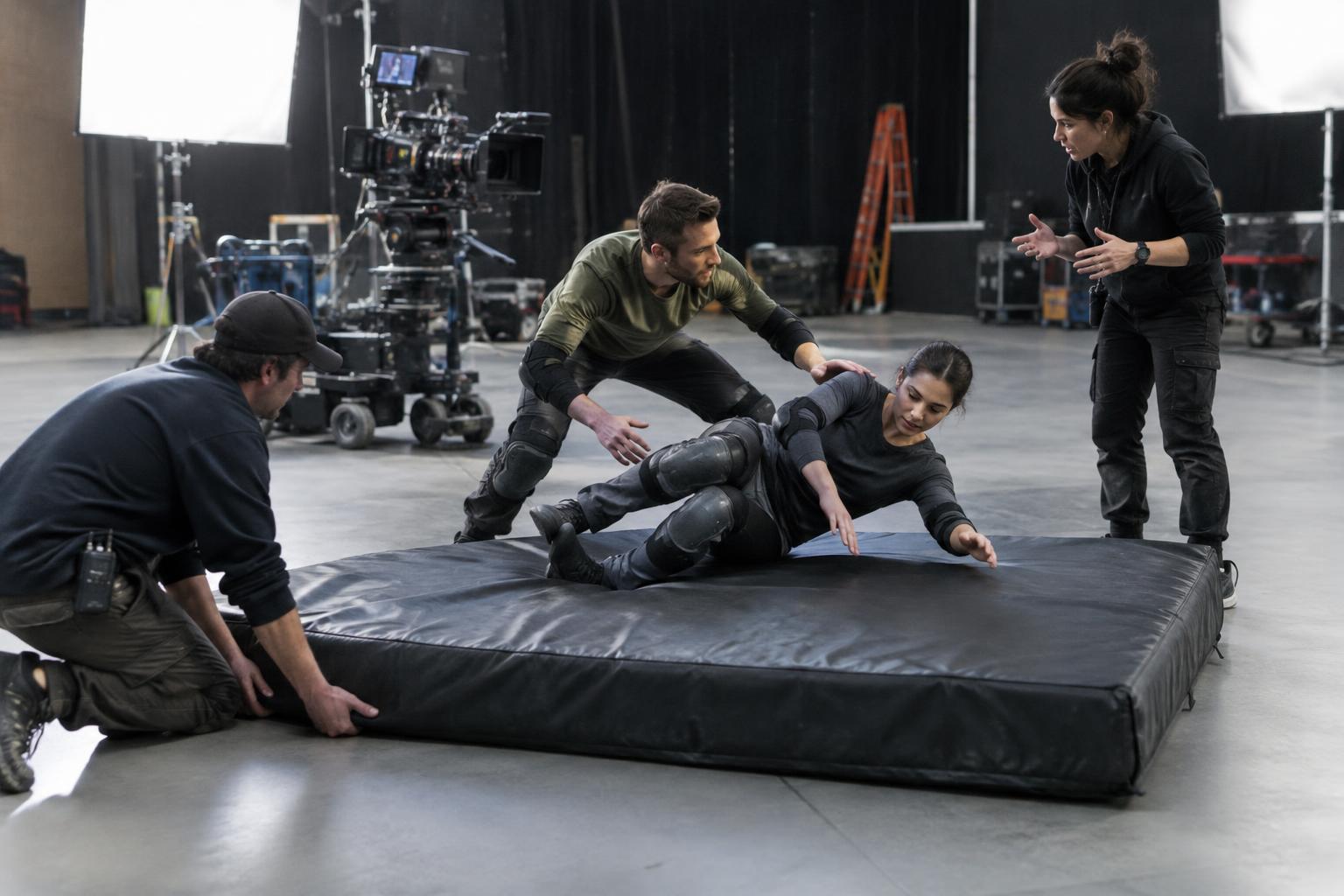
Stunt work often begins at a manageable pace. Performers can learn the order of movements, establish distances and identify the cues that tell them when to act. In a staged confrontation, for example, a step to the side may matter as much as a dramatic swing. If that step changes, the next person’s position or sightline may change with it. Practicing the sequence helps reveal those dependencies before the pressure of filming.
Repeatability matters because a scene may need more than one take. The camera might move, a reaction might be filmed separately, or a performer might need to match an earlier action for continuity. A well-rehearsed sequence gives the team a shared reference while still allowing sensible adjustments. When something changes, the new version can be discussed and practiced rather than assumed.
Coordination extends beyond the performers
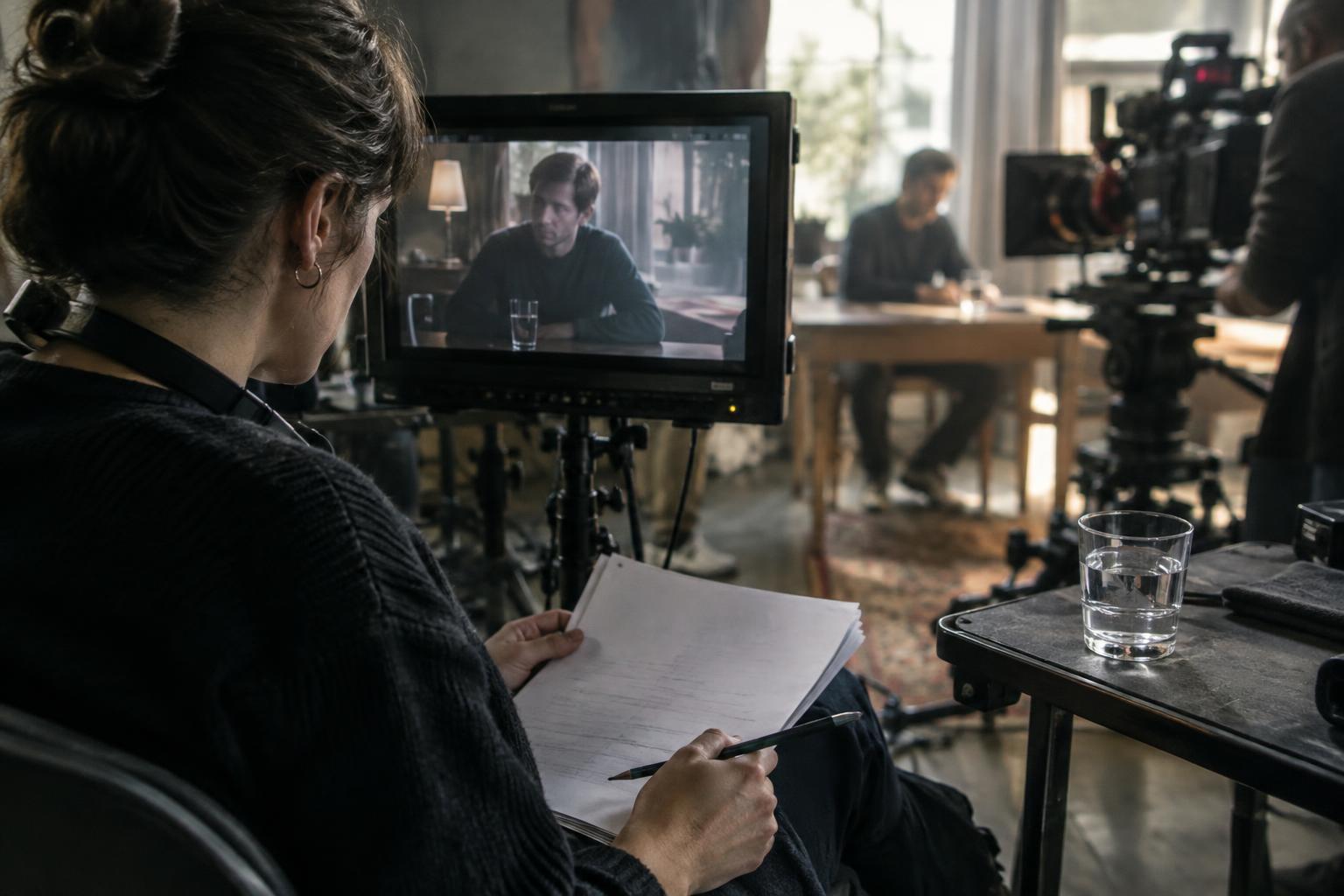
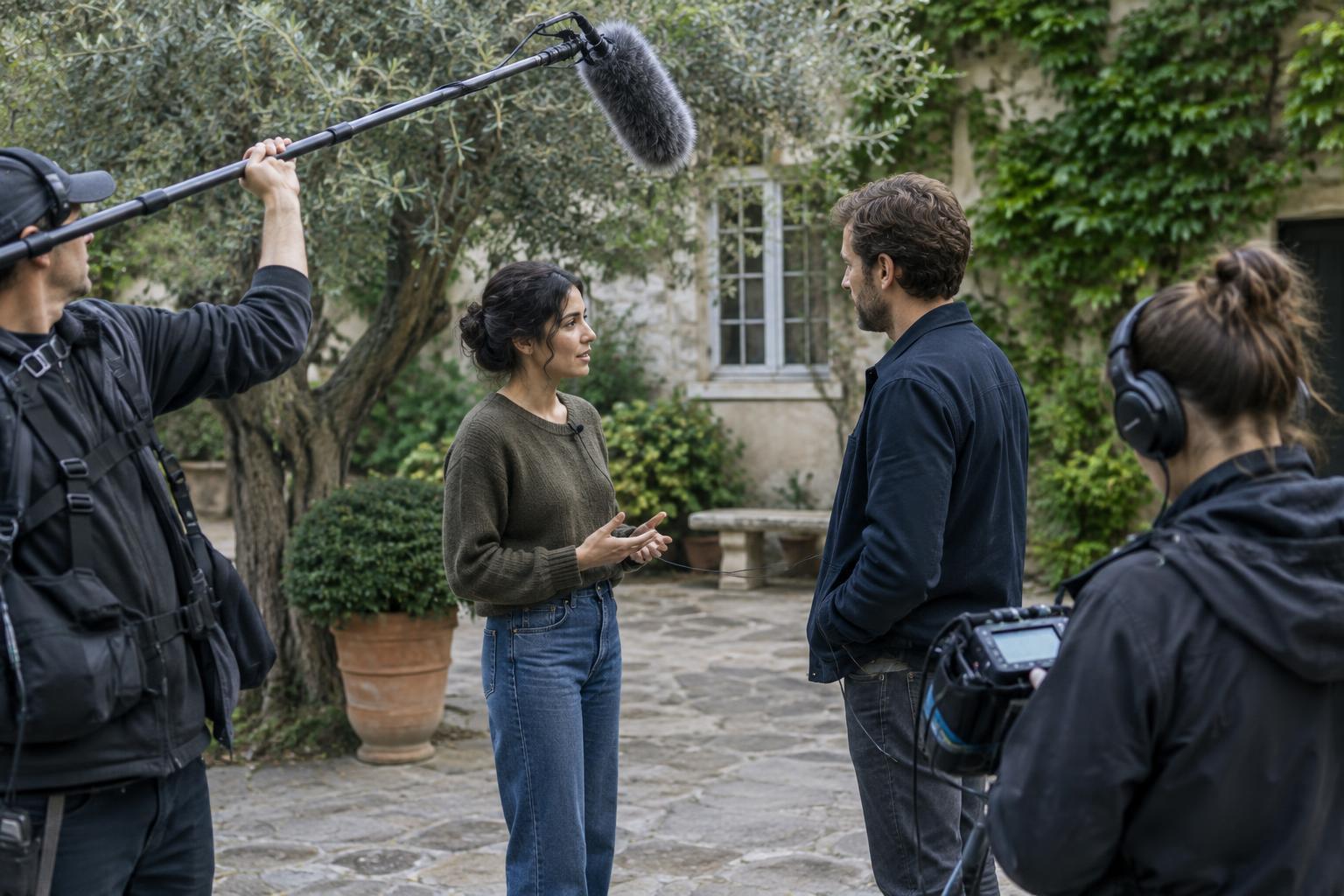
A stunt is part of a larger production. The director needs the action to express a dramatic point; camera and lighting teams need to frame it; sound may need clean cues; and the people responsible for props, wardrobe and the set need to know what the movement will touch or pass through. A coat that limits movement, a prop placed in a different spot, or a camera positioned in a performer’s path can affect the plan.
Clear communication helps the crew distinguish a settled plan from a proposed change. Before a take, the relevant people need to understand the intended action and their own responsibilities. This is especially important when a scene involves several moving parts: a performer reacting to an impact, another crossing the frame, and a camera following both. Coordination makes those actions feel seamless on screen without requiring anyone to guess what comes next.
Safety checks catch changes rehearsal cannot prevent
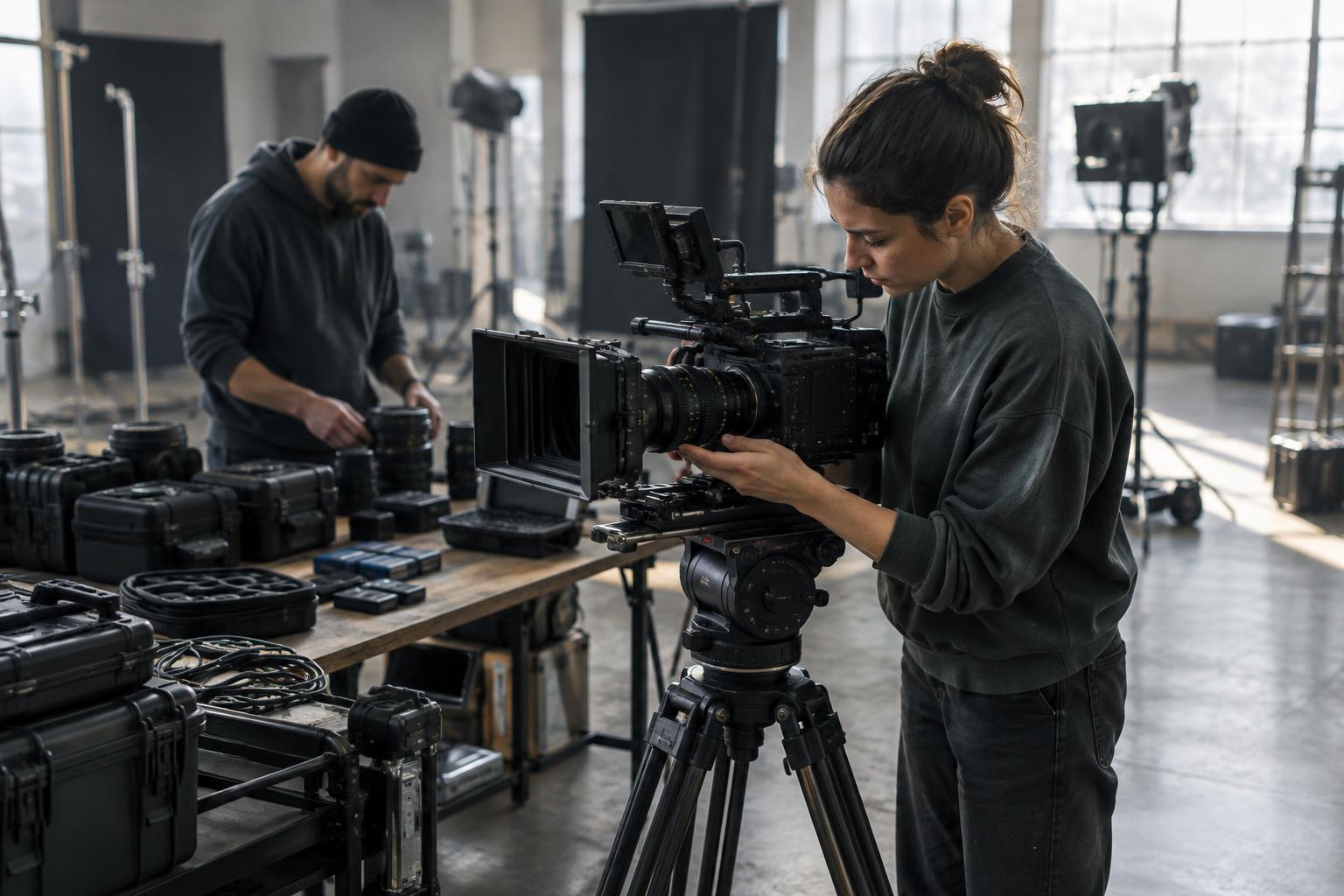
Even after a sequence has been practiced, the filming environment can change. A surface may be different from the one used in rehearsal. A piece of set dressing may have moved, or a costume adjustment may affect how freely someone can turn. Checking the space, equipment and agreed positions before a take helps the team notice those differences. The check is not a formality; it is a chance to confirm that the plan still fits the conditions.
Safety also depends on people being able to pause and reassess. If a cue is unclear or a movement no longer feels workable, stopping to clarify is more useful than trying to preserve momentum. The exact checks will vary with the scene, but the principle remains the same: everyone involved should know what is expected, what has changed and who is responsible for addressing a concern.
Good preparation leaves room for performance
Careful planning might sound at odds with an energetic scene, yet it can give performers more freedom to act. When the physical sequence is familiar, they can devote more attention to the character’s fear, determination or surprise. The audience sees a dramatic choice rather than a list of practiced steps. Camera placement and editing can strengthen that effect by showing the movements that tell the story most clearly.
The finished scene is a collaboration between performance, choreography and filmmaking. Rehearsals make the action repeatable, coordination aligns the crew, and safety checks test the plan against the reality of the set. None of that preparation needs to be visible to viewers. Its reward is a moment that feels immediate because the people behind it knew exactly how to make it happen.