Start by listening to the location
A location can look perfect through the camera and still be difficult to record. Traffic may rise between takes, ventilation may hum beneath every line, and a refrigerator may switch on halfway through a scene. Before filming, the sound team can listen from where the actors will stand and identify noises that can be controlled. Turning off a machine for a take, closing a nearby door or moving a conversation away from a busy entrance may help more than trying to repair the recording later.
Some sounds cannot be stopped. In those cases, consistency matters. A steady background is often easier to work with than one that changes sharply from shot to shot. The crew may plan takes around intermittent noise or adjust blocking so the actors stay farther from it. Early communication with the location manager, assistant director and camera department gives sound a chance to solve problems before the set is ready to roll.
Put the microphone where the voice is
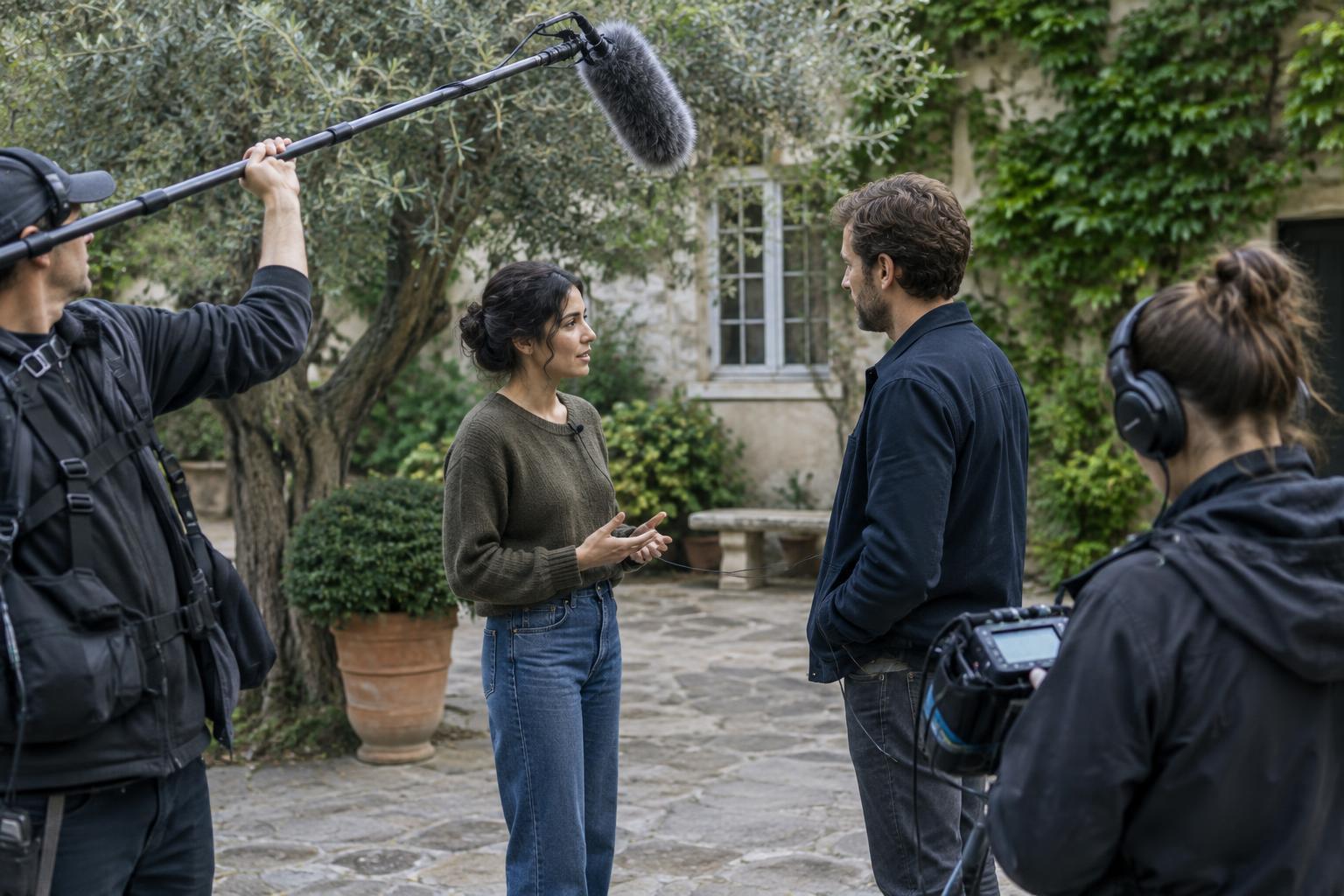
A boom microphone is valuable because an operator can aim it toward the person speaking while keeping it out of frame. Distance matters: as the microphone moves farther from the actor, it generally picks up more of the surrounding location relative to the voice. The boom operator therefore works with camera framing, lighting and actor movement to get as close as the shot allows. A wide shot may leave less room for the boom than a close-up, so coverage affects what the sound team can capture.
A concealed lavalier microphone can provide another option, especially when a scene involves broad movement or a crowded frame. Hiding one is a collaboration with wardrobe: fabric rubbing against the microphone can be more distracting than the background noise it was meant to avoid. Boom and lavalier recordings are not interchangeable in every scene. Capturing both when practical gives the editor choices, but each track still needs to be checked for its own problems.
Make costumes and movement part of the sound plan
An actor turning away, embracing someone or handling a prop can change a recording even if the location stays quiet. Rehearsal lets the sound team follow those movements, test microphone placement and notice rustling or clattering before a full take. It also gives the camera and sound teams time to agree on where a boom can travel without casting a shadow or entering the frame.
Costume details deserve attention during that rehearsal. Stiff layers, jewelry and hidden microphone cables may make noise when a performer moves naturally. The goal is not to restrict a performance to protect the recording; it is to find a setup that survives the performance. When an adjustment is needed, a quick test with the actor moving and speaking is more informative than a microphone check made while everyone stands still.
Protect the take from avoidable noise
Recording clean dialogue depends on habits beyond the sound department. Crew members can pause unnecessary movement, silence devices and hold conversations until a take ends. If a scene includes practical effects, footsteps or prop handling, the team can decide which sounds are essential to the action and which can be performed more quietly. That discussion is especially useful when an object repeatedly covers a line.
Outdoor work calls for particular care with wind. Suitable microphone wind protection and thoughtful positioning can reduce the buffeting that overwhelms speech, though neither will make a severe gust disappear. The recordist should monitor through headphones while filming rather than assume a visible audio level means the words are clear. If a plane, siren or other sudden noise covers a line, identifying the affected take promptly may make a clean repeat possible.
Record options for the edit
At the end of a setup, the sound team may record a short stretch of the location’s background without dialogue. This room tone or ambient sound helps an editor bridge gaps and keep the background from jumping between cuts. It is not a substitute for intelligible speech, and it works best when recorded under conditions similar to the scene.
Crews may also capture a wild line: an actor repeats a piece of dialogue without the camera rolling, often after a take was disrupted or the boom could not reach. A wild line can offer a useful alternative, although matching its energy and acoustic character to the filmed performance takes care. Clear notes about noise, microphone changes and promising takes help the editing team understand what was recorded. The aim is not a perfectly silent location. It is to preserve the voice, the performance and enough consistent sound around them to make the scene feel continuous.