Why continuity matters
A scene that feels like one uninterrupted conversation may be built from shots filmed hours apart. The camera might first capture a wide view, then move closer for each actor’s lines. Performers repeat the scene, and props, costumes, lighting, and blocking may need to be reset along the way. Continuity is the work of keeping those separate pieces compatible enough to cut together.
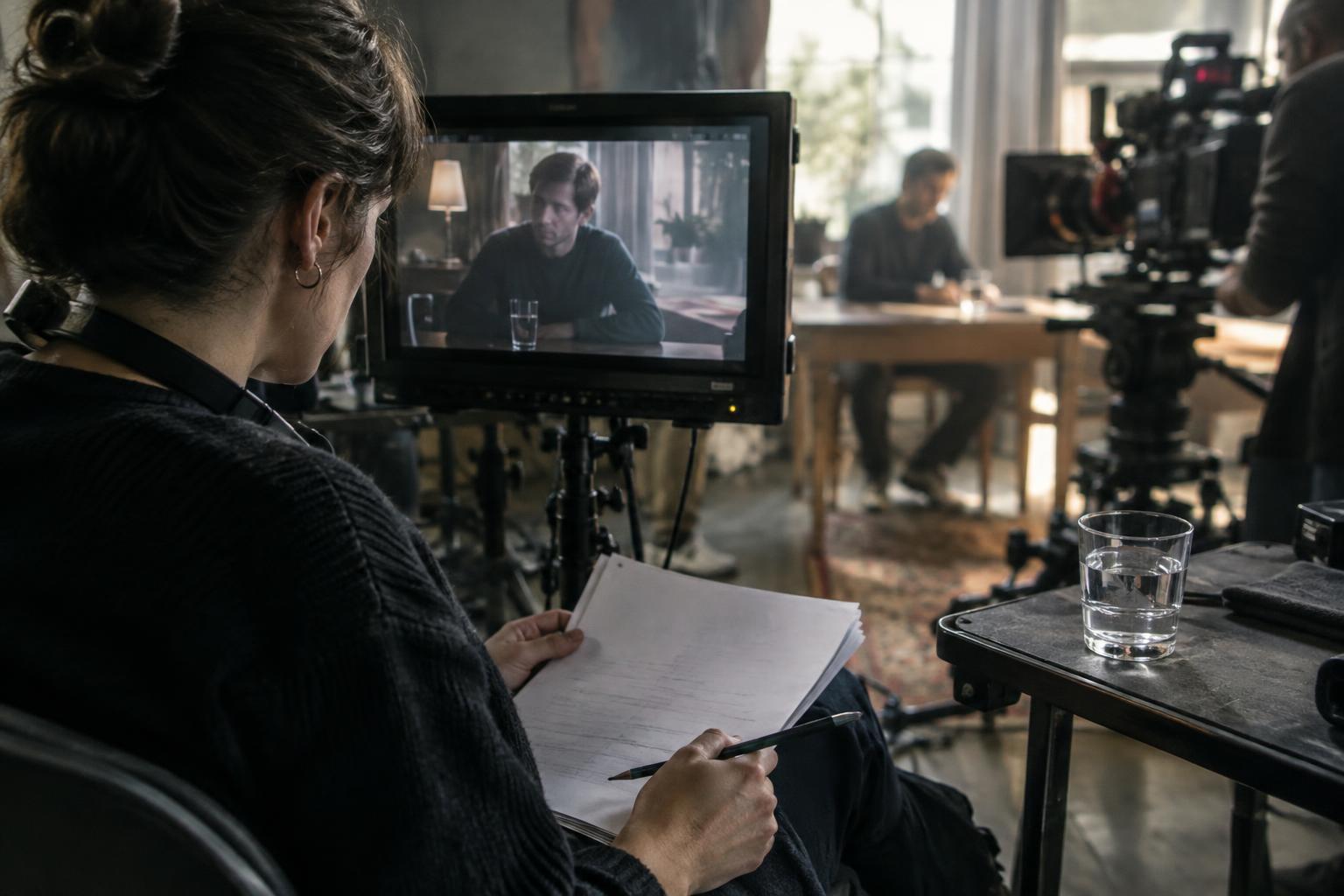
The script supervisor is one of the people watching that relationship throughout a shoot. Their job is not to prevent every variation. It is to notice what changes, understand which details may matter in the edit, and give the director and crew useful information while there is still time to act on it. A small mismatch can draw attention to a cut; a deliberate change can be perfectly workable if the shots are planned around it.
Building a record of the scene
Before and during filming, a script supervisor works from the screenplay and the scene as it is actually staged. They track which portions of the script have been filmed, how the action unfolds, and where spoken lines differ from the page. An actor may omit a phrase, swap a word, or pause in a new place. Recording those choices helps the production recognize when a later angle no longer matches an earlier one.
Their notes can also capture physical details: which hand lifts a cup, when a character sits, where someone looks before answering, or whether a door is open at the start of a take. These observations are especially useful when the camera changes position. A close-up may be filmed after a wide shot, but it still needs to represent the same moment in the story. Rather than relying on memory alone, the supervisor builds a reference for that moment.
Watching takes without losing the whole scene
During a take, the script supervisor must follow both the performance and its practical details. They may note the timing of an action, a variation in dialogue, or an interruption that makes a take difficult to use. They also track which camera setups cover which parts of the scene. That broader view matters: a line spoken differently in two takes may be a problem if the editor needs to cut between them, but less so if only one version is likely to be used.
Between takes, the supervisor can flag a difference to the appropriate person. A prop handler may reset an object, a performer may repeat a gesture, or the director may decide to keep the new choice. Other departments manage their own areas of continuity, including costume, hair, makeup, and props. The script supervisor’s contribution is to connect those details to the filmed action and raise potential mismatches, not to take over every department’s work.
Connecting the set to the edit
Continuity notes remain useful after the cameras stop rolling. They help identify what was filmed, what changed between takes, and which shots may work together. If a director favors a particular performance, notes can make it easier to find that take and understand any differences an editor may need to work around. The exact paperwork and workflow vary by production, but the purpose is consistent: preserve a clear account of the material created on set.
This is also why coverage matters to a script supervisor. If an actor crosses the room in the wide shot but is already seated when a close-up begins, the editor may have no easy way to bridge the action. Catching that gap on set gives the team options, whether that means adjusting the close-up, filming an additional shot, or accepting the difference as part of a deliberate edit.
Consistency in service of performance
Perfect repetition is neither possible nor always desirable. A spontaneous pause or unexpected gesture may give a scene its strongest take. The goal is to protect that creative choice while understanding its consequences for the surrounding shots. A script supervisor might point out that a new movement will need to be repeated in the reverse angle, or that a line change affects a response filmed earlier.
The result of good continuity work is often invisible. Viewers stay with the characters instead of wondering why a glass has moved or a sentence has changed halfway through. Behind that ease is a practical collaboration: careful observation, precise notes, and timely conversations that help performances filmed in pieces feel like a single unfolding moment.