The invisible map inside a scene
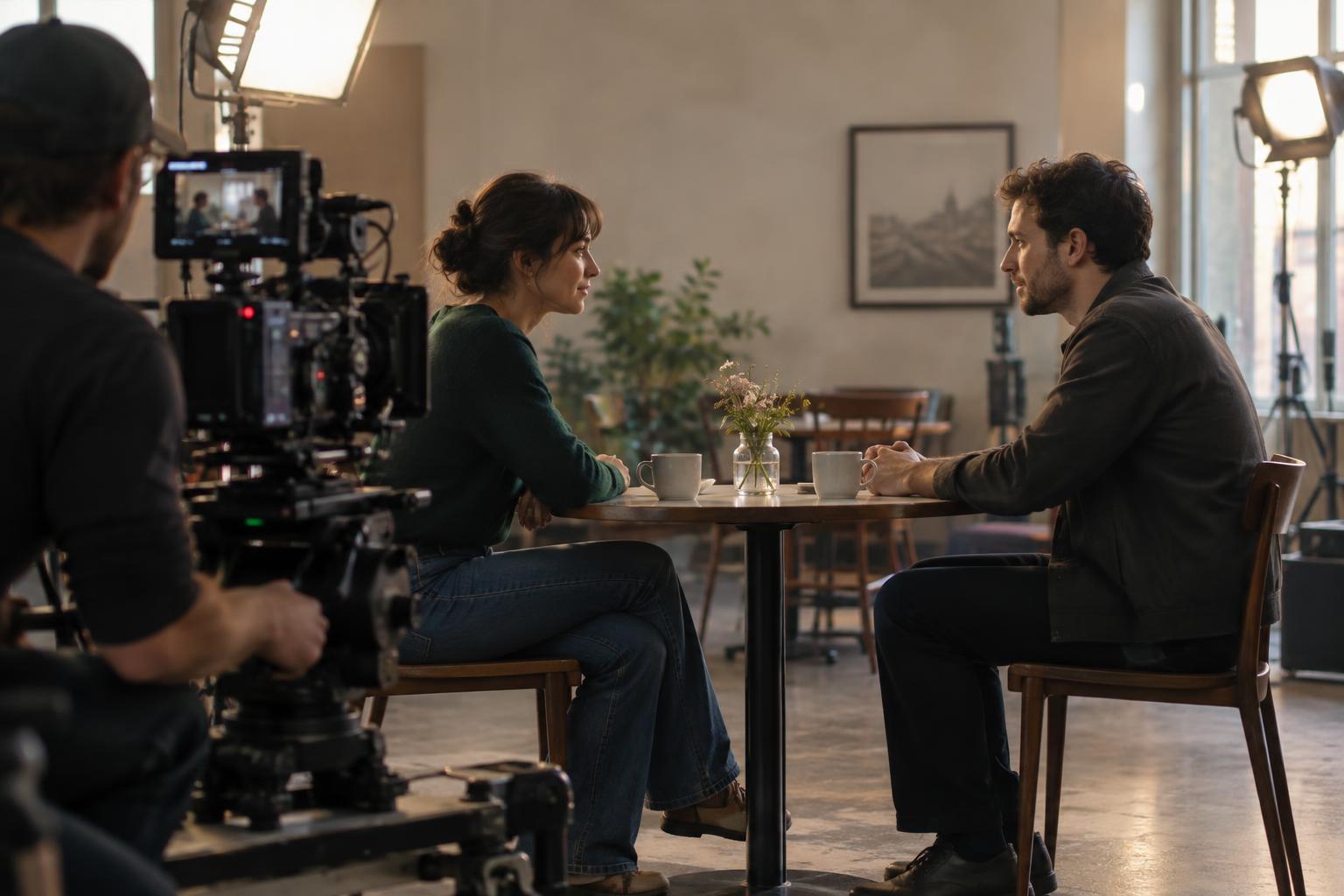
When two characters face each other across a table, viewers quickly form a mental map: one person is on the left, the other on the right. The film may move from a wide shot to separate close-ups, but that relationship usually stays intact. This consistency is called screen direction. It helps an audience understand where characters are looking, where they might move, and how the pieces of a scene fit together.
The same principle matters beyond conversations. If someone runs from left to right in one shot, a cut to that person running right to left may suggest they have turned back, even if the story intends them to keep going. Filmmakers can establish direction through a wide shot, a visible destination, or a sequence of matching movements. Once viewers have an orientation, later shots can rely on it rather than explaining the layout again.
What the 180-degree rule actually describes
Imagine a line running between two people who are speaking. This is the axis of action. If the camera stays on one side of that line, the person established on the left continues to appear on the left in wider views, and each person’s close-up places their gaze toward the other’s side of the frame. The camera has a semicircle of possible positions from which to vary shot size and angle while preserving that relationship. This working convention is known as the 180-degree rule.
The line is not a physical boundary on the set. It is a way to plan how shots will connect in the edit. An axis can also follow a person’s route down a corridor, a car’s path along a road, or the shared direction of play in a sports scene. Moving the camera across the axis without preparing the viewer can reverse those screen relationships. Two people may suddenly seem to be looking the same way, or a traveler may appear to be heading back toward the place they just left.
Why clear geography makes editing more flexible
Consistent screen direction lets an editor compress time and shift attention without repeatedly returning to a master shot. In a conversation, a glance can lead naturally to the person receiving it. In a chase, the editor can cut among a runner, a pursuer, and an exit while allowing viewers to understand who is gaining ground. The audience can concentrate on the performance or the stakes rather than pausing to work out everyone’s position.
This clarity is also a matter of staging. An actor’s eyeline, the direction of a doorway, a distinctive object in the background, and the path someone takes through the frame can all reinforce the map. A wide establishing shot helps, but it cannot solve every confusing cut on its own. The closer shots still need enough compatible visual information to feel like parts of the same space.
Crossing the line without losing the viewer
The rule is a tool, not a ban on camera movement. A filmmaker may want the camera on the other side of the axis because the scene’s focus or balance has changed. One way to make that shift legible is to show it happening: the camera moves around a character, or a character crosses the space and creates a new arrangement. A neutral shot looking along the axis can also soften the transition because it does not strongly favor either side.
Sometimes disorientation is the point. A sudden reversal can make a confrontation feel unstable or reflect a character’s confusion. Its effect depends on the audience having some sense of the earlier arrangement; otherwise, the cut may register only as unclear. Breaking an established pattern tends to be more expressive than abandoning orientation throughout the scene.
A simple way to watch for it
The next time a film cuts between two people talking, notice which side of the frame each occupies in the wider shot and which way each looks in close-up. Then try the same exercise with movement: track a character entering or leaving a room across several shots. If the geography remains easy to follow, screen direction is probably doing quiet work.
Pay particular attention when a scene changes sides. Does a camera move, a character’s action, or a new wide view show you how the layout has shifted? Or does the change make you briefly uncertain about where everyone is? These questions reveal the purpose of the convention. The 180-degree rule is less about keeping every camera in a prescribed place than about helping each cut carry the viewer into the next shot.