Two ways to direct attention
When a person crosses a room on screen, our eyes tend to follow. When the camera moves toward someone who has stayed still, that movement can have a similar pull. These are two distinct tools: blocking is the placement and movement of performers within a scene, while camera movement changes the viewer’s position or the frame around them. Together, they decide not only what we see but how we encounter it.
Neither tool works in isolation. Lighting, sound, editing and performance also influence where attention goes. Still, watching the relationship between bodies and camera is a useful way to understand a scene’s design. Ask a simple question: what changes first—the person in the space, or our view of the space? The answer can reveal whether a moment invites us to follow an action, discover a detail or reconsider someone we thought we understood.
Blocking makes relationships visible
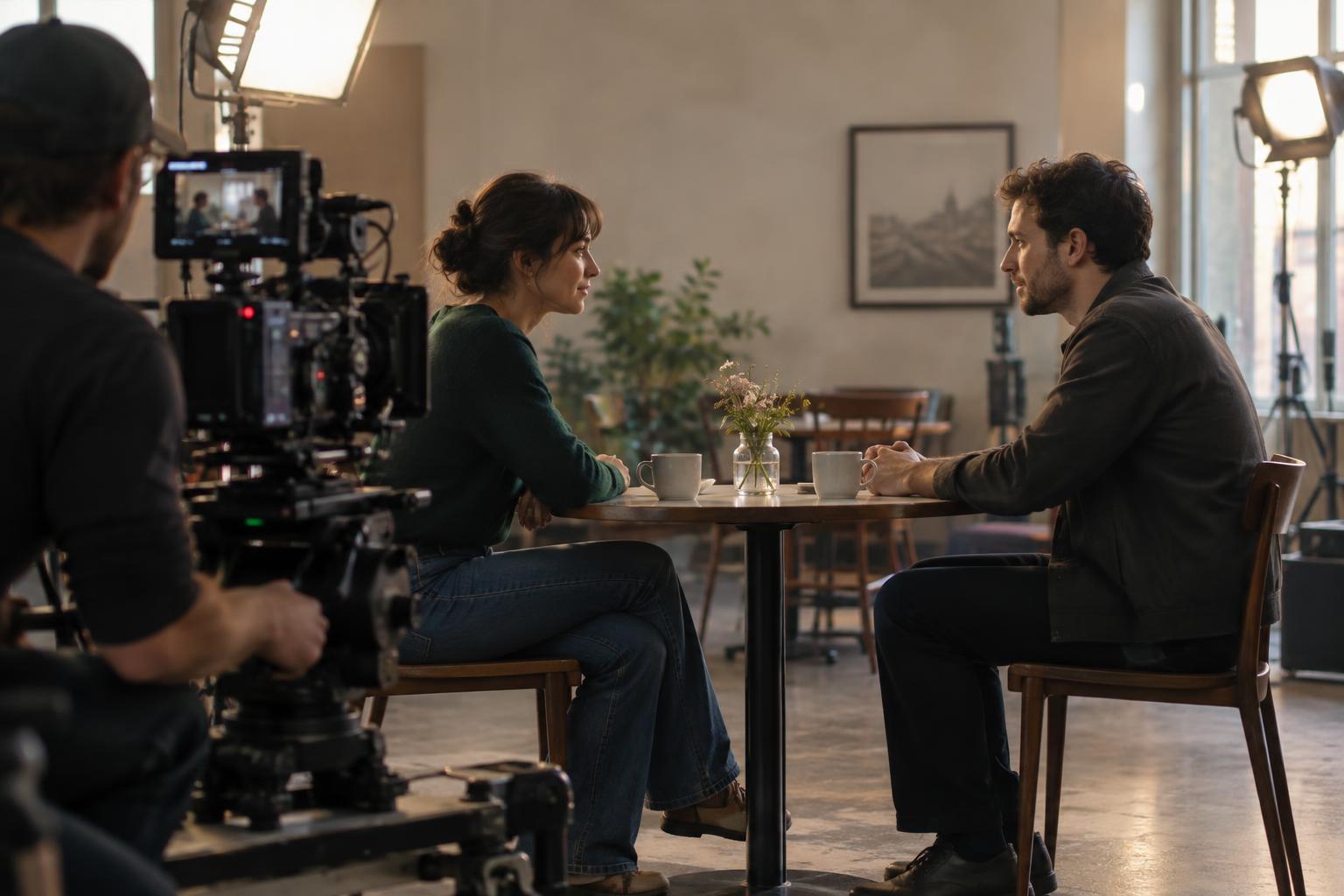
Blocking can express a relationship before a line of dialogue does. Two characters standing close together may appear united, but a third person stepping between them changes that arrangement instantly. Someone seated while others stand may seem excluded, comfortable or quietly in control; posture and context determine which reading fits. Movement matters as much as position. A character who repeatedly approaches a doorway and turns back can make hesitation visible without naming it.
A fixed camera can let these shifts play out inside one frame. If a character moves from the background into the foreground, they become harder to ignore even though the camera has done nothing. If they leave the frame, attention may settle on the person left behind. This is why blocking is more than a map of where performers stand. It sets up changing priorities and gives viewers room to notice choices, reactions and the distance between people.
Camera movement changes the viewer’s role
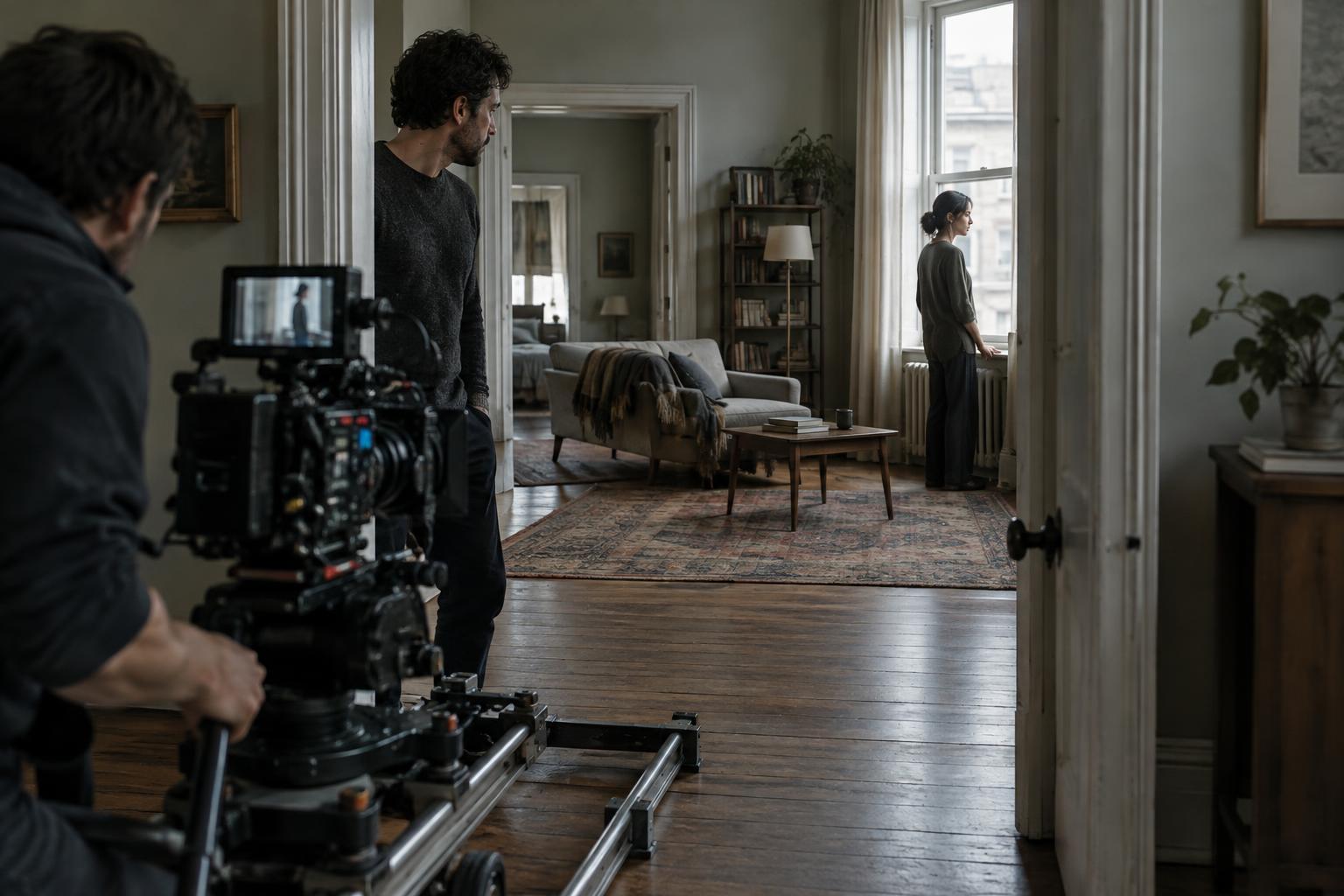
A moving camera can guide us through a space or revise our understanding of it. A gentle move toward a character may make a small reaction feel important. A sideways move might uncover someone previously hidden by a wall or another performer. Following a person through a crowded room can keep us close to their experience, while drifting away from them can suggest that something else deserves our attention. The direction, speed and timing of a move all affect its meaning.
Movement does not automatically make a shot more engaging. A camera that advances while an actor retreats can hold their size in the frame while the surroundings change. A camera that remains still as the actor walks away lets that growing distance become the point. Even a subtle adjustment can matter if it arrives at the right moment. The question is less whether the camera moves than what the move allows us to see, feel or anticipate.
What happens when they work together
Imagine a conversation at a dinner table. One guest stands to clear a plate while the others keep talking. If the camera follows the guest into the kitchen, the scene briefly privileges their private reaction over the group’s discussion. If it stays at the table, the departure becomes something the remaining guests must respond to. The actor’s action is the same in both versions; the camera’s choice changes whose experience anchors the moment.
Blocking and camera movement can also pull in different directions. A performer might move toward the center of a room while the camera slowly reveals a figure at its edge. That tension gives the viewer a choice between following the obvious action and noticing the new information. Such choices need not be dramatic to be effective. In a quiet scene, a shift of attention from speaker to listener can make the response feel more revealing than the words.
A practical way to watch a scene
On a first viewing, follow the scene naturally. On a second, try watching with the sound low and note where each person begins and ends. Who enters or leaves the frame? Does anyone cross in front of someone else? Then watch the camera: does it follow, lead, hold back or reveal something the characters cannot see? These observations can help separate what the performers do from what the framing asks us to notice.
Finally, consider the timing. A camera move that begins before an actor turns may create anticipation; one that begins afterward may feel like a response. A still shot can give movement within the frame unusual weight. There is no single rule for what any arrangement means, and viewers may read the same gesture differently. But noticing these choices makes familiar scenes feel newly active: attention becomes part of the storytelling, not merely a by-product of it.