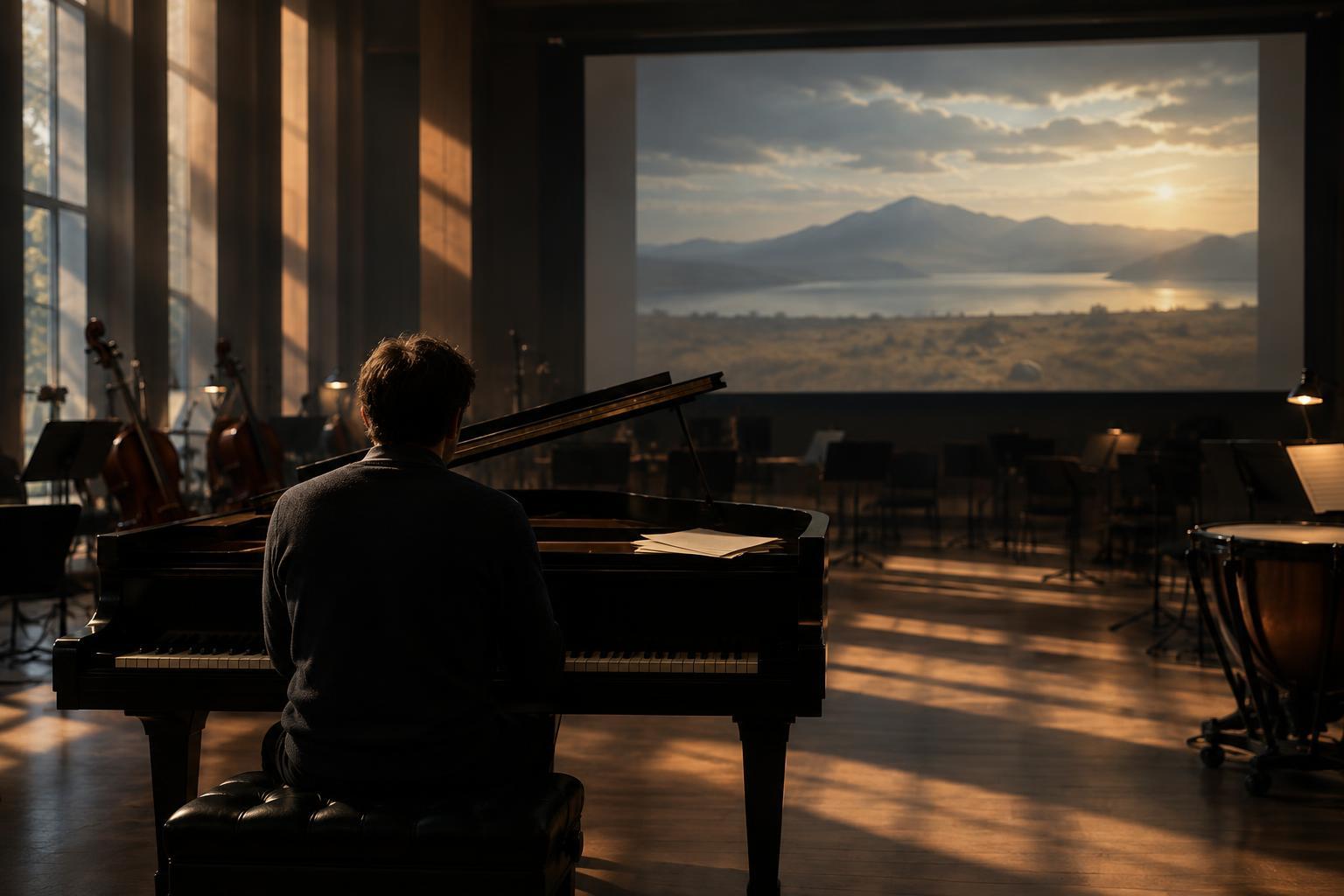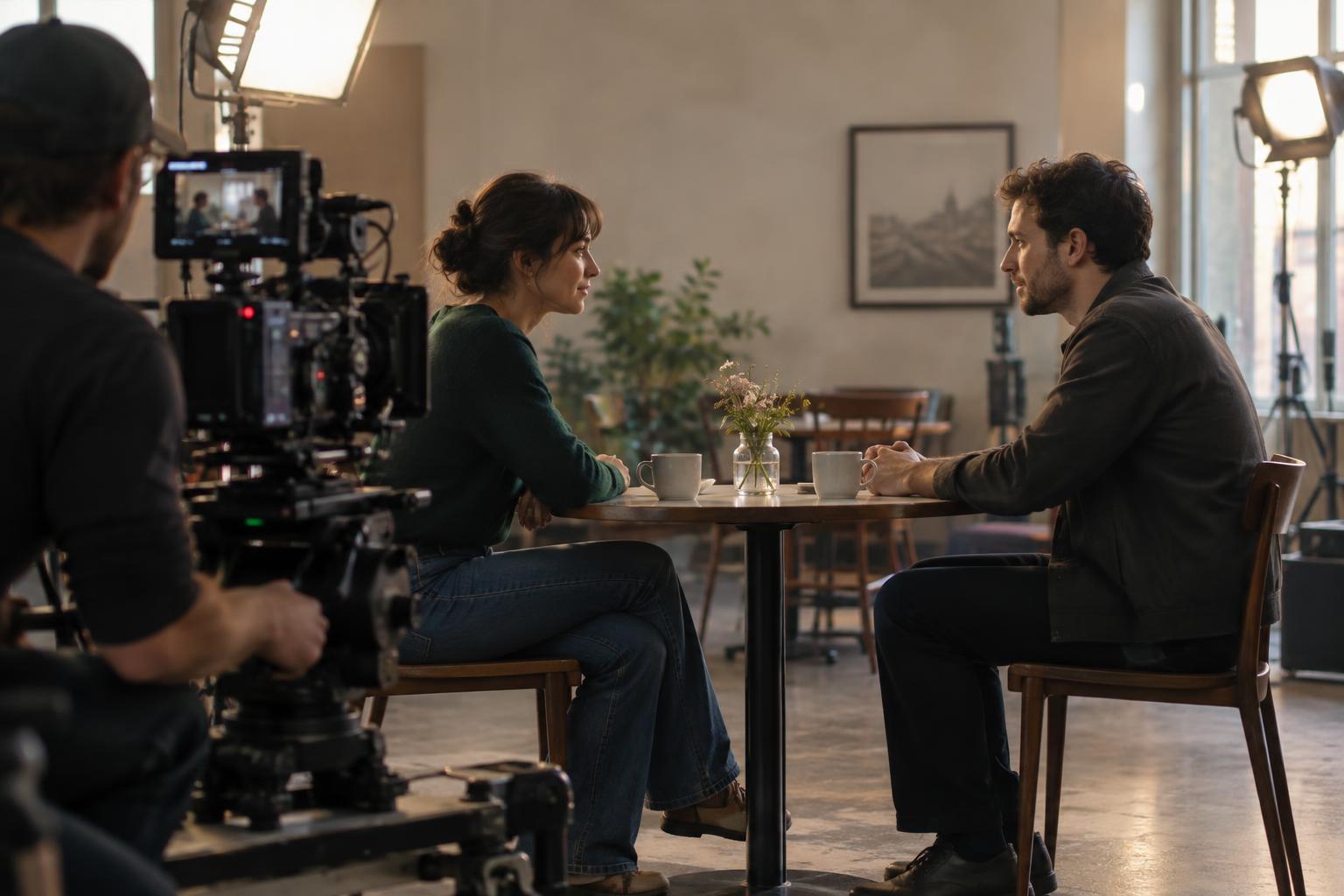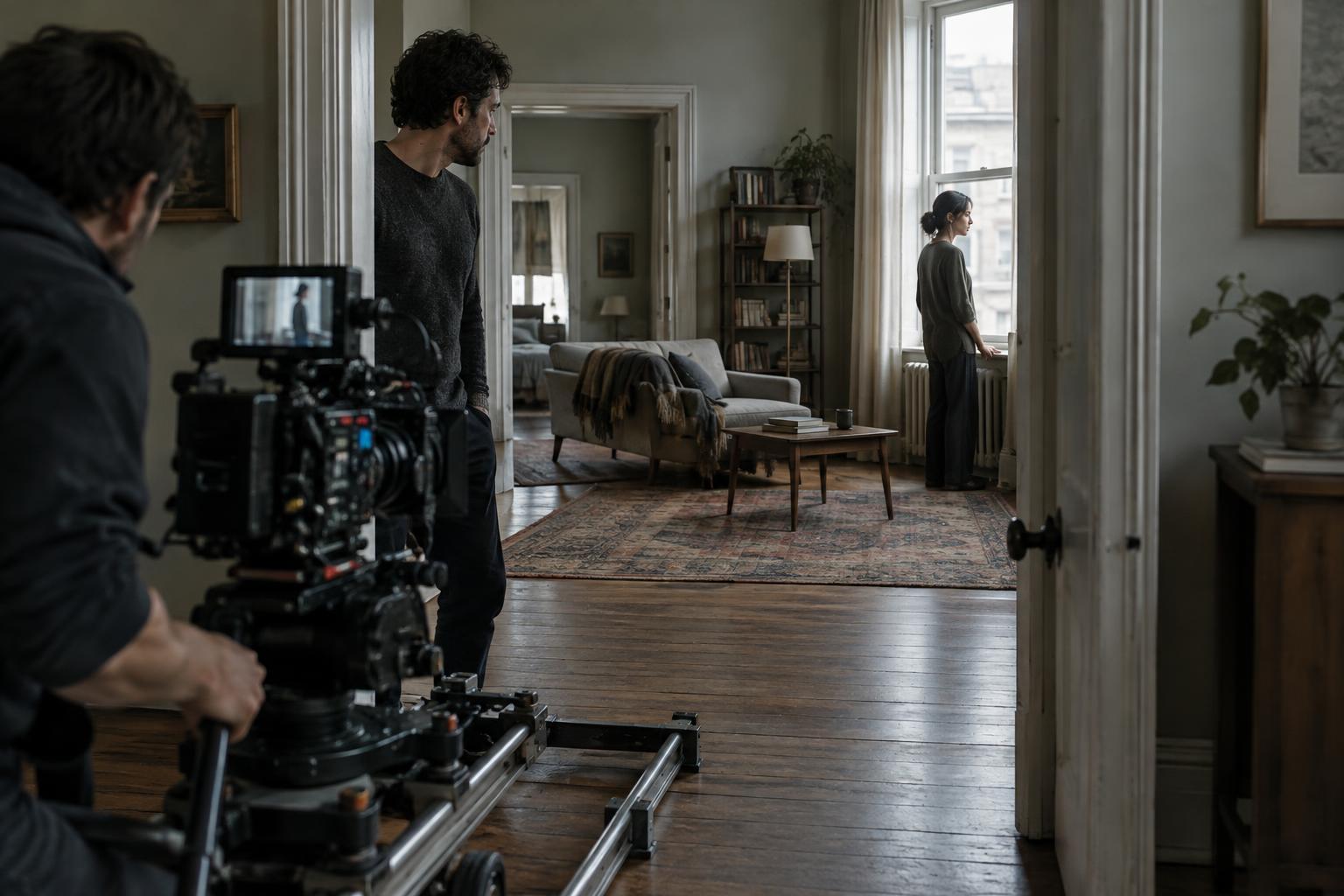
Start with the world of the story
Imagine a character entering a café while a song plays. If it comes from a radio behind the counter, the song belongs to the world of the story: it is diegetic sound. The characters could, in principle, hear it too. If the song is added for the audience and has no apparent source in that world, it is non-diegetic sound. The distinction is about where a sound exists, not whether it is important or how loudly it is mixed.
Dialogue, footsteps, traffic and a doorbell are familiar diegetic sounds. A film’s background score is usually non-diegetic, as are sound effects used solely to emphasize an edit or heighten a feeling. “Can the characters hear it?” is a useful first question, but it is better understood as “Does this sound belong to their story world?” A character need not visibly react to a distant siren for the siren to count as diegetic.
A source can be offscreen
Sound does not become non-diegetic just because its source is hidden. A dog barking beyond the frame, music drifting from another room or a voice calling from down the hall can all be part of the scene. Offscreen sound can make a film’s world feel larger than the image and give viewers information before a character turns to look.
Listening to the sound’s apparent space can help identify it. A song heard through a wall might sound muffled; the same song from a nearby speaker might be clearer. These qualities can suggest a location, although filmmakers can also use them creatively rather than realistically. Sometimes the image reveals a source only after the sound begins. That delayed reveal can briefly leave the audience unsure whether it is hearing a score or something in the room.
What each kind of sound can do
Diegetic sound can affect a character’s choices. A ringing phone interrupts a conversation; a song at a party gives people something to dance to; a sudden noise prompts someone to investigate. It can also establish a setting without an explanatory line of dialogue. Even when the characters ignore it, the sound suggests that life continues around them.
Non-diegetic sound has a different freedom. A score can connect scenes set in different places, underline a change in mood or build anticipation before anything visible happens. Because it does not need a plausible source within the scene, it can follow the audience’s understanding rather than a character’s. Neither approach is inherently more subtle: a quiet radio can steer a scene’s emotion, while a prominent score can make its point unmistakably.
When a scene crosses the boundary
Films often make the distinction interesting by changing it. A sequence might begin with full, clear music that seems like a soundtrack cue. The camera then moves toward a small speaker, and the music takes on the thinner sound of that device. What first seemed non-diegetic is revealed as diegetic. The reverse can happen when music from a visible source continues over a cut to a place where that source could not be heard. The song becomes a bridge for the audience rather than a continuous sound in the characters’ surroundings.
Other cases resist an easy label. A character may recall a voice, hear an imagined sound or experience music that reflects their inner state. The audience hears it, but the rest of the story world may not. Voice-over also depends on context: a character’s spoken account may be presented as part of the story, while an outside narrator may stand apart from it. In these moments, asking whose perspective the sound represents can be more revealing than insisting on one fixed category.
A simple way to listen more closely
On a rewatch, choose one scene and note when each sound enters. Look for a possible source, then ask whether a character could respond to it. Notice what happens across cuts: does the sound stay tied to a place, change with the camera’s distance or continue smoothly into a new scene? Pay attention, too, to moments when a character reacts—or when the film conspicuously offers no reaction.
The goal is not to sort every sound into two perfect piles. It is to notice the choices shaping your experience. A film can let you hear the room as a character hears it, place you at a distance with a score, or move between those positions in seconds. Once you listen for that movement, sound becomes more than an accompaniment to the image: it becomes part of how a scene tells its story.