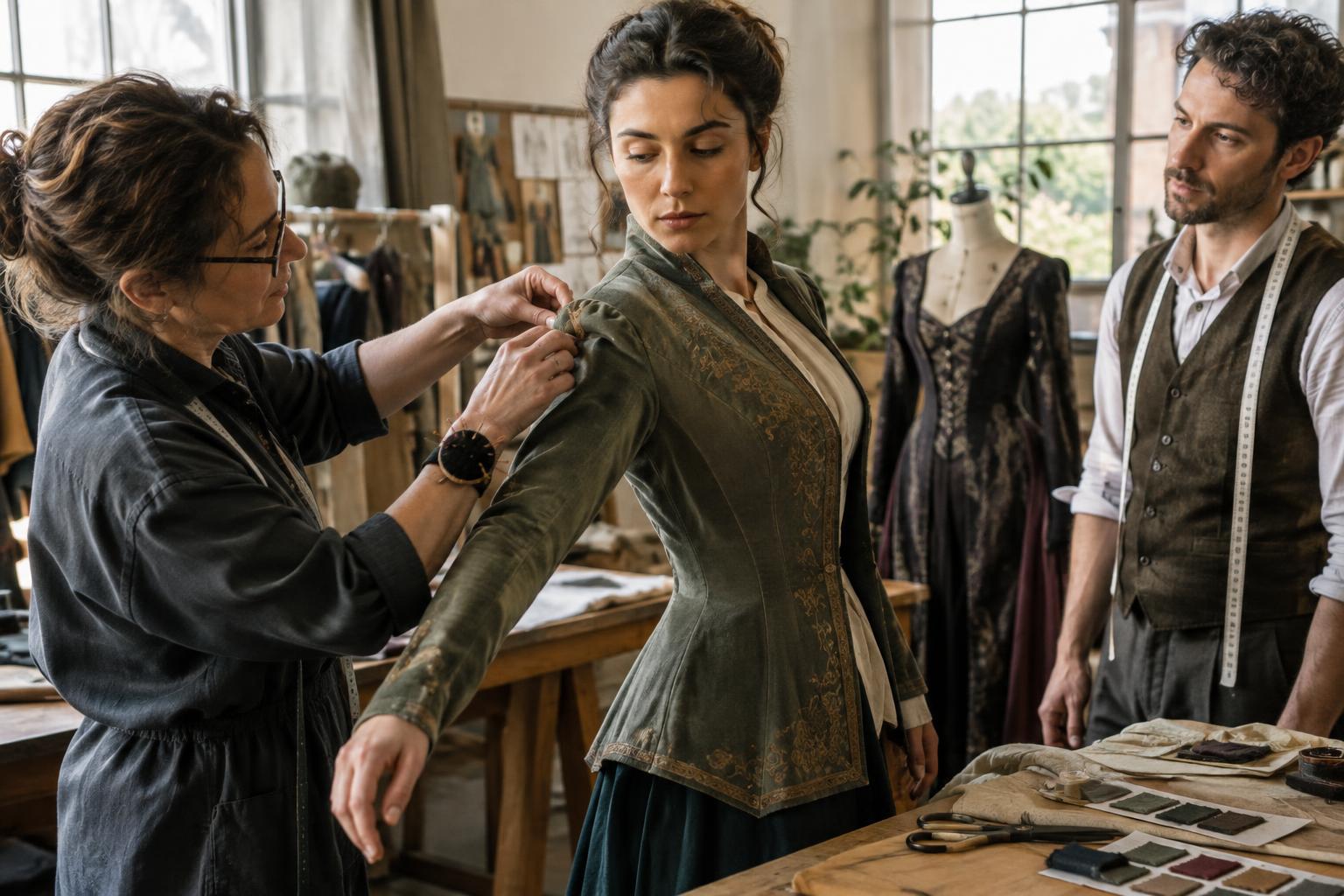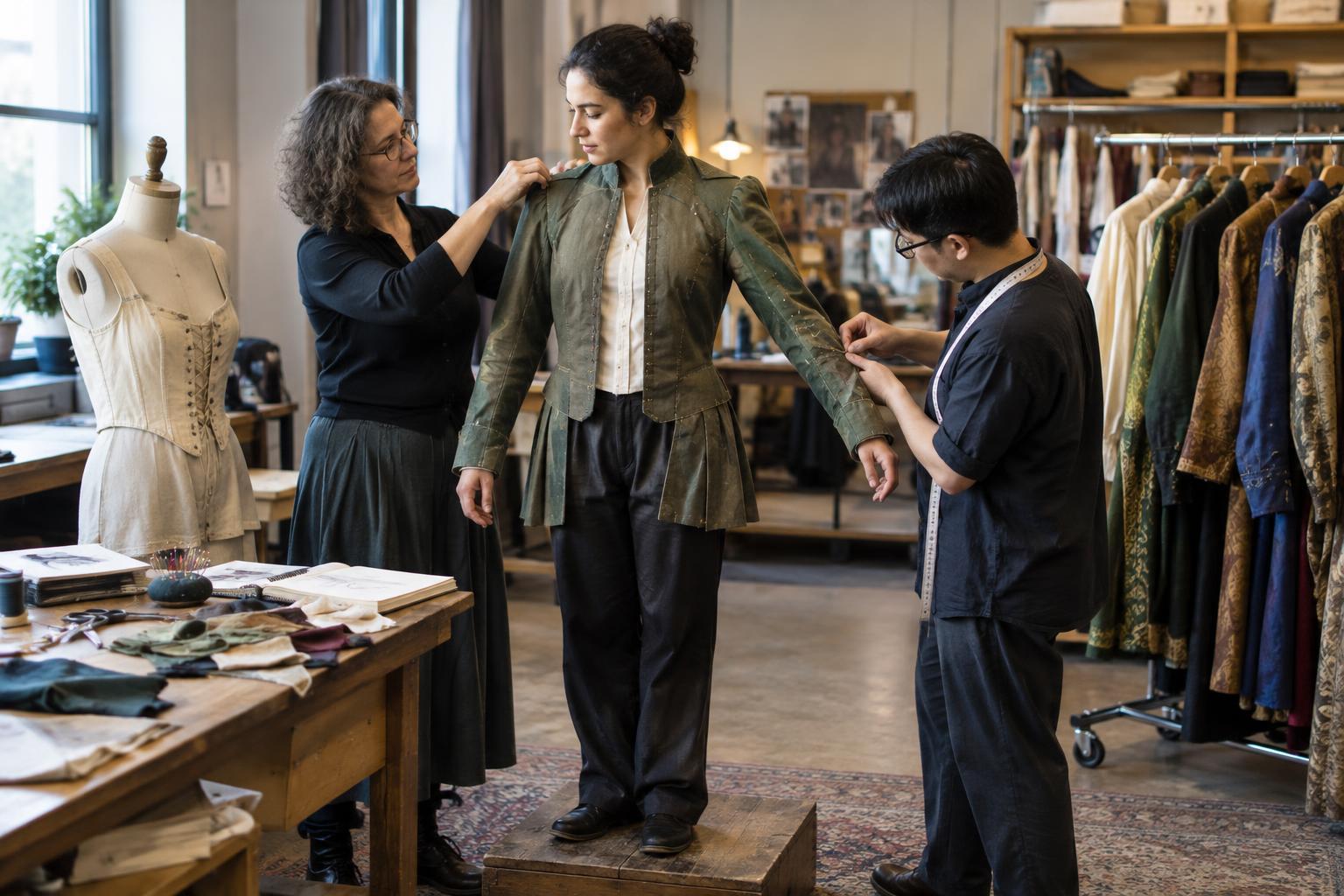
The camera sees a narrower version of the fabric
In person, you can step closer to a jacket, move around it and watch its surface respond to light. You may even know what it would feel like to touch. On screen, all of that information must fit into a sequence of flat images. A fabric that looks richly textured on a hanger can appear smooth in a wide shot; a subtle sheen can become the first thing an audience notices in a close-up.
That difference matters in costume design because viewers rarely see a garment under the same conditions as the people making it. The costume has to communicate at a particular camera distance, under particular lights and while an actor is moving. Its on-screen appearance is not simply a record of how it looked in the fitting room.
Light can reveal texture or conceal it
Texture becomes visible partly through tiny changes in brightness. Light coming from the side catches raised threads and leaves small shadows in the spaces between them. Frontal, even light can reduce those shadows, making the same surface look flatter. This is why a coarse weave or embroidered detail may seem prominent in one setup and barely register in another.
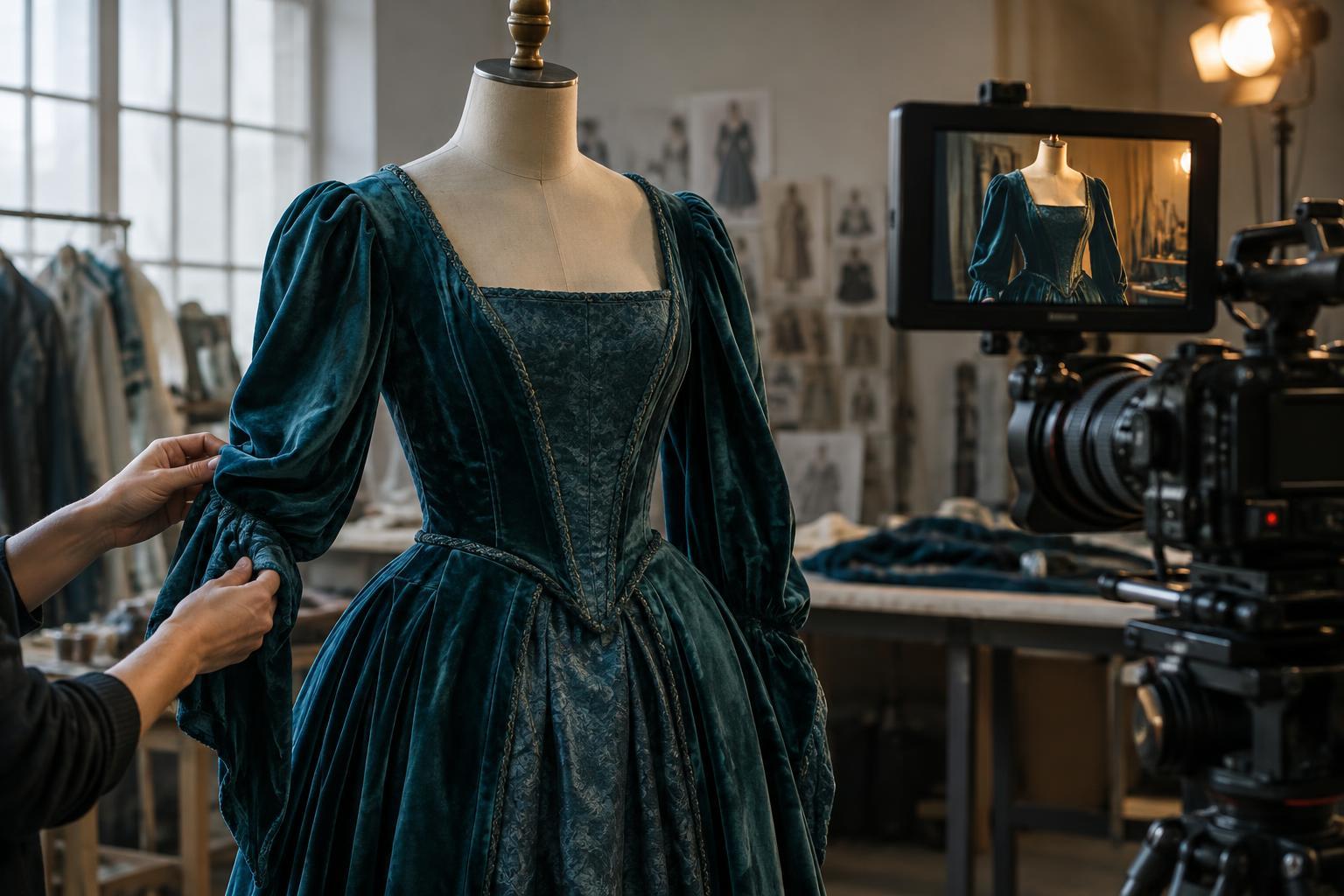
Shine is especially dependent on the lighting angle. Velvet, satin, sequins and coated fabrics do not reflect light in the same way, but each can produce highlights that draw attention away from its underlying weave. A dark velvet costume, for example, may show its depth where light skims across it yet lose detail in a dimmer area of the frame. Neither view is necessarily misleading: both are responses to different lighting conditions.
The surrounding scene also affects perception. A pale garment against a pale set may show less obvious texture than the same garment against a darker background. Costume and lighting teams can use that relationship deliberately, whether they want a character to stand out or to blend into a space.
Distance and framing change what survives
A camera cannot show every thread at every distance. In a close-up, stitching, nap and small irregularities may become part of a character’s visual identity. In a full-body shot, those details may merge into a general impression: matte, crisp, fuzzy or fluid. The audience may read the garment’s silhouette and contrast before it reads its surface.
Very fine repeated patterns introduce another complication. Narrow stripes, tiny checks or tight weaves can sometimes create distracting ripples or shifting patterns in a recorded image. This effect, often called moiré, arises when the pattern in the fabric interacts with the way the image is captured and displayed. It does not mean the fabric itself is moving. A camera test helps a costume team judge whether a pattern that looks appealing in person will remain calm on screen.
Movement tells a different texture story
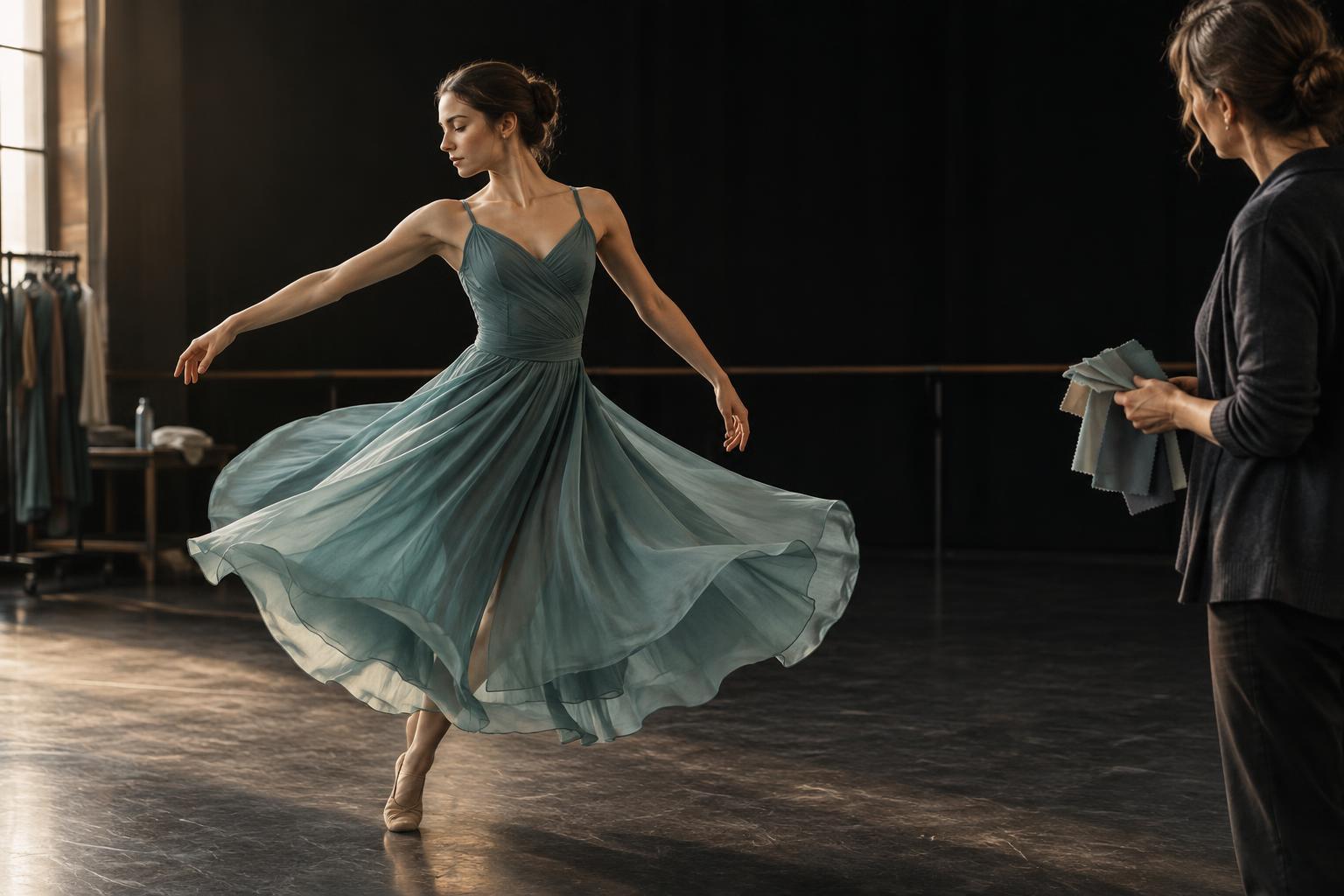
Texture is not only a surface detail. It also influences how a garment bends, folds and settles. A stiff cloth may hold a sharp outline as an actor turns; a softer one may gather into rounded folds. In motion, those changes can make the material’s weight and structure legible even when its individual fibers are too small to see.
Movement can alter shine from moment to moment, too. As an actor walks, reflective areas shift across the costume. A fabric that seems restrained in a still photograph may flash under moving lights or reveal a pattern only when it folds. For performance clothing, watching the garment in action can be more informative than judging a swatch laid flat on a table.
Testing for the screen, not just the mirror
Color adjustment, exposure and the contrast of the finished image can further change how much texture remains visible. Dark folds may merge, bright highlights may lose detail, and a delicate pattern may become more or less noticeable. The result depends on the whole image, not the costume alone.
A useful camera test therefore looks at a garment in conditions close to those planned for the scene. The team can check it at different distances, under relevant lighting and during the movements the performer will make. They can ask whether the intended impression survives: Does the coat still look worn? Does the dress feel light? Does an embellishment support the character rather than distract from the face?
The goal is not always to make fabric look exactly as it does in person. Screen costumes help tell a story within a frame. Understanding how cameras transform texture gives costume teams more control over that story—and gives viewers another way to appreciate the craft behind what they see.