Start with the movement, not the fabric label
A costume that looks perfect on a hanger may behave differently during a turn, a floor sequence or a quick change. Before choosing fabric, list what the performer needs to do in it: reach overhead, bend deeply, partner with someone, travel across the stage or repeat sharp movements. Note which parts of the costume should follow the body and which should create a larger shape around it. Those needs offer a more useful starting point than a fabric’s appearance alone.
The cut matters as much as the material. A wide skirt can allow generous movement without much stretch, while a close-fitting sleeve may restrict an arm even when its fabric has some give. If possible, discuss the movement with the performer and costume maker early. That conversation can reveal requirements that are easy to miss in a sketch, such as a secure neckline during inversions or enough room at the shoulder for lifts.
Understand stretch, recovery and drape
Stretch describes how far a fabric gives; recovery describes how well it returns to its original shape. Both matter for fitted dancewear. A material that stretches easily but recovers poorly may gradually sag at the knees, elbows or seat. Test a sample in the direction the garment will need to move, then release it and look for lingering distortion. Also check whether it stretches in one direction or across both its width and length. A fabric can feel flexible in your hands yet offer little give where the costume needs it.
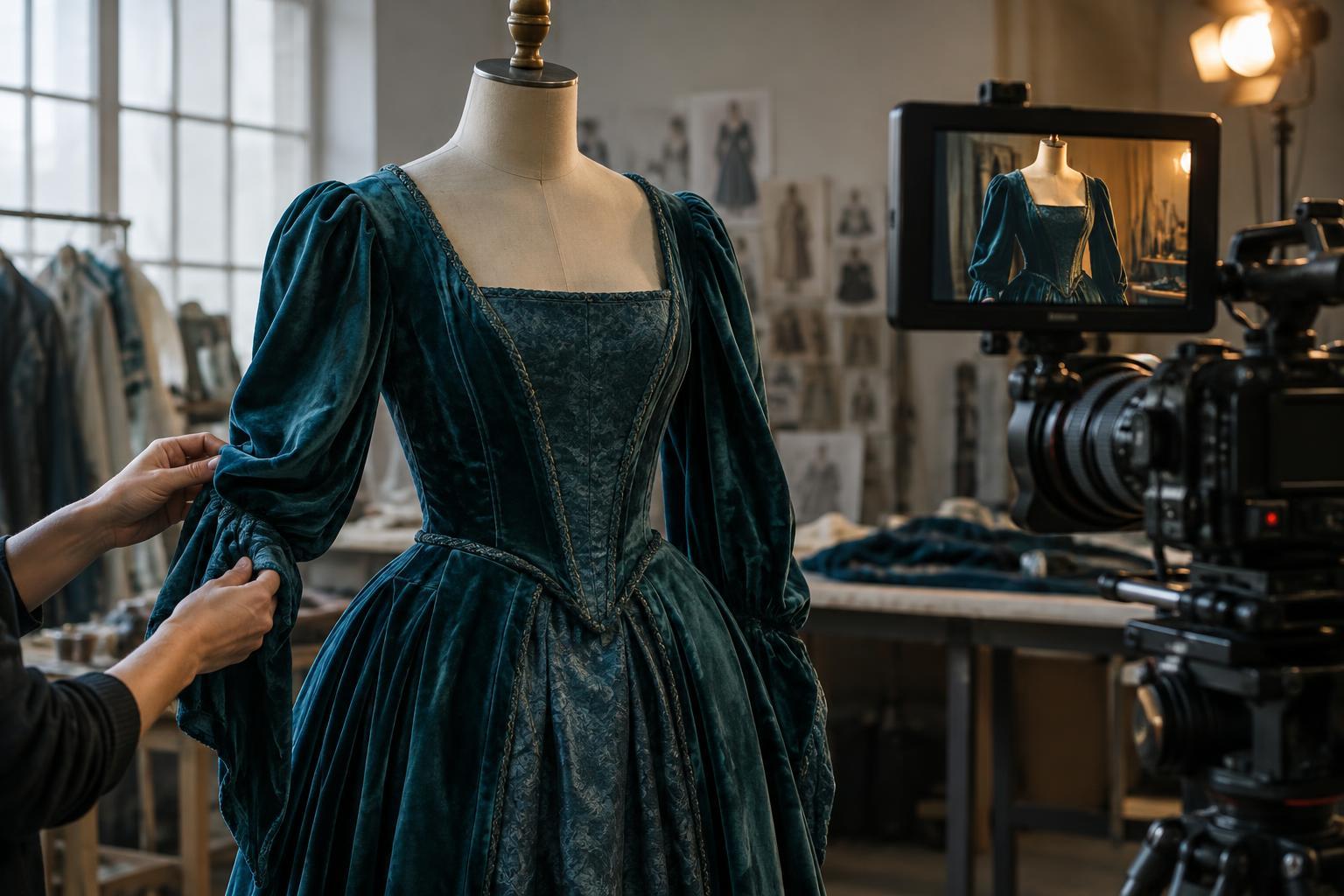
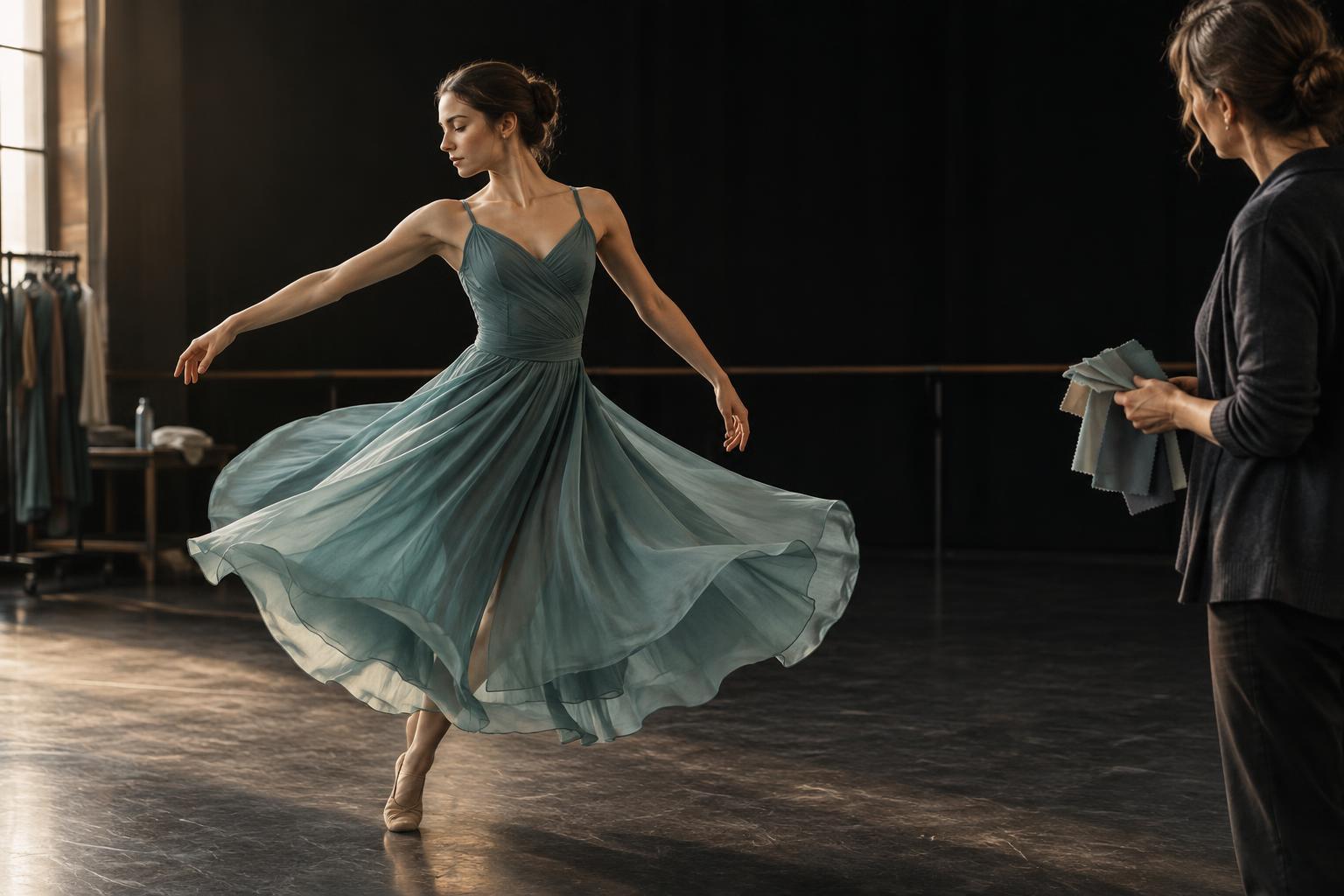
Drape is a different quality: it describes how fabric hangs and falls. A soft, fluid material can make turns and traveling steps visible through trailing movement. A crisp material may hold a graphic silhouette instead. Neither is automatically better. Try holding a generous sample against the body, walking with it and changing direction. Small swatches can suggest texture and color, but they rarely show the full sweep of a cape, trouser leg or skirt.
Balance visual impact with comfort
Fabric weight changes how a costume feels over a performance. Layers, linings and decoration can add up, particularly around the shoulders or waist. Lightweight fabric is not always the answer, though: very thin material may cling, reveal more than intended under strong lighting or need additional support. The goal is an appropriate balance between the silhouette the audience should see and the freedom the performer needs.
Consider what touches the skin as well as what faces the audience. Rough trims, stiff seams and scratchy embellishments can become distracting when a movement repeats. A lining or carefully placed facing may help, but it can also reduce stretch or change drape. If the performance involves vigorous movement, think about heat and airflow without assuming that a fabric advertised as breathable will feel comfortable under every costume layer. A short wear test is more informative than a label.
Check how the fabric behaves onstage
Color and texture can change under stage lighting. A glossy surface may catch highlights with every turn, while a matte one may keep the focus on the overall shape. Sheer areas and pale fabrics deserve particular attention when lit from behind. Look at samples under lighting that resembles the production’s setup when that is possible, and view them from a distance as well as close up. Details that seem prominent at a worktable may disappear from the audience’s perspective.
Sound is another useful test. Some crisp, coated or heavily embellished fabrics rustle when they brush against themselves. That may be welcome for a theatrical entrance but distracting in a quiet passage or near a microphone. Walk, turn and move the sample alongside other costume pieces to hear what it does. Check how it interacts with shoes, props and a dance partner, too: a beautiful surface is less useful if it catches on another garment.
Build a rehearsal test into the choice
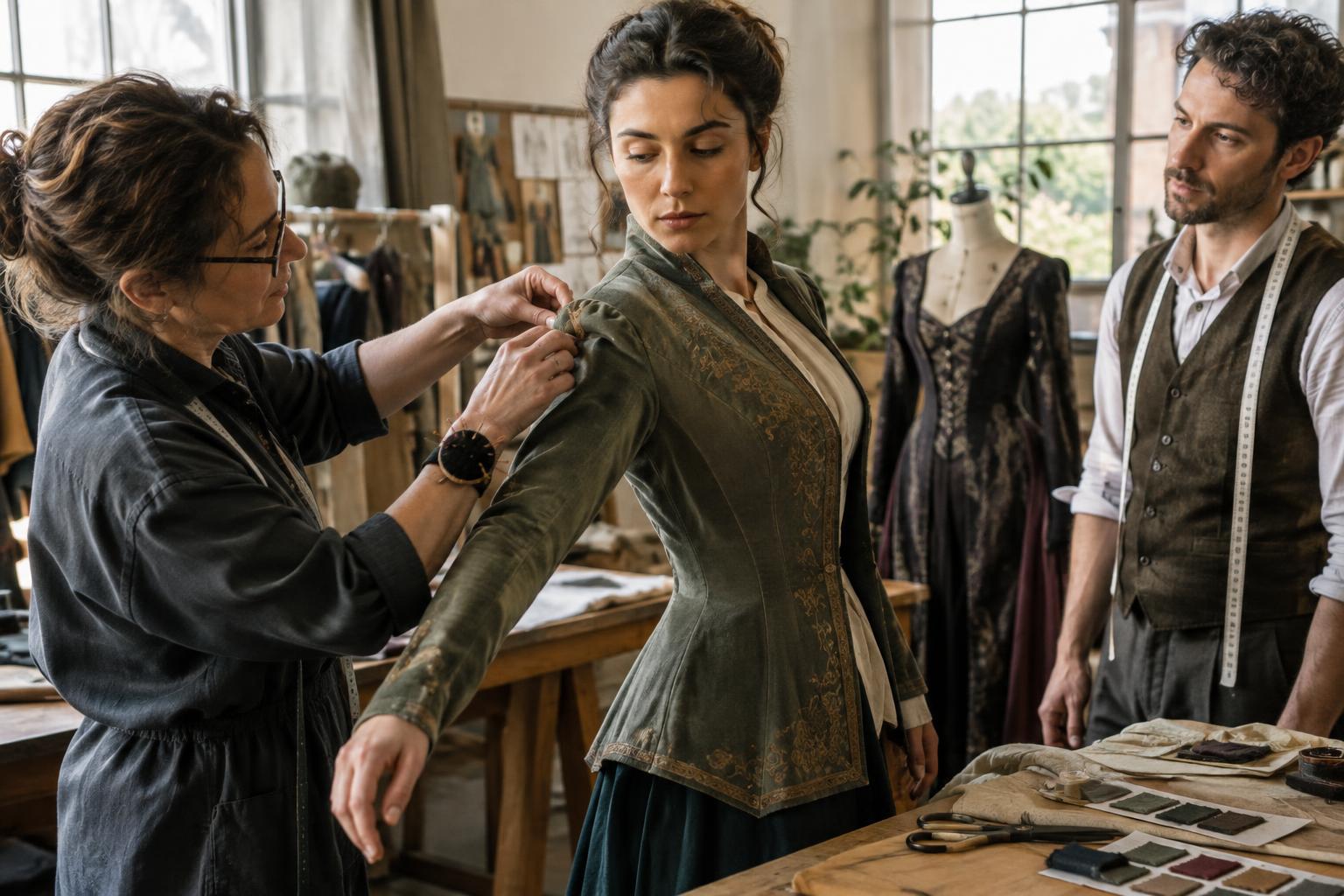
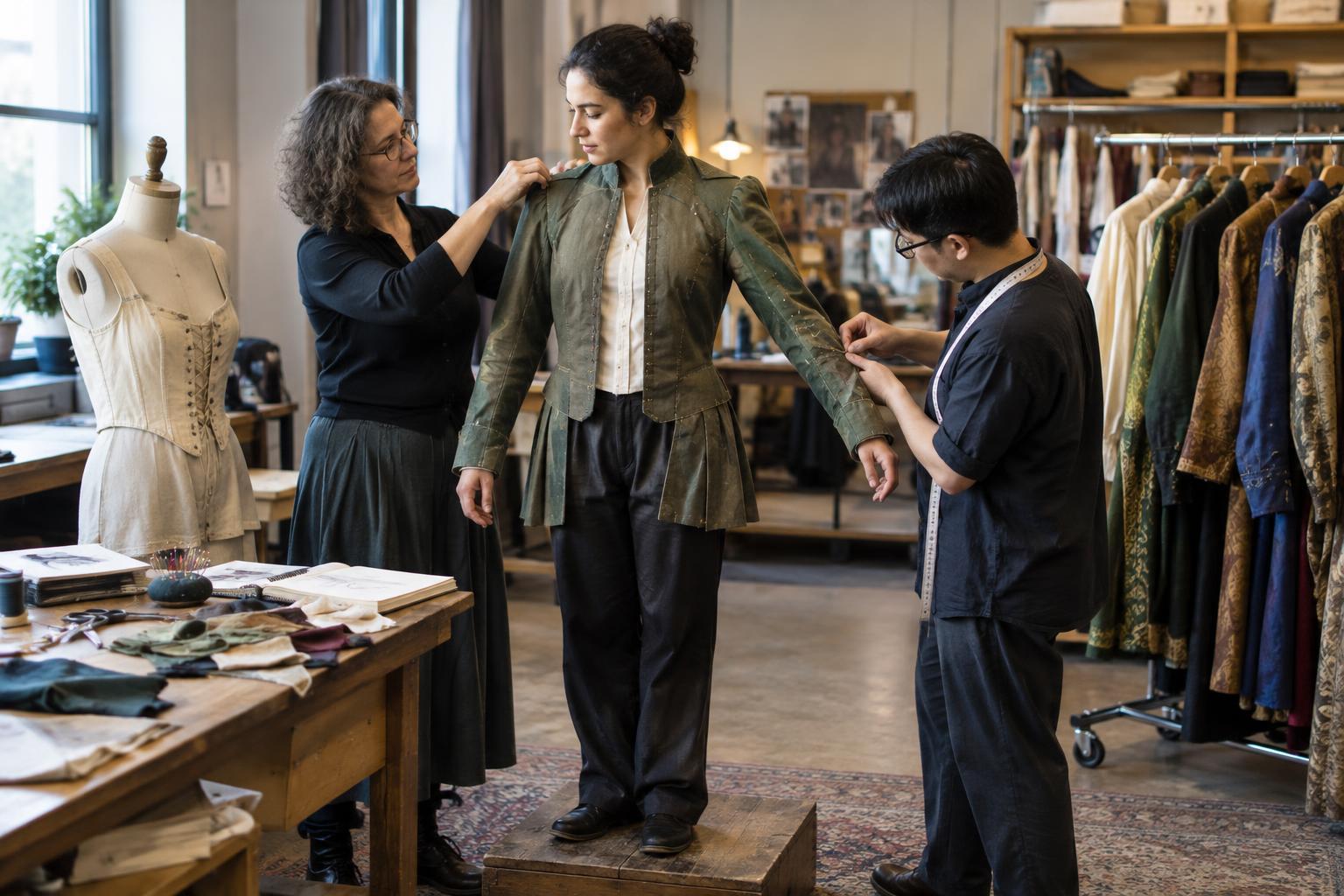
Before committing to a finished costume, make a simple movement sample or mock-up at the scale of the most demanding area. A sleeve can reveal restricted reach; a trial skirt can show whether its volume tangles around the legs. Ask the performer to run representative movement rather than only pose in front of a mirror. Watch for riding up, twisting seams, slipping straps and fabric that takes too long to settle after a turn.
Finally, consider what repeated wear will require. Ask how the fabric should be cleaned, whether it creases during transport and how securely decoration can be attached. Leave room for repairs and adjustments where practical. The best choice is not necessarily the stretchiest or most dramatic fabric: it is the one that supports the intended image through the entire performance, allowing the audience to notice the movement rather than the costume fighting it.