The image starts with a plan
Film lighting is not simply a matter of making actors visible. It guides attention, gives a location depth and helps one shot feel connected to the next. A scene might call for soft daylight through a window, a sharp pool of light around a performer or a room that stays dim without losing important details. Creating that look involves choices about light sources, placement, color, shadows and exposure.
The director of photography, also called the cinematographer or DP, is responsible for the photographic approach to the film. Working with the director, the DP decides what the image should communicate and how the camera and lighting can support it. The DP does not usually move every lamp personally. Instead, they communicate the desired result to the department leads, who work out how to achieve it safely and efficiently with the available crew and equipment.
The gaffer turns the lighting idea into a setup
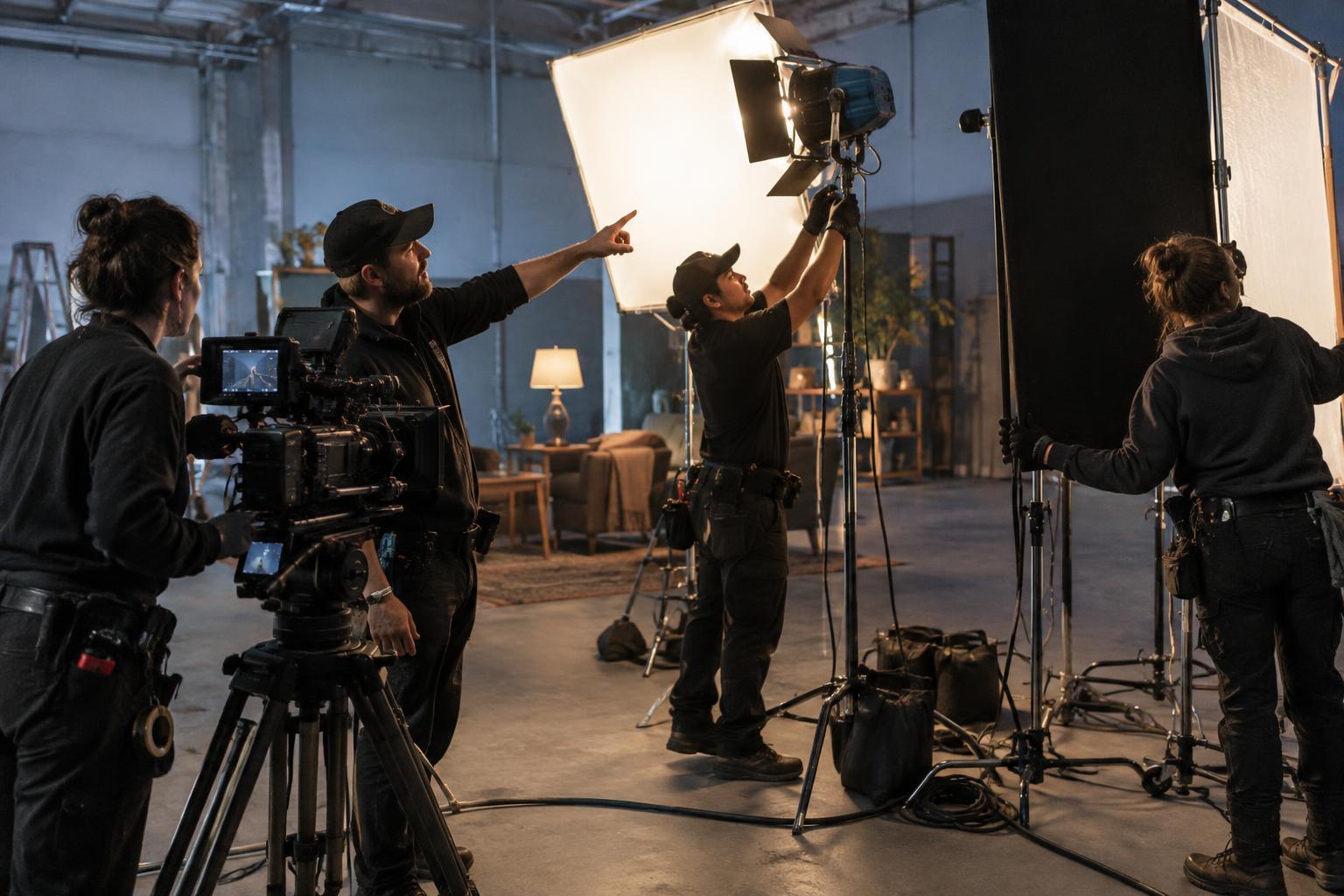
The gaffer is the head of the electrical lighting crew. They collaborate closely with the DP, translating a request such as “make the window light feel softer” into a practical setup. That might mean choosing a different fixture, changing its position or modifying its output. The gaffer also considers the power available, the time needed for a change and whether the setup will work across all the planned camera angles.
On a larger production, the best boy electric is the gaffer’s key assistant and helps run the department’s day-to-day work. Despite the traditional job title, this is a coordination role rather than a description of who is best at lighting. Responsibilities can include organizing crew assignments, equipment and power needs. Titles and reporting lines vary by production, so a small shoot may combine jobs that a larger one assigns to separate people.
Electricians make the light work
Set lighting technicians, often called electricians or electrics, handle much of the hands-on work with lighting fixtures and their electrical supply. Under the gaffer’s direction, they place and adjust units, run cable, distribute power and make changes between takes or camera setups. A lamp that needs to move only a little may still require careful coordination: its stand, cable and effect on nearby performers all matter.
Some productions separate the crew preparing a location from the crew working during filming. A rigging electrical team may install cable and fixtures before the shooting crew arrives, then remove them when the location is finished. A lighting console operator may control compatible fixtures from a central desk, allowing changes in brightness or color without sending someone to each lamp. Specialist roles, including generator operators, may also be involved when the power setup calls for them. Not every project has every position.
Grips shape and support the light
A film lighting setup also depends on the grip department. Grips do not generally power or operate electrical lighting fixtures; they handle the equipment that supports camera movement and shapes light. For lighting, that can mean positioning flags to block unwanted spill, setting diffusion to soften a source or placing bounce material to redirect it. These tools can change the look of a shot without changing the lamp itself.
The key grip leads the grip crew, with a best boy grip assisting in its organization. Grips and electricians work side by side, but the distinction helps clarify who handles which equipment. If the DP wants a shadow reduced, the gaffer might adjust a fixture while the key grip proposes a bounce or a different piece of diffusion. The final solution may use both departments.
Why the crew keeps working after the lights are on
A lighting setup is rarely finished the moment it looks right from one camera position. A wider shot may reveal a stand that was hidden in a close-up. A performer may move farther than expected, or a change in framing may put a bright reflection in the background. The lighting and grip teams make adjustments so the scene remains visually coherent while giving the camera and performers room to work.
They also coordinate with other departments. A visible table lamp, often called a practical, may be selected and placed by the art department while the electrical crew helps make its light suit the shot. Camera, sound and production teams need to know where equipment can safely go and how long a reset might take. The crew’s work is partly technical and partly collaborative: each person helps turn a visual intention into a repeatable image the audience can simply watch.