The artist sets the direction
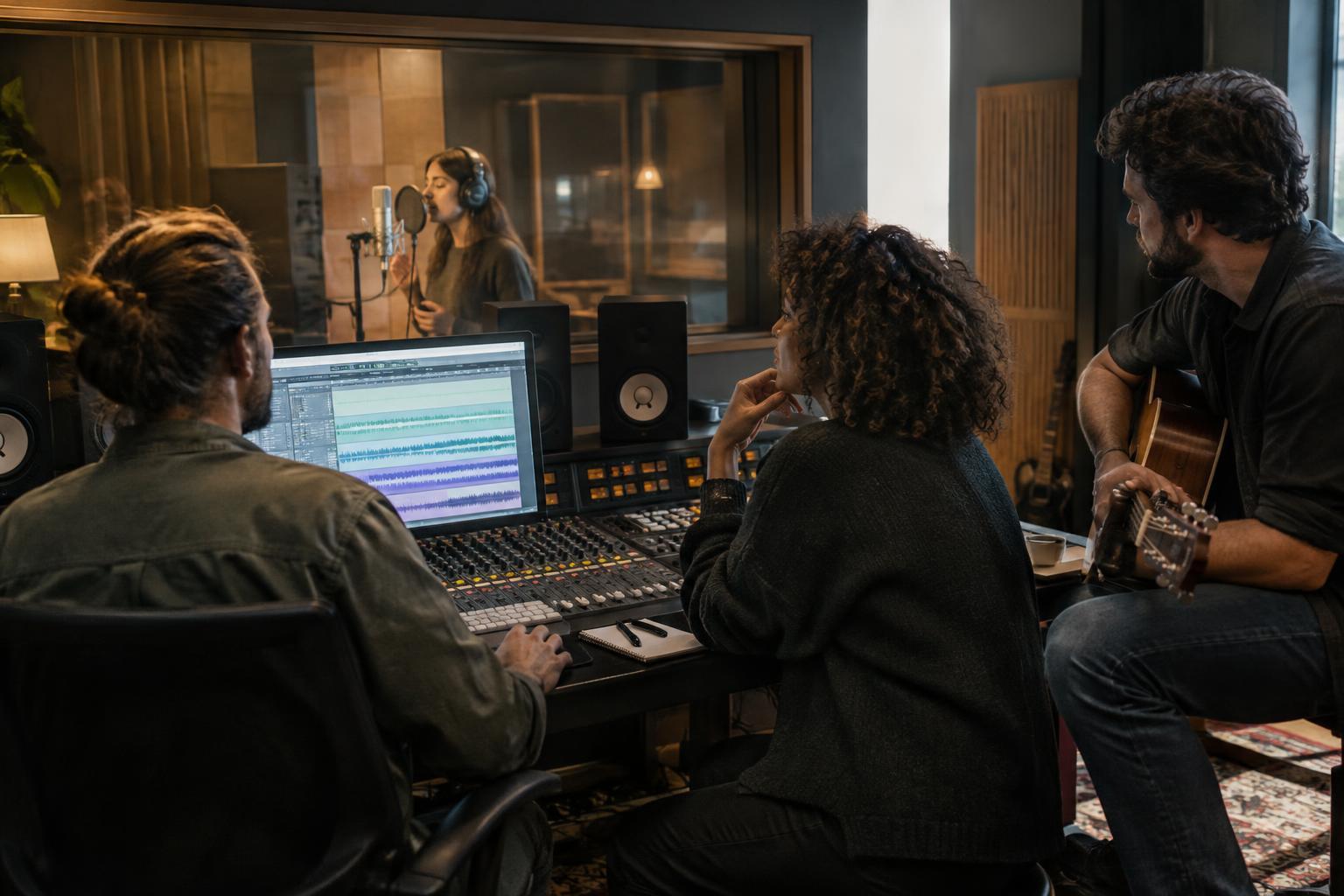
A studio session may look like one person singing into a microphone while everyone else watches. In practice, the performance depends on a series of shared decisions: what the song should feel like, which parts need recording and when a take is ready to keep. The exact team changes with the project. A home recording might involve two people doing nearly everything, while a larger session can divide the work among specialists.
The artist or band is at the center of those decisions. They bring the voice, instrumental identity and interpretation that make the recording theirs. They may choose the tempo, suggest changes to an arrangement, decide which emotions to emphasize or ask to try a line again. A songwriter, if different from the performer, may be present to clarify a lyric or melody. Being the artist does not mean making every choice alone; it means helping the team understand what the finished performance should communicate.
The producer shapes the overall performance
The producer helps turn the artistic goal into a workable recording. Depending on the project, that can mean planning the session, developing the arrangement, choosing sounds, coaching performances or deciding which takes best serve the song. A producer might suggest a quieter delivery for a verse, make room for a guitar part by simplifying a keyboard line, or call for a break when repeated takes are losing energy.
The role is creative rather than fixed to one piece of equipment. Some producers build tracks and play instruments; others focus on listening, communication and decisions. A vocal producer may concentrate specifically on phrasing, harmonies and vocal takes. Good direction is not necessarily constant direction. Sometimes the most useful contribution is to give a performer space to experiment, then help identify what worked.
Engineers make the recording possible
The recording engineer handles the technical path from a sound in the room to a usable recording. That includes selecting and placing microphones, setting levels, managing the recording software and checking that each take is captured cleanly. During a performance, the engineer listens for problems such as unwanted noise, distortion or a missing signal. They also manage practical requests, such as changing what a musician hears in their headphones.
An assistant engineer may prepare microphones and cables, organize tracks, label files and help the session move efficiently. These tasks can sound minor until a take needs to be found quickly or a setup needs to change without interrupting the performers’ momentum. In a small studio, one engineer may do both jobs. The producer and engineer often work closely, but their questions differ: the producer may ask whether a take feels right, while the engineer checks whether it has been recorded reliably.
Musicians and collaborators build the parts
Session musicians are brought in to perform particular parts, such as drums, strings, backing vocals or a solo. They may read a prepared arrangement or develop a part with the artist and producer. Their job is not simply to play accurately. They listen to the song, adjust their timing and tone, and make choices that support the lead performance. A restrained part can be more useful than a showy one if it leaves room for the song’s focus.
Other collaborators may join for a specific purpose. An arranger can work out how multiple instruments fit together; a vocal coach may help a singer prepare or manage a demanding passage. Not every session needs these roles, and one person may cover several of them. Clear communication matters more than an elaborate job chart: everyone needs to know who is making a decision and what the next take is meant to achieve.
What happens after the last take?
Recording a take is not always the end of a session. The team may listen back, choose preferred performances and assemble a final part from multiple takes, a process often called comping. They may record an extra harmony or replacement line once they hear what the song needs. Keeping tracks and takes clearly named helps preserve those choices for whoever works on the project next.
Mixing and mastering are usually distinct later stages, though the same people may be involved. A mix engineer balances the recorded parts and shapes how they sit together. A mastering engineer prepares the finished mix for its intended release formats and checks its overall presentation. Knowing where one stage ends and the next begins helps explain the teamwork behind a recording: the studio session captures performances and possibilities, while later work brings the chosen version into focus.