The shot is only the beginning
When a scene calls for a creature, a digital set extension or the removal of a visible rig, the filmed take is the starting point, not the entire handoff. Visual effects artists need to understand what the camera saw, how it moved and what the light was doing. Useful reference material gives them a way to check their work against the real set instead of guessing from the finished take alone.
The exact checklist depends on the shot. A simple screen replacement may need different material from a moving shot through a partially built environment. Before filming, the visual effects supervisor, cinematography team and relevant department leads can identify which references matter most. That planning is especially valuable when the location, lighting setup or performers will not be available again.
Plates that preserve what the camera saw
A plate is footage intended to be used as part of a visual effects shot. The main take is one plate; crews may also capture a clean plate of the same view without an actor, prop or temporary visual effects element. That unobstructed image can help artists remove objects or rebuild portions of the background. For it to be useful, the camera position, lens, focus, exposure and lighting should remain as consistent as the shot requires.
Sometimes an empty frame is not enough. Artists may need extra coverage of a background hidden by a performer, or a separate pass of a practical element such as smoke, reflections or moving fabric. These passes do not automatically make a difficult shot easy: changing sunlight, drifting shadows or a camera that cannot repeat its move may limit how closely they match. The point is to capture options while the scene still exists.
Camera and set details that help align the effect
A digital object has to sit convincingly within a photographed scene. Camera notes help artists reconstruct the view: lens choice, focal length, focus distance, aperture, camera height and movement can all be relevant. Distortion references may help them account for the way a particular lens bends the image. For a moving shot, tracking markers placed on suitable surfaces can provide visible points from which to estimate camera motion.
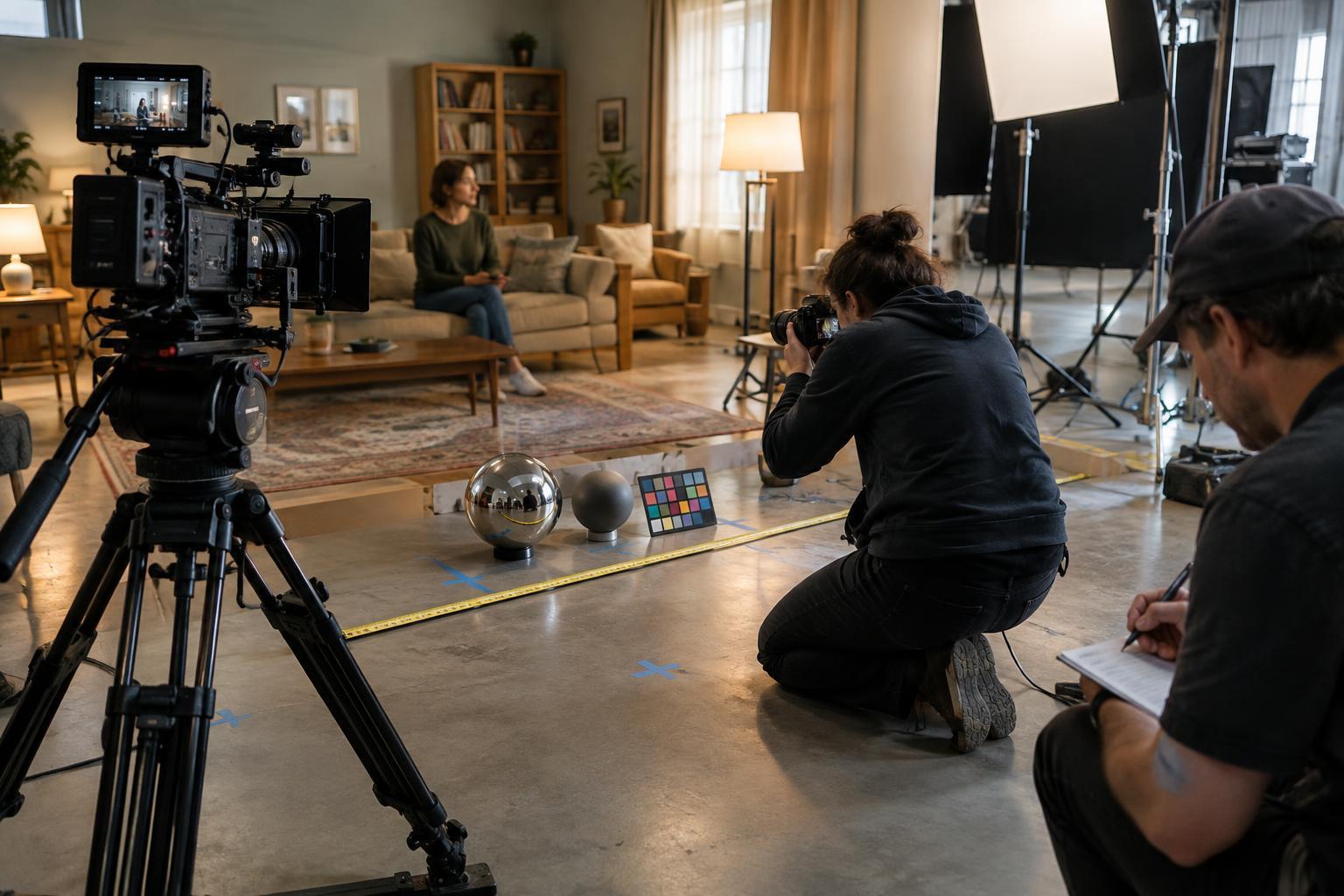
Measurements and photographs of the set add scale and context. Crews might record the dimensions of a doorway, the position of a prop, the height of a platform or the distance between an actor and a wall. Wider reference photographs can reveal areas outside the filmed frame that matter when extending a set or creating reflections. Notes linking this material to the correct shot and take are as important as the material itself; an unidentified reference is harder to use.
Lighting and color references
A convincing addition must respond to the scene’s light. Crews may photograph reflective and neutral reference spheres, capture a set of images covering the surrounding environment, and record the placement or behavior of key lights. These references can help artists judge the direction, color and softness of illumination. They can also show what should appear in a shiny surface, though a reference captured after the lights move may no longer describe the take.
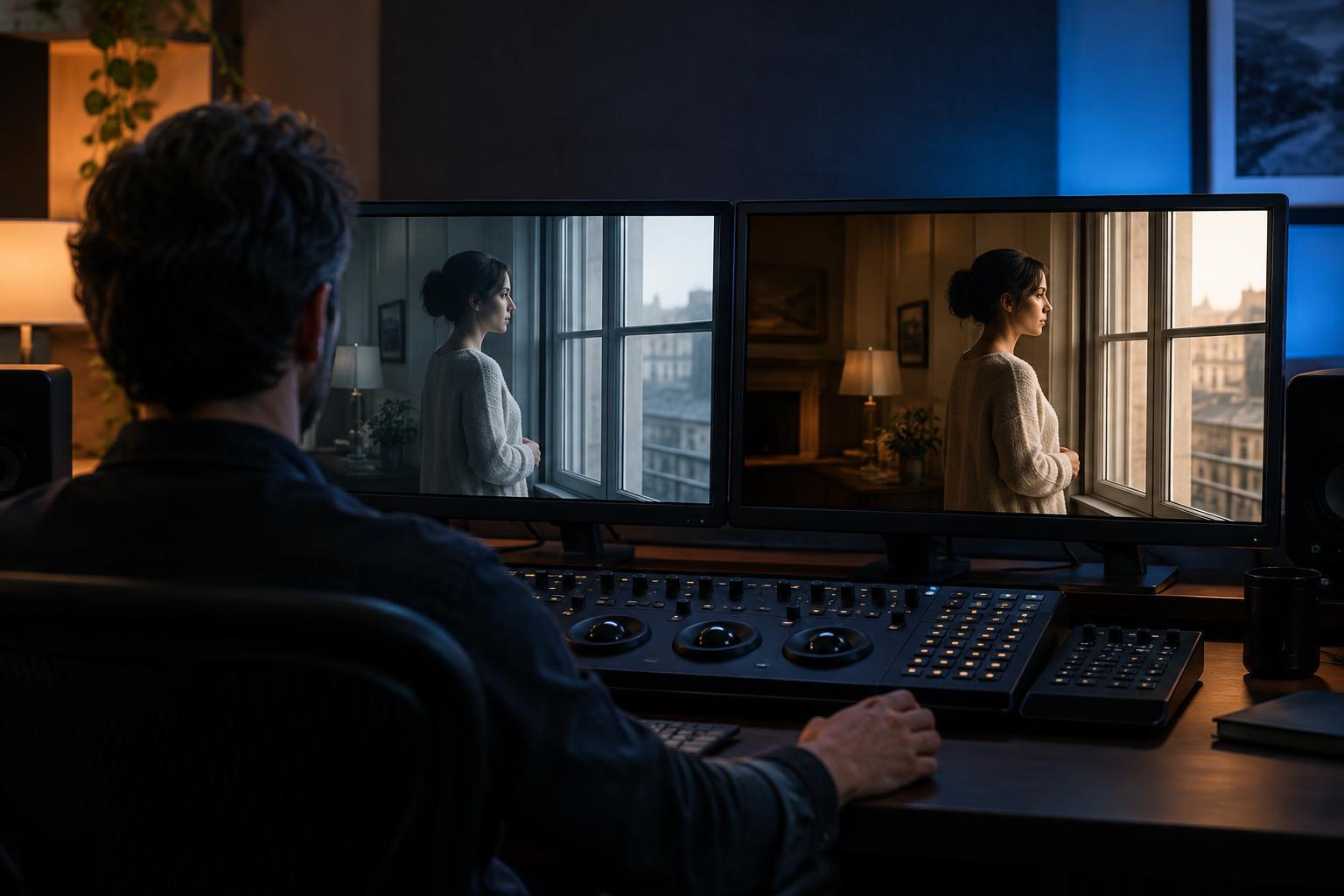
Color charts and neutral reference cards give the team a shared visual baseline for comparing footage and added elements. They are most useful when captured under lighting that represents the shot and when the images retain enough information for the intended workflow. None of these tools replaces careful viewing: practical light can shift during a take, and a performer may cast or receive shadows that need attention in the finished composite.
Performance, continuity and a usable handoff
Visual effects also depend on human cues. An actor’s eyeline indicates where an unseen character belongs; the timing of a reach, recoil or pause tells artists when an interaction should happen. Stand-ins, temporary props or marks can help performers respond to something tangible, provided those aids are planned for removal or replacement. Script notes and continuity images can clarify which action, costume state or prop position belongs to the selected take.
The final task on set is to keep the material understandable. Clear shot identifiers, take numbers and notes about changes between takes allow the post-production team to match references to footage. Crews do not need to capture every possible image for every shot. They need to preserve the information that cannot be reliably recovered later: the camera’s view, the scene’s light, the set’s geometry and the details of the performance. That record lets artists spend more time shaping the effect and less time reconstructing what happened on set.