A setting has to serve the scene
An empty theater, a narrow street or a house at the edge of town might seem ready for its close-up. For a location scout, visual appeal is only the beginning. The useful question is whether the place helps tell the particular story being filmed. A dramatic staircase may be irrelevant if the scene needs two characters to speak privately. A modest kitchen may be ideal if its layout lets the camera stay close to a tense exchange.
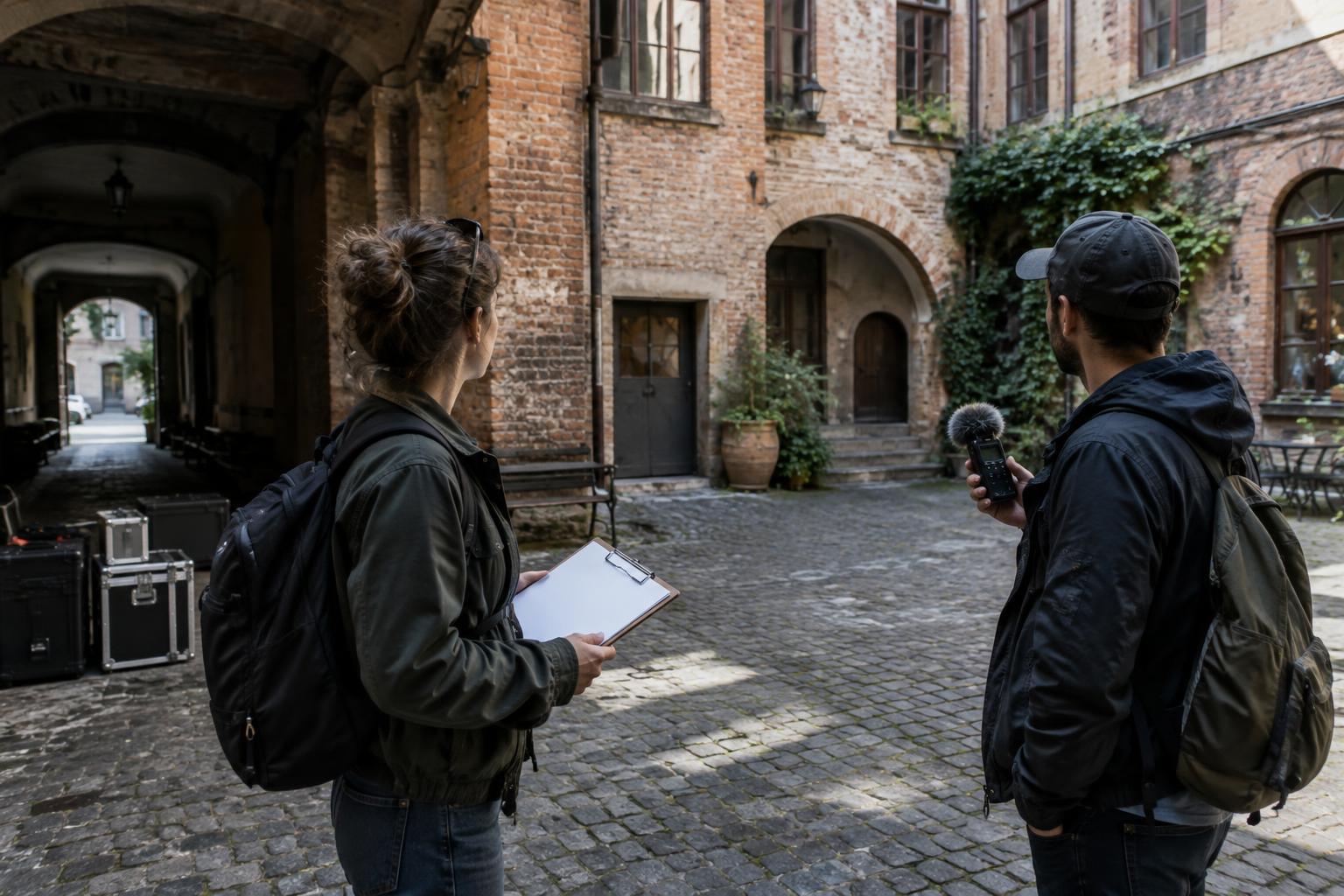
Scouts typically work from a brief describing the story’s needs, then gather photographs and practical details for the production team to review. They consider what the camera can see from multiple angles, not just the most flattering viewpoint. A location may need room for performers to move, space for equipment or a sightline that supports a specific action. The best choice is not always the most spectacular place; it is the one that remains convincing once the scene is underway.
Sound and light can change everything
A place can look peaceful in a photograph and sound very different in person. Passing traffic, aircraft, ventilation systems, nearby construction or a busy business next door may interfere with dialogue. Some noise can be managed, but recurring interruptions can slow a shoot or limit when a scene can be filmed. A scout pays attention to what can be heard at different times, especially if the story calls for a quiet setting.
Light presents another set of questions. Where does the sun fall during the hours a crew might work? Do windows face a direction that suits the scene, or will the light shift quickly across the room? Could practical lights or temporary equipment be placed without disrupting the space? Film crews can shape light, but a location’s windows, ceiling height and available power still affect how much work is required to achieve the intended look.
The crew needs somewhere to work
A filming location must accommodate more than the action visible on screen. Performers and crew may need places to prepare, store gear, take breaks and move between setups. A beautiful upstairs room becomes more complicated if equipment must be carried through a narrow doorway or if there is no practical way to bring larger items inside. Parking, loading access, restrooms and nearby space for support vehicles can matter as much as the room being filmed.
Scouts also look for constraints that might not be obvious in a first impression: fragile floors, limited electrical access, steep paths or entrances shared with other occupants. These issues do not automatically rule out a location. They help the team decide whether the place can be used safely and efficiently, and what arrangements it would require. A workable location gives the production options rather than forcing every department to solve a different problem at the last minute.
Permission includes people, not just paperwork
Before filming, a production needs to establish who can authorize use of a property and what conditions apply. A scout may help identify the owner or appropriate contact, while other members of the production handle agreements and any required permits. Rules vary by place and project, so an inviting storefront or public square cannot simply be treated as available. Even a willing owner may have limits on hours, noise, alterations or the number of people allowed inside.
Neighbors and regular users of a space matter too. A crew may affect access to homes, businesses or shared areas, even when the camera never points toward them. Clear expectations about schedules and disruption can make a location easier to use and easier to leave in good condition. Respect for the space is practical as well as courteous: a production depends on people trusting that their property and routines will be taken seriously.
The location must hold up across the shoot
A scene that appears to unfold in minutes may be filmed over many hours or across separate days. Scouts therefore consider whether the location can provide a consistent look. Furniture that cannot be moved, a business that changes its displays or a street with unpredictable activity can complicate continuity. If the script returns to the same setting later, the team also needs to know whether it can realistically return under similar conditions.
Weather and season can introduce further uncertainty outdoors. A garden, for example, may look quite different after a period of growth or heavy rain. No scout can remove every variable, but identifying them early gives the production a chance to plan alternatives. That is the quiet craft behind a convincing screen setting: recognizing not only what makes a place memorable, but what it will take for the place to keep working after the first beautiful shot.