Start with the version and the day
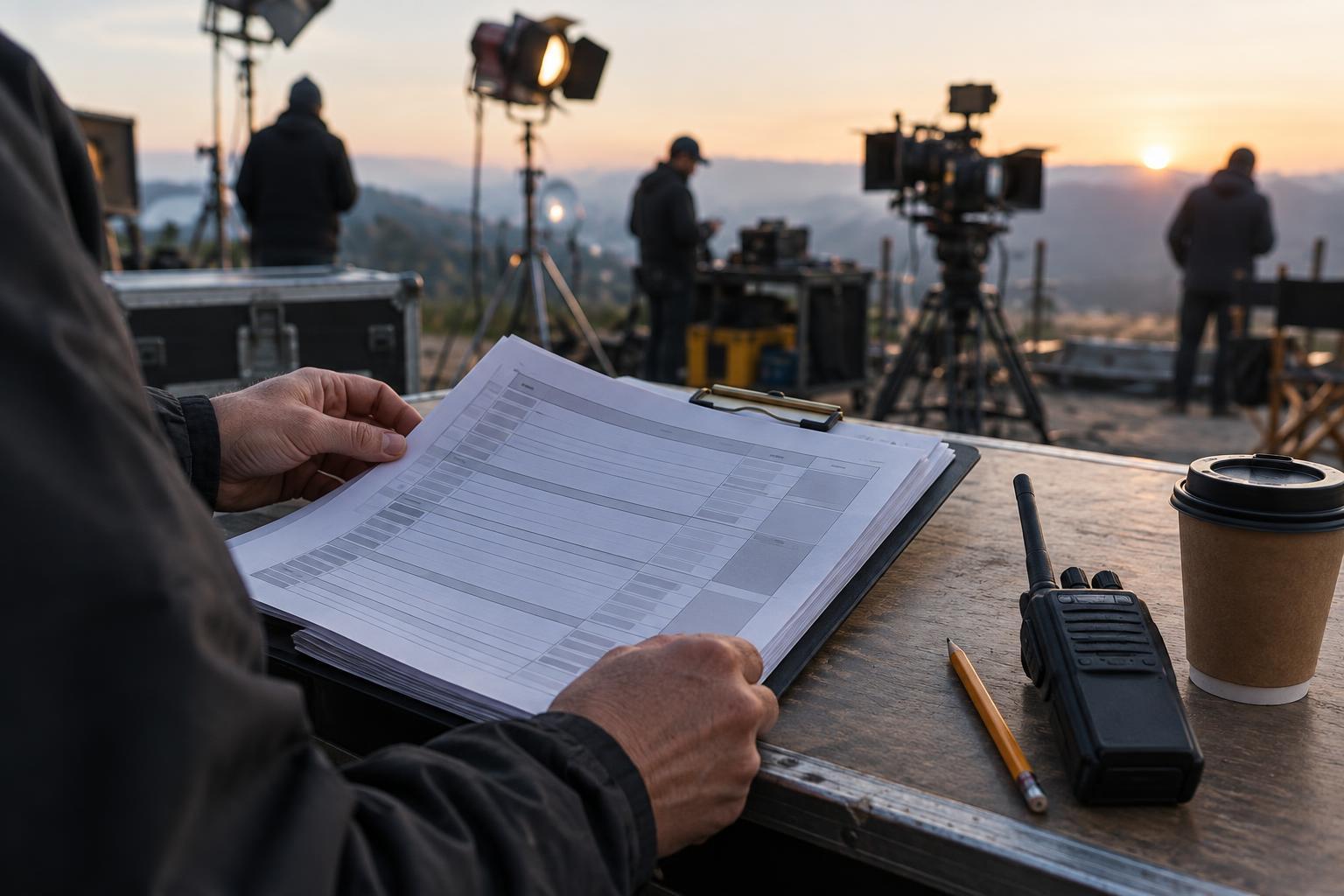
A call sheet is a working plan for a shoot day. It brings together the information people need to get to the right place, at the right time, with an idea of what will be filmed. Productions format them differently, so read the labels rather than relying on a familiar layout. A call sheet may change as plans develop; check its issue date, version or revision marker before treating a saved copy as final.
Begin with the production name and shoot date. Then find the general crew call, any scheduled start of filming, and the expected wrap or end-of-day information if provided. The general crew call is not necessarily your personal call. It gives context for the day, while your department, role or name may have a separate arrival time. If you receive an update after making travel plans, compare both copies for changed times, addresses and notes rather than assuming only one detail has moved.
Find your call and trace where you need to go
Look for a section listing cast, crew or departmental call times. A performer might have separate times for transport, hair, makeup, wardrobe and readiness on set. A crew member might see a department-specific call or an instruction from a supervisor. Read the sequence carefully: a pickup time is not the same as an arrival time, and a time marked “on set” usually describes when someone should be ready there, not when they should start looking for the location.
Next, match your call to the correct address. The filming location, parking area, crew base and check-in point may be different places. Call sheets can also include access instructions, transport details or restrictions on where to enter. Save the relevant address and allow time to move from parking or drop-off to check-in. If an address or instruction is unclear, ask your production contact before the shoot day when possible; guessing at a large or multi-entrance site can make even an early arrival stressful.
Read the shooting plan as a map, not a promise
The scene schedule shows what the production intends to film and in what order. It may identify scene numbers, brief descriptions, interior or exterior settings, day or night story time, locations, and the performers or background groups needed. This helps departments anticipate equipment, costume changes, props and transitions. A scene set at night in the story, however, does not automatically mean a nighttime call: the schedule tells you when the crew plans to capture it.
Treat the running order as a guide rather than a guarantee. Setups, weather, access and other practical factors can change the sequence. Pay particular attention to location moves, meal information and any notes that affect your work. If you are new to the production, scene numbers can be more reliable reference points than a short scene description when asking a colleague which setup comes next.
Check the notes that shape your preparation
A call sheet may include a weather outlook, daylight information, safety reminders, special equipment, wardrobe requirements or details about sound-sensitive areas. Not every note applies to everyone, but a small instruction can have a large effect on your day. A request for quiet near a location, for example, matters even if you are not part of the camera or sound teams. Read departmental notes as well as the general notes, and follow any separate instructions your supervisor has sent.
You may also find contact numbers, emergency information and a nearby medical facility listed. Keep those details accessible without treating the call sheet as a substitute for an on-site safety briefing. Because these documents can contain private contact information, addresses and unreleased production details, share them only through channels approved by the production. Avoid posting a call sheet or a screenshot of it to a public feed.
Make a quick pre-shoot check
Before you finish reading, ask yourself five questions: Is this the latest version? What is my exact call or pickup time? Where do I check in, and how do I get there? Which scenes or tasks involve me? Are there notes that change what I should bring or wear? That short review turns a dense page into an actionable plan.
If two instructions conflict, do not quietly choose the one that seems most convenient. Contact the appropriate production coordinator or your department lead to confirm. On the day, keep an eye on approved production communications for updates. A call sheet is most useful when it helps everyone begin from the same plan—and stay ready to adapt when the work of making a film requires it.