The work starts with what the scene needs
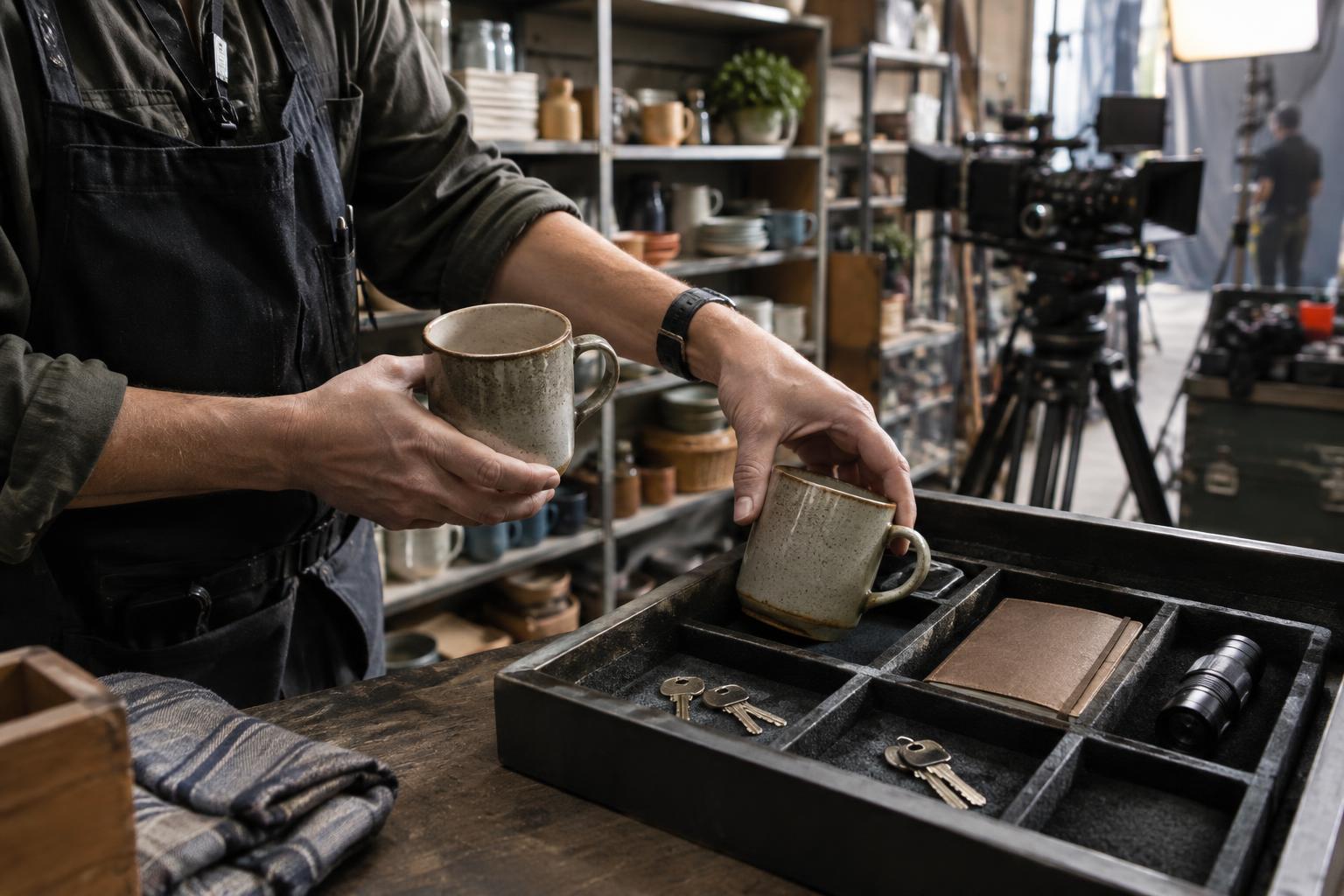
A character opens a letter, sets down a cup and reaches for a set of keys. None of those actions may seem remarkable to a viewer, but each gives a prop team a question to answer. What should the object look like? Must it open, pour or make a sound? Will an actor handle it repeatedly? Does the story need it to change between scenes? Prop work begins by turning these story details into practical requirements.
Teams often start with the script and conversations with the director and other departments. A background object may only need to establish a place, while a prop held in close-up must stand up to scrutiny. The art department’s visual direction, the actor’s planned movement and the camera’s view can all affect the choice. Making those distinctions early helps the team spend its attention where the audience is most likely to notice a mismatch.
Sourcing is more than finding the right look
Depending on the production, an item might be bought, rented, borrowed, made or adapted from something already available. The best-looking option is not always the most useful one. A heavy object may be awkward to carry through several takes; a fragile one may not survive them. A distinctive item may be difficult to replace if it breaks or goes missing. Sourcing therefore involves thinking about handling, durability and the possibility of finding or making duplicates.
The prop must also fit the world of the story. Its condition can suggest how long someone has owned it or how carefully they treat it. A spotless notebook and a battered notebook tell different stories before either is opened. When a scene depends on a specific detail, such as a name on an envelope or a page an actor must read, the team needs to confirm that detail with the relevant creative departments rather than treating the object as decoration.
Preparation makes an object ready for repeated action
Once sourced, a prop may need cleaning, aging, labeling or modification. A container might need to be easy to open on cue. A book may need to fall open to the correct page. Food and drink used across multiple takes require particular planning because their appearance and quantity can change. Teams may prepare several matching versions of an item, each suited to a different stage of a scene.
Preparation also includes a practical test: can the object do what the scene asks of it? A prop that works on a shelf might be distracting when handled or unreliable when an action is repeated. Testing gives the team time to adjust it before filming. It also helps identify when a specialized version is needed for a particular shot. The aim is not simply to make an object convincing at a glance, but to make it dependable during the work of performing and filming.
Tracking protects continuity
Scenes are not always filmed in story order, and a single action may be captured from several camera angles. That makes tracking essential. If a character picks up a cup with the handle facing left in one shot, its position may matter when the action is filmed again. The same applies to a folded letter, a partly used notebook or the contents of a bag. Small changes can become noticeable when shots are edited together.
Prop teams use clear storage locations, labels, notes and reference images as needed to keep objects identifiable. A useful record connects an item to the scene and to its state at a particular point in the story. It might distinguish an unopened package from its opened version or a clean garment accessory from a marked one. Continuity is collaborative: performers, camera crews, the script supervisor and prop staff may each notice a different detail that needs to remain consistent.
Handoffs keep the day moving
On a filming day, the prop team’s job includes getting the right object to the right place at the right time. That can mean setting an item before a take, handing it to a performer, collecting it afterward and resetting it to its starting condition. A well-planned handoff lets the performer focus on the action rather than searching for an object or wondering which version to use.
After a scene, props need to be accounted for, especially if they will return later in the shoot. Items may be stored, repaired or prepared for their next appearance. This final step is less visible than a memorable on-screen detail, but it is part of what makes that detail possible. Good prop work gives an object a clear journey: from a story requirement to a usable item, through every take, and safely on to its next scene.