From everyday speech to deliberate singing
Singing asks the voice to do things that ordinary conversation may not: sustain a phrase, move between pitches, project a lyric and repeat the effort consistently. A warm-up is a bridge between those everyday sounds and the particular demands of a rehearsal, recording session or show. It need not be a test of how high, loud or impressive someone can sound at the start of the day.
A singer might begin with easy humming, gentle pitch glides or comfortable patterns on a vowel. These sounds provide a low-pressure way to notice how the voice responds. Is a note easy to begin? Does the tone change as the pitch rises? The point is not to force an immediate fix, but to make small adjustments before attempting the most demanding passages.
Coordinating breath, pitch and tone
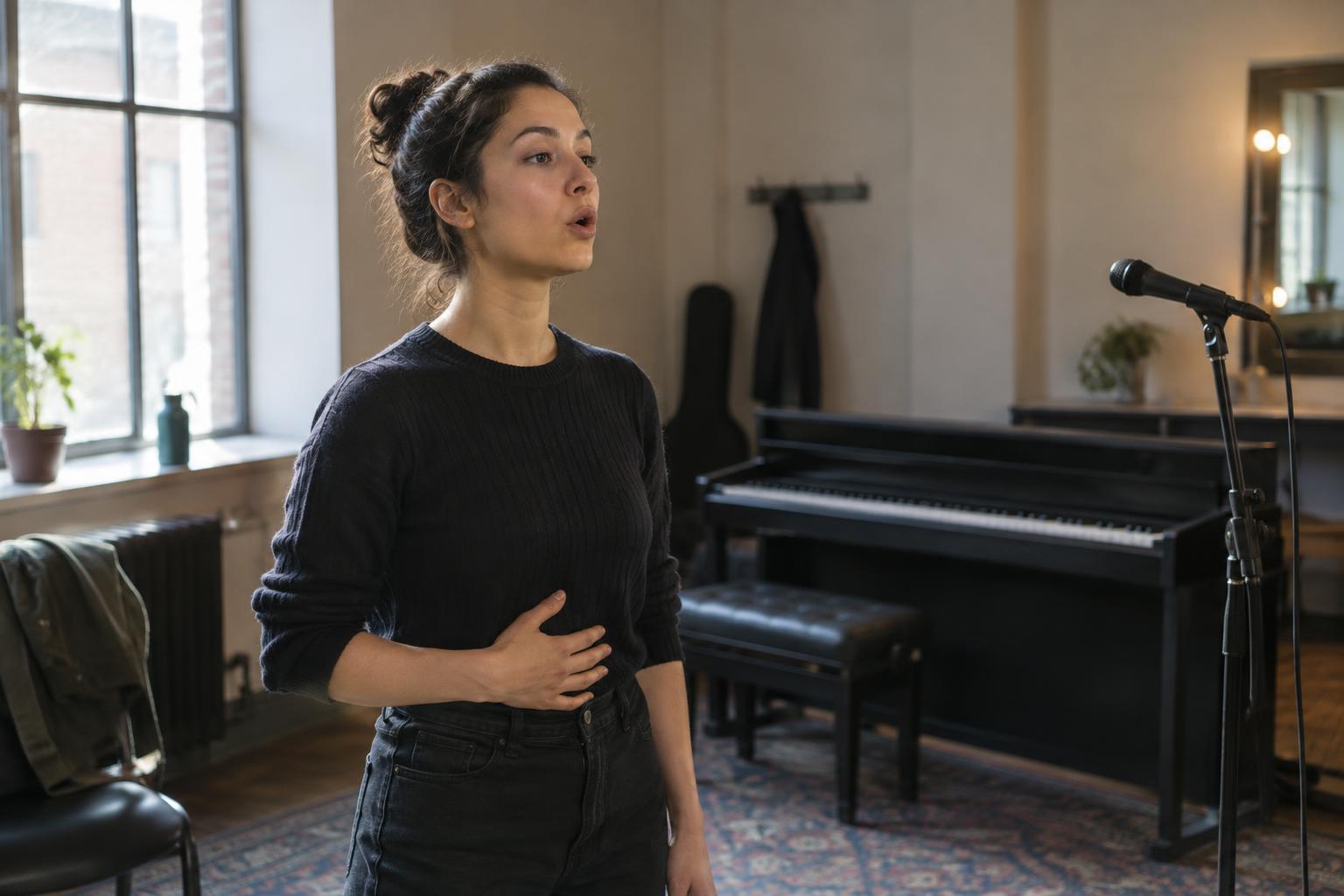
A musical phrase depends on more than taking a large breath. Singers need to manage airflow while forming notes and words, whether they are holding a quiet line or delivering a strong chorus. Simple exercises on steady notes or short phrases can help a performer notice where breath is being spent too quickly and where a more comfortable pace is possible.
Warm-ups also give singers a chance to travel through the part of their range a piece will use. Gradual pitch patterns can make changes between lower and higher notes feel less abrupt. The aim is coordination rather than pushing for a wider range. A singer preparing a soft ballad may spend more time finding an even, gentle sound; someone rehearsing rhythmic material may pay closer attention to quick, clean note changes.
Making the words work
Audiences hear songs as language as well as melody. Lips, tongue and jaw shape consonants and vowels, and those movements affect how clearly a lyric comes across. Warm-ups that alternate sounds or use short text phrases let a singer practice forming words without letting every consonant interrupt the musical line.
That preparation becomes especially useful when the lyrics are fast, the melody sits in an unfamiliar part of the range, or the performer is singing while moving. A singer might speak a tricky line in rhythm, sing it slowly, then bring it closer to performance pace. The exercise is not about making every word unnaturally crisp. It is about finding an articulation that serves both the story and the sound.
Preparing for the actual performance
There is no single warm-up that suits every voice or every job. A brief studio session, a long stage set and a choir rehearsal place different demands on a singer. The most useful routine moves from comfortable sounds toward the range, volume, phrasing and style needed next. A performer can sample a difficult entrance or transition without singing the entire show at full intensity beforehand.
Warm-ups can prepare attention, too. Repeating a familiar pattern gives a singer time to listen, settle into a tempo and shift focus from the distractions of arrival to the choices inside the music. In an ensemble, a shared warm-up can help performers listen to one another and agree on the shape of a phrase. It does not guarantee a flawless performance, but it creates an opportunity to notice problems early and approach the work with intention.
Keeping the routine useful
A productive warm-up generally begins within an easy range and builds gradually. The singer can pay attention to how the voice feels and sounds instead of treating a routine as a fixed checklist. If an exercise calls for strain, backing off or changing it is more useful than trying to win a contest with the exercise. Persistent discomfort is a reason to stop and seek appropriate guidance rather than sing through it.
The best sign of a useful warm-up is not a spectacular final note. It is that the singer is better acquainted with the voice they have in that moment and more ready for the music ahead. That readiness includes technical choices—breath, pitch and diction—but also the freedom to turn those choices toward character, feeling and connection with an audience.