A long phrase begins before the first note
When a singer carries a line across several measures without an audible break, the effect can seem effortless. Behind it is a series of choices: where to inhale, how strongly to begin and which words need room at the end. Breath control is not simply the ability to take in a large amount of air. It is the ability to use air at a pace that serves the sound and the meaning of the phrase.
That distinction matters because a phrase rarely makes the same demand from beginning to end. A soft opening may need a gentle onset, while a higher or louder note later in the line may call for a different balance of airflow and vocal effort. Singers learn the shape of the whole line so they do not spend their available air too quickly on its first few words.
Planning a breath around the words
Punctuation on a lyric sheet can suggest places to breathe, but musical phrasing does not always match the printed sentence. A singer may mark a breath before a new thought, after an important word or at a brief instrumental opening. The aim is to make the pause feel like part of the storytelling rather than an interruption forced by the need for air.
Preparation can also reveal when a phrase needs another approach. If the final words repeatedly fade or become rushed, the singer might choose an earlier breath, adjust the opening volume or reconsider where the line gathers intensity. In an ensemble, a planned breath helps performers return to the next entrance together. For a soloist, it can create anticipation: a small silence before a lyric may make that lyric more striking.
Steady release, not a held breath
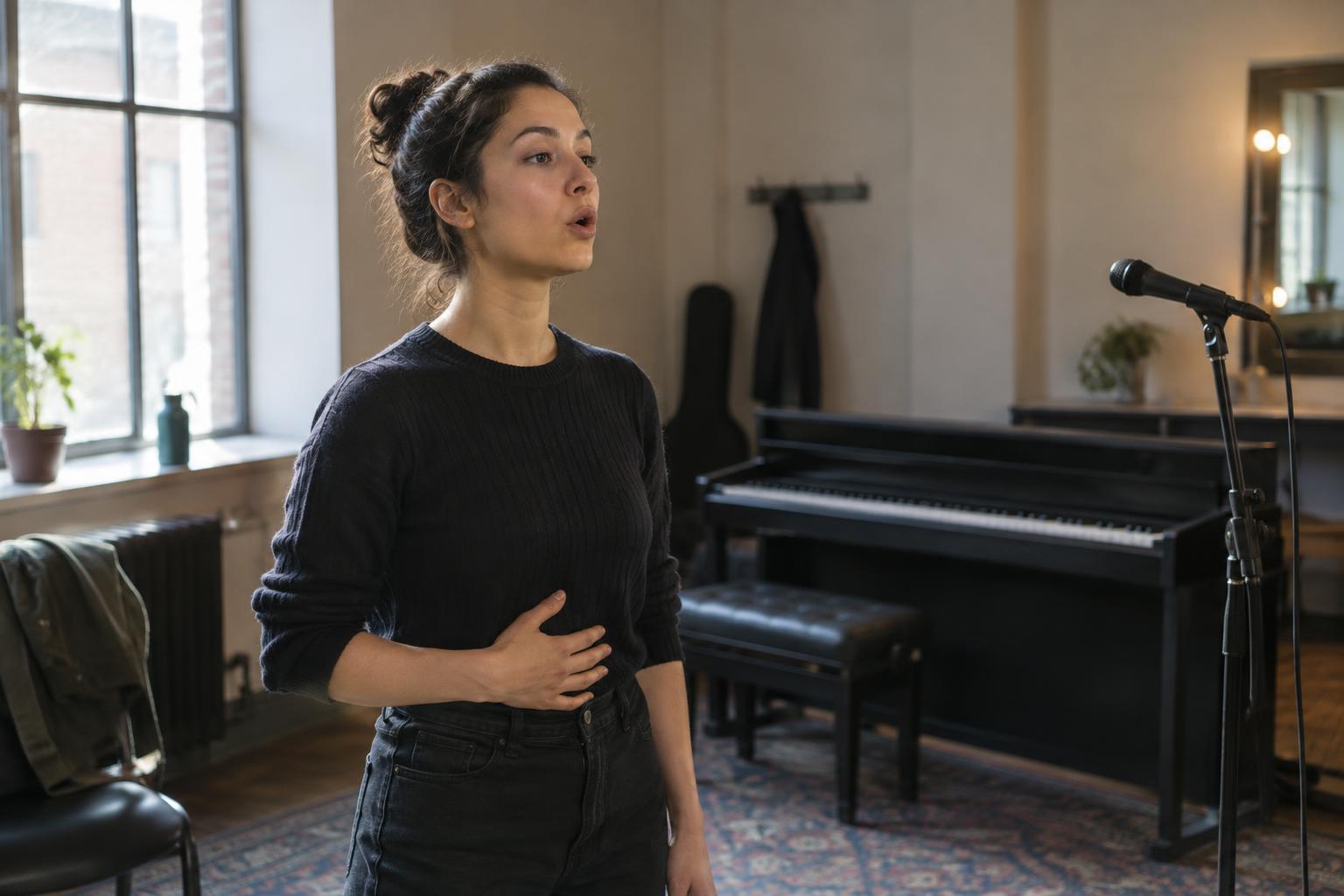
Breathing for singing involves coordination. The body makes space for an inhale, then manages the outgoing air while the vocal folds produce sound. A singer trying to preserve air by clamping down may make the line feel tight; one who lets air escape too freely may struggle to sustain its ending. The useful middle ground is a release that changes with the phrase instead of staying rigid.
A simple way to notice that release is to sing a comfortable line at an easy volume and listen to what happens near its end. Does the tone remain connected? Do the last consonants arrive clearly, or do they disappear as the singer hurries toward the next breath? The exercise is less about proving how long one can sing than about hearing where the line loses its shape. If a phrase consistently feels strained, changing the key, tempo or breath placement may be more productive than pushing harder.
Why diction and dynamics matter
Air is only one part of a sustained phrase. Vowels carry much of a sung line, while consonants give its words definition. If a singer leans heavily on every consonant, the line can become choppy; if the consonants vanish, listeners may miss the thought being expressed. Clear diction allows the phrase to move forward without making each syllable a separate event.
Volume also affects how a singer experiences a long line. Starting at full intensity can leave little room for a later rise, either in sound or emotion. A quieter beginning may allow the singer to build toward a key word while maintaining a coherent tone. In amplified performance, the microphone can help carry subtle changes to an audience, but it does not replace the singer’s need to coordinate breath, tone and timing.
The performance is the point
Long phrases are often admired as displays of technique, yet their strongest effect may be dramatic. An unbroken line can make a confession feel urgent, a melody feel suspended or a chorus feel communal. A well-placed breath can be just as expressive. It gives the listener a moment to absorb a word and can signal a turn in the song’s emotion.
The goal, then, is not to eliminate every breath. It is to make each one useful. Singers can study where a phrase wants to travel, practise it at a comfortable pace and notice whether its ending still communicates what its beginning promised. When breath planning supports the lyric rather than drawing attention to itself, a long phrase becomes more than an endurance feat: it becomes a complete musical thought.