Start with a reason, not an ornament
Accessories can do a surprising amount of storytelling. A bag suggests what someone expects to carry; a watch may hint at their relationship with time; a scarf can be practical, sentimental or deliberately theatrical. The detail becomes interesting when it belongs to the person wearing it, rather than appearing to have been added simply to fill an empty space in the frame.
A useful starting question is: why would this character choose, keep or tolerate this object? Someone who repairs their own clothes might carry a key ring that has gathered useful odds and ends. Someone trying to look more established than they feel might wear an accessory that seems just a little too formal for the setting. These choices do not need to announce a complete backstory. They give the performer something specific to live with and the audience something to notice if they look closely.
Let the accessory work within the whole silhouette
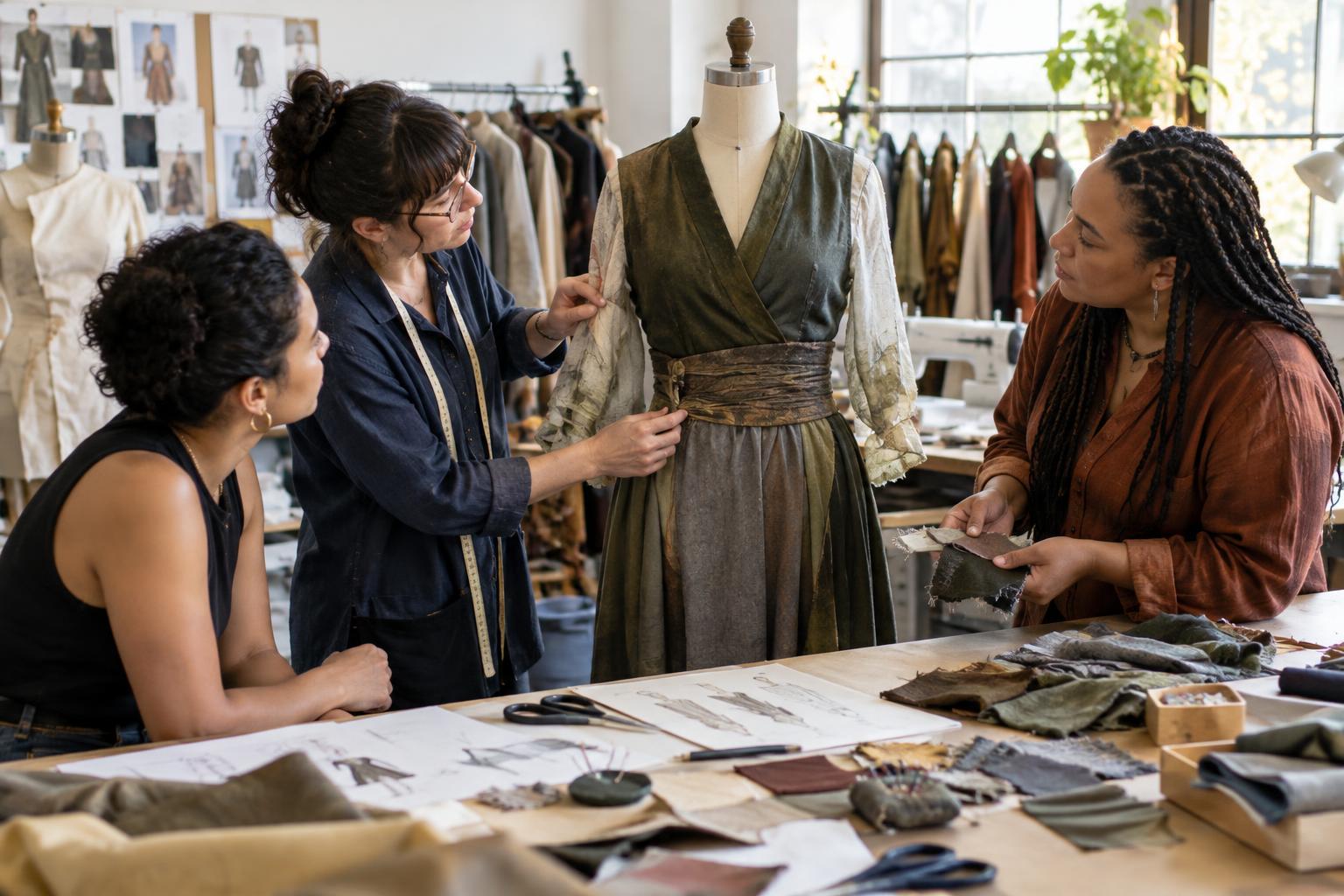
An accessory has to share space with the rest of the costume. Its size, color, texture and position affect where the eye goes first. A broad hat or bright necklace can become the visual center of a look, which may be exactly right for an entrance. If the scene depends on a face or a quiet gesture, a less conspicuous detail may serve it better. Restraint is not the absence of design; it is a decision about what deserves attention.
The same object can also read differently against different clothing. A polished brooch on an otherwise immaculate outfit may disappear into the overall impression of care. On a faded coat, it might suggest pride, memory or an attempt to hold on to an earlier version of oneself. Thinking about contrast helps an accessory add meaning without requiring several other pieces to repeat the message.
Use wear and handling to make a detail feel lived-in
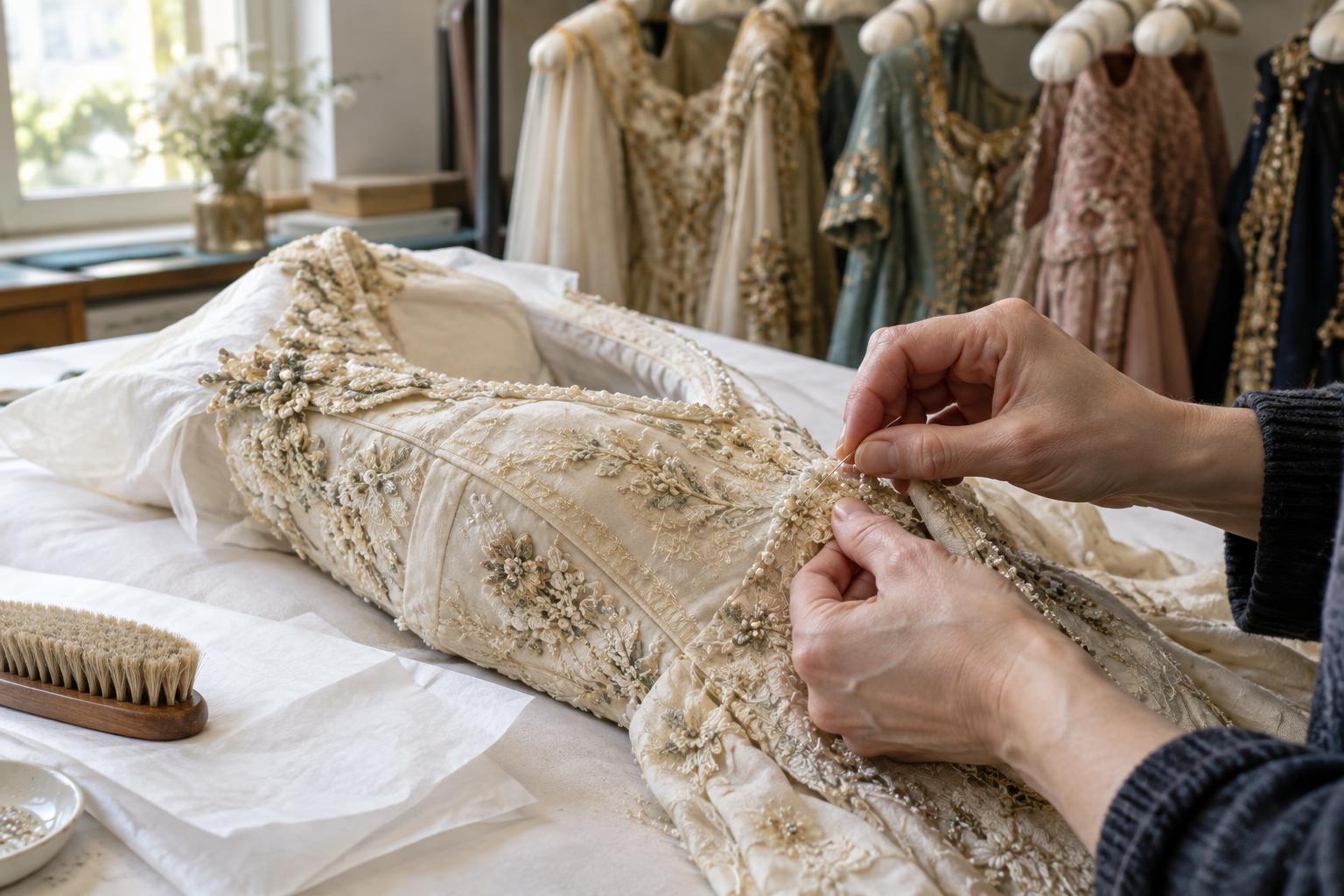
Condition can tell a story as clearly as style. Frayed edges, an uneven repair or a carefully maintained shine may suggest how long an object has been owned and how its owner treats it. Wear should still make sense for the character and setting. A scratch placed where a hand repeatedly touches a buckle feels more convincing than damage scattered across every item for a generally “rugged” effect.
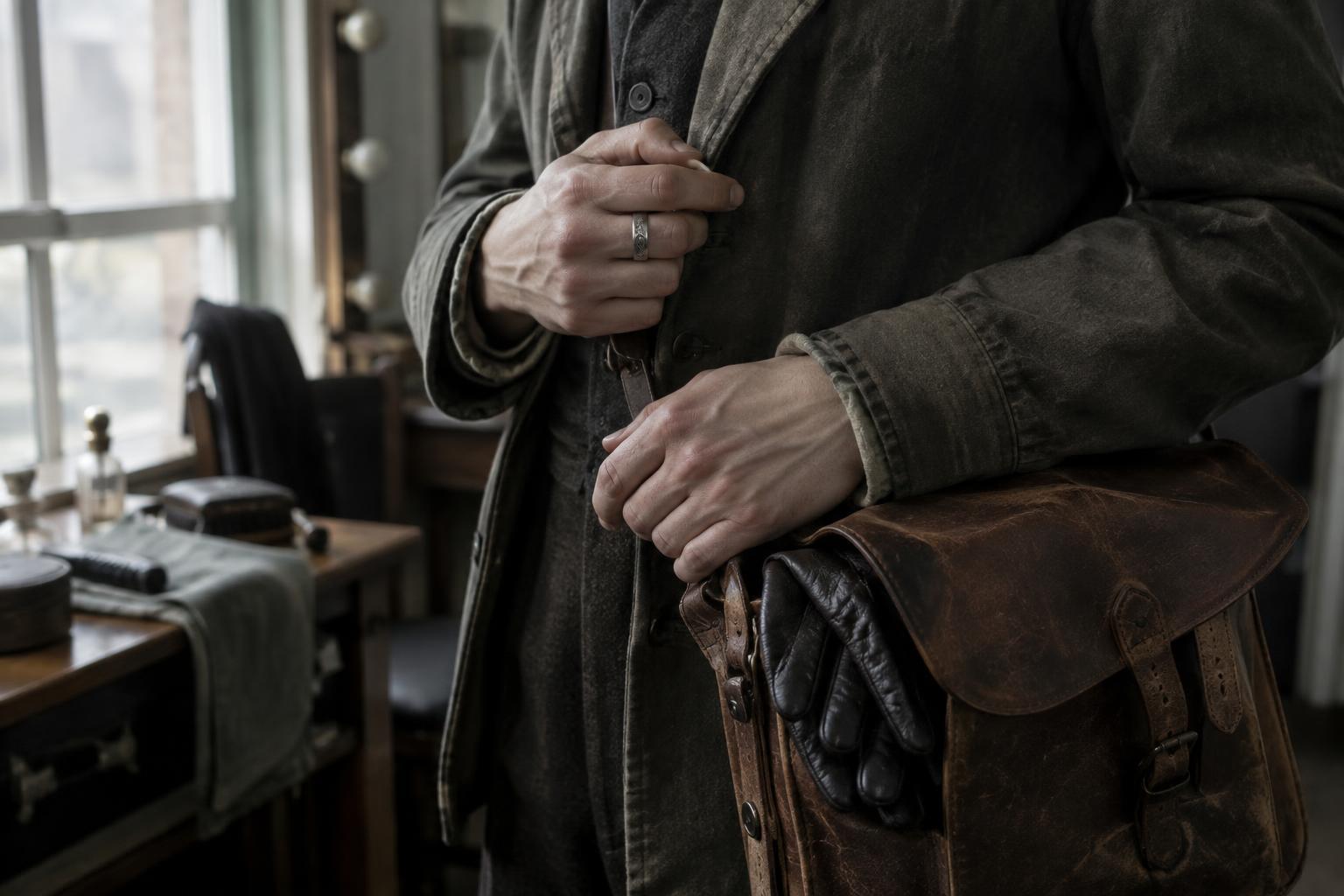
What the performer does with an accessory matters just as much as how it looks. A character might turn a ring while choosing their words, check a closed bag before leaving or remove gloves only when they feel safe. These actions need room to become part of the performance; too many expressive objects can make every movement seem significant. One accessory with a clear physical relationship to the character is often more useful than a collection of competing clues.
Make room for repetition and change
An accessory can gain meaning by returning across scenes. A familiar pendant may begin as an ordinary part of a character’s dress, then become noticeable when they leave it behind. A once-pristine pair of shoes can gradually show the demands of a journey. Repetition allows the audience to learn a visual habit, while a later change gives that habit dramatic weight.
Changes are most effective when they follow an understandable cause. If a character starts wearing someone else’s scarf, the shift might suggest affection, grief or simple necessity; the surrounding story and performance determine which reading feels strongest. Costume need not explain the change on its own. It can hold a question in view while dialogue, action and context answer it—or deliberately leave it open.
Check the detail from the audience’s point of view
A costume detail must function at the distance from which it will be seen. Onstage, a tiny inscription may be invisible, but the shape of a cane or the way a bag affects posture can communicate across a room. On screen, a close shot may give a small clasp or worn cuff more presence. In either setting, the accessory should still make sense when it is not being singled out. It is part of a person’s daily appearance before it is a clue.
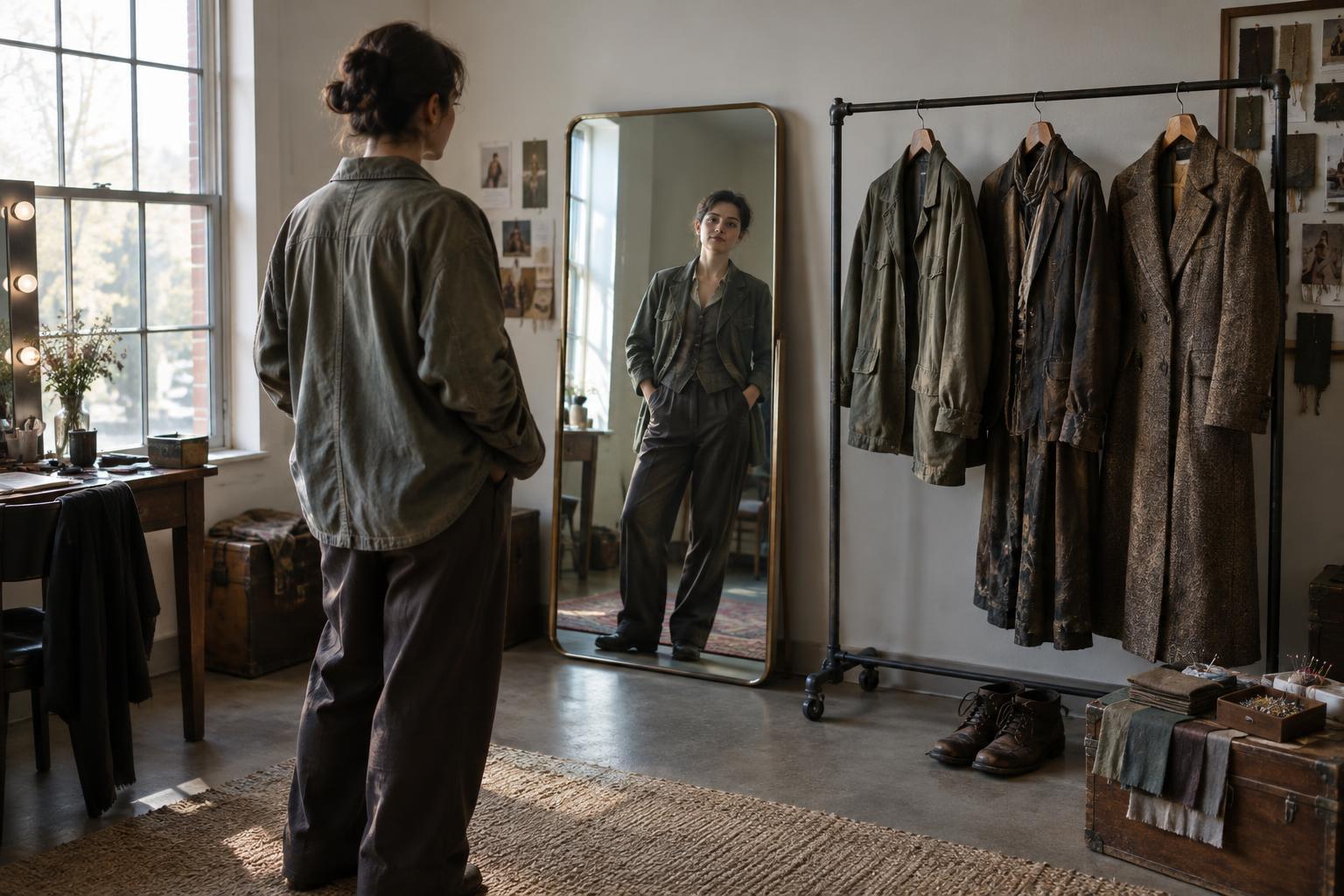
The final test is to look at the whole character in motion. Does the accessory help the performer move naturally? Does it draw attention at the right moment, or keep pulling focus from something more important? Could removing one piece make the remaining detail clearer? When accessory choices answer those questions, they can be memorable without being loud. The audience may not consciously inventory them, but they help make the character feel particular and believable.