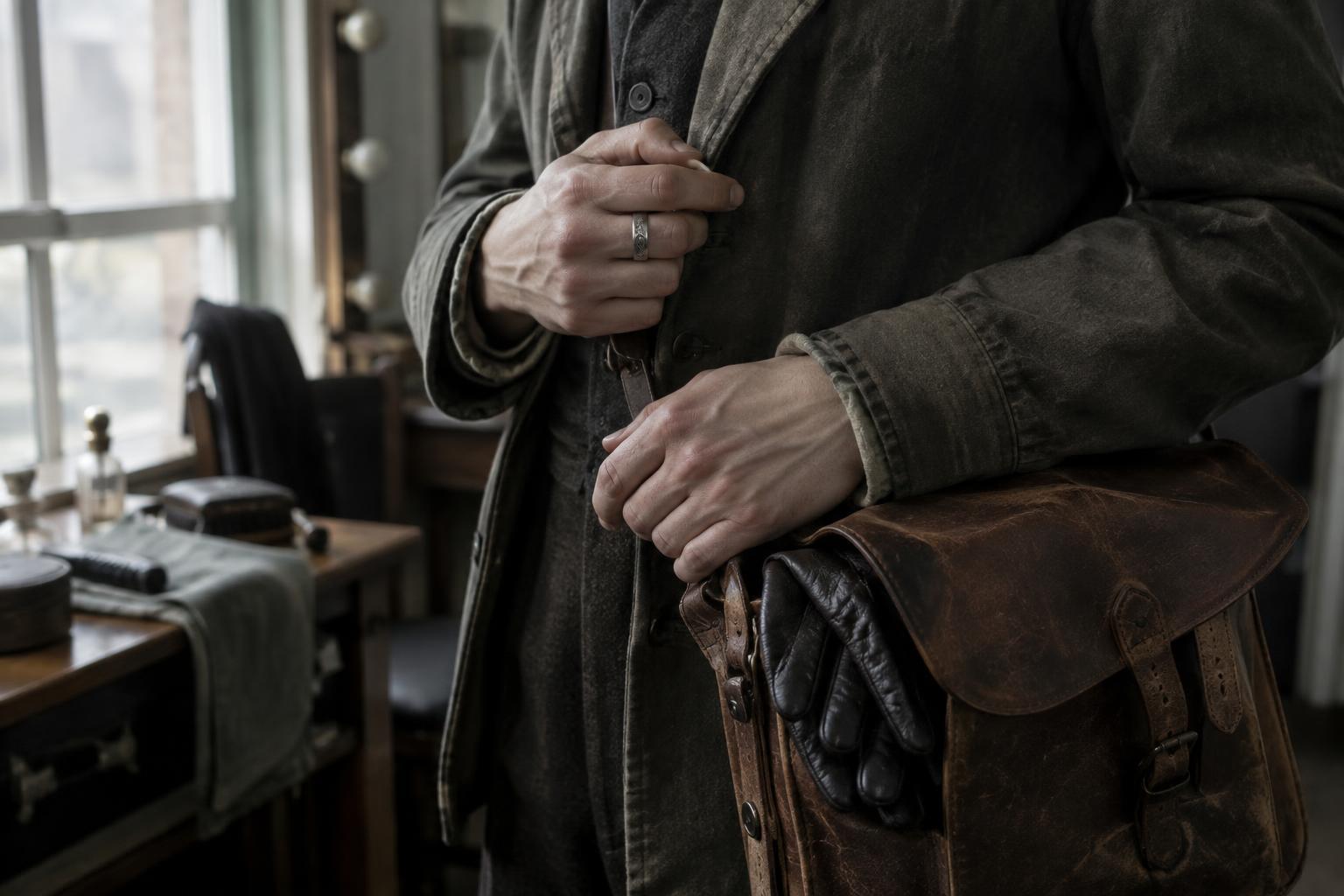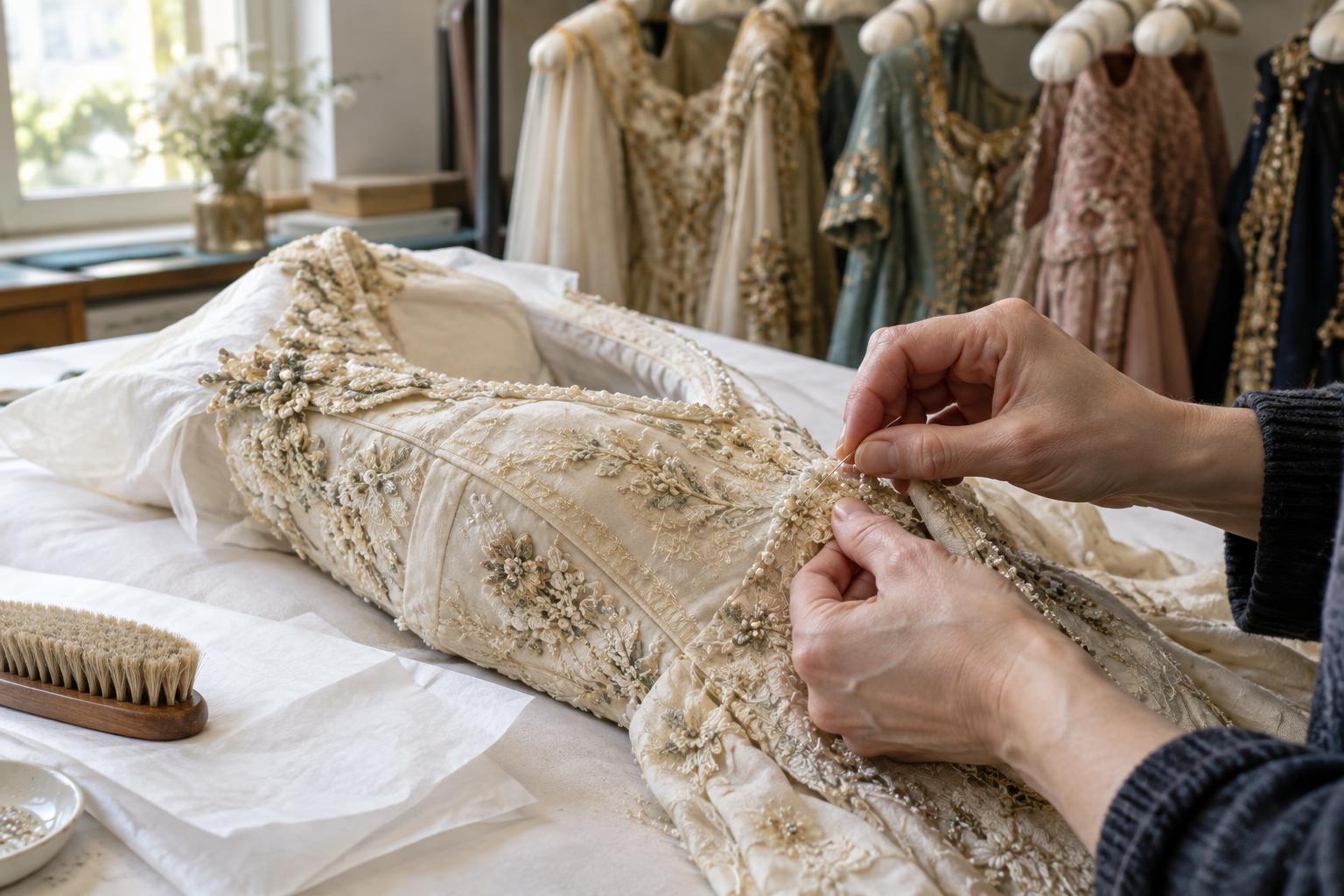
Care begins before the costume is worn
A delicate performance garment is more than a piece of clothing. It may carry beads, painted surfaces, fragile lace or several fabrics that react differently to moisture and heat. It also has a job to do: an actor must be able to move in it, change into it and wear it repeatedly while its appearance stays consistent. Cleaning is therefore only one part of costume care.
Before a garment enters regular use, a costume team can identify its materials, construction and vulnerable points. Notes and photographs help distinguish an intentional worn effect from new damage. Fastenings, hems and areas that rub against props or other garments deserve particular attention. Knowing how a costume was made helps the team decide what can be cleaned, what needs specialist handling and what should simply be protected from further wear.
The first steps after a performance
The most useful care often happens as soon as the costume comes off. Rather than putting a damp garment straight into a closed bag, a team can let it air in an appropriate space and check for perspiration, makeup transfer, loose trim or a small tear. Removing a costume carefully matters too: a hurried tug at a fastening can do more harm than an entire scene of wear.
Teams may keep underlayers or replaceable components between the performer and a hard-to-clean outer garment. These pieces can often be cared for separately, reducing how frequently the more fragile item needs treatment. When several people handle the same costume, clear notes about a new mark or repair help prevent a minor problem from being overlooked before the next fitting or performance.
Why cleaning is a case-by-case decision
There is no single safe wash cycle for a costume described as delicate. Water may affect dyes, adhesives, shaping or surface decoration, while heat and agitation can distort fabric and loosen embellishments. Even a removable-looking spot may sit across two materials that require different treatment. For that reason, costume teams generally assess the whole garment before attempting to clean one part of it.
A limited, carefully tested approach may be preferable to a full wash, but spot cleaning is not automatically harmless. Testing on a concealed area, avoiding unnecessary rubbing and allowing time for thorough drying can reduce risk. If the materials or previous treatments are uncertain, the sensible choice may be to consult someone experienced with that type of garment. The aim is not always to make a costume look new; it is to keep it usable without erasing the finish that makes it right for the production.
Repairs that respect the design
Delicate costumes also need routine maintenance. A loose bead, strained seam or failing hook is easier to address before it becomes a larger break. Repairs must hold through movement, but they should not change the garment’s silhouette or draw attention under performance lighting. Matching the original construction where practical can help a repair blend in and make future maintenance easier.
Some costumes are designed to look aged, distressed or uneven. In those cases, care requires a distinction between deliberate detail and accidental damage. A team may stabilize a frayed area rather than remove it, or reinforce a hidden stress point while leaving the visible surface alone. Reference photographs and continuity notes are especially useful when a garment must look the same across repeated performances or separate filming days.
Storage is part of the work
Once a costume is clean enough and completely dry, how it is stored affects its condition. A heavy garment may stretch on an unsuitable hanger; a structured piece may be crushed if folded carelessly. Trims can catch on neighboring costumes, and tightly packed storage makes it harder to notice damage. Supportive hanging or carefully padded flat storage depends on the garment’s weight, shape and materials.
Good costume care is less about one dramatic restoration than a series of small, informed decisions. Inspection, ventilation, restrained cleaning, timely repairs and suitable storage all help a fragile garment keep doing its job. For an audience, that work may be invisible. On stage or screen, its result is a costume that still looks like it belongs to the character, not like something the production has had to worry about.