Start with a visual baseline
A costume can tell us something about a character before the plot asks them to change. The first few appearances establish a visual baseline: what they reach for, how carefully they dress and how comfortable they seem in what they wear. A crisp outfit might suggest an effort to appear in control; a favorite worn jacket might suggest familiarity or attachment. Neither detail has one fixed meaning. Its value comes from giving the audience something to notice when the character later makes a different choice.
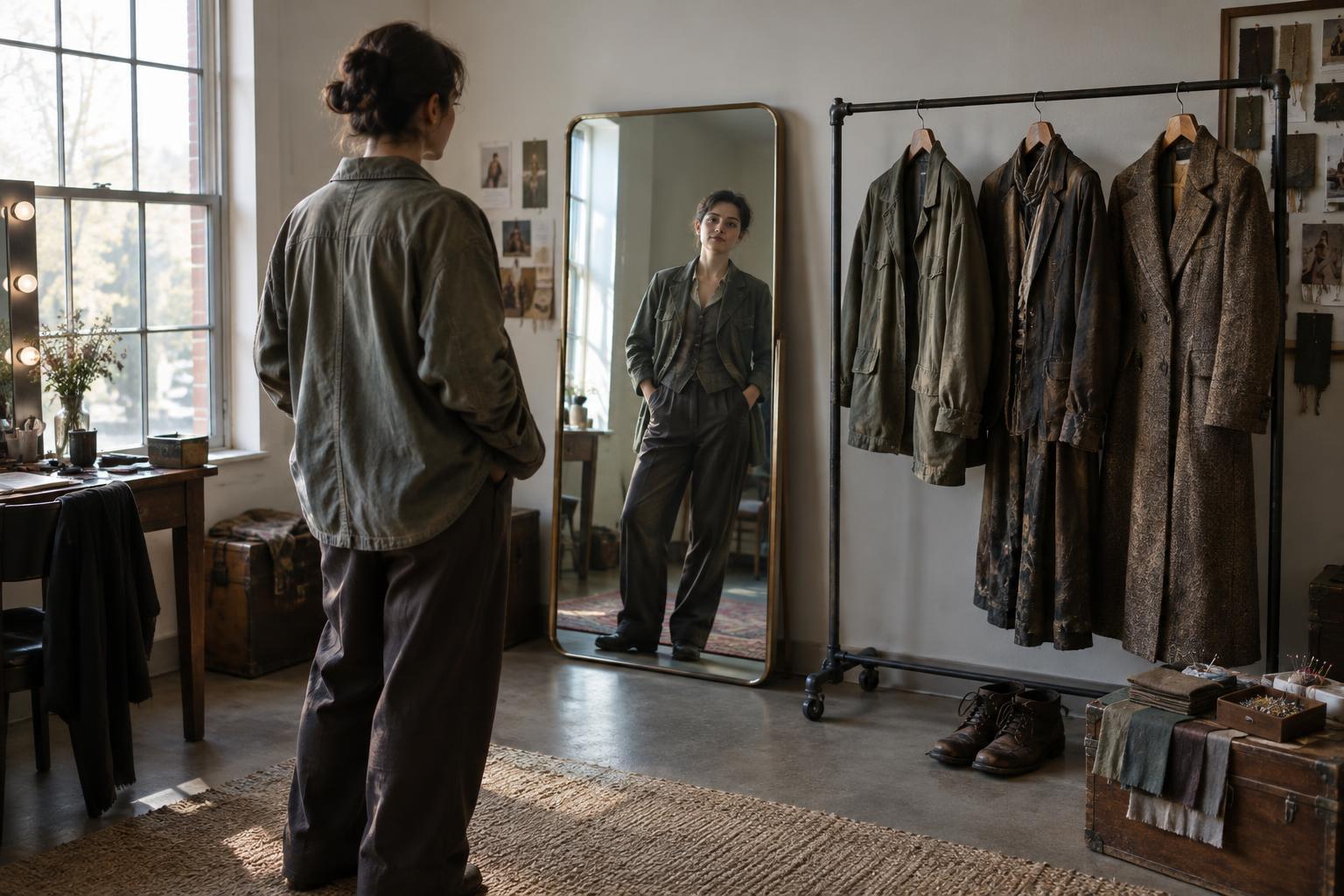
A useful baseline is specific rather than simply stylish. Consider a character who always buttons a coat fully, even indoors. If they eventually leave it open, the change may register as ease or vulnerability—but only if the story has made that habit visible. Costume design works with acting here. The same coat can communicate restraint when a performer holds it tightly and relief when they let it fall loose.
Let small changes carry weight
A transformation does not require a dramatic makeover. Fit, layering and condition can shift gradually as a character’s circumstances change. Someone who once dressed for approval may begin choosing clothes they can move in. Another character might keep the same formal wardrobe but stop maintaining it as carefully. These adjustments invite viewers to infer what has changed without turning the costume into an explanation of the plot.
Gradual shifts can be especially effective across a long story. A sleeve rolled up for one difficult task may become a habit. An accessory borrowed from another person may enter regular use. By the time the audience recognizes a new pattern, the costume has helped make the character’s development feel lived-in. The details still need to make sense within the story’s setting, resources and daily routine; otherwise, they risk feeling like decoration added for the viewer’s benefit.
Use color as a relationship, not a code
Color can help track change, but it rarely works as a simple dictionary in which one shade always means one emotion. A bright garment can express confidence, disguise anxiety or meet an expectation imposed by someone else. What matters is how a color sits within the production’s wider palette. A character who initially blends into their surroundings may become more visually distinct, or the reverse may happen as they try to belong.
Color also connects characters. Similar tones might suggest shared loyalties, while a garment that contrasts with a group can make a separation visible. Lighting, sets and the clothes worn by others all affect what the audience sees, so a costume’s meaning is created in context. When watching a scene, it is often more useful to ask, “What has changed around this person?” than to ask what a single color supposedly symbolizes.
Make repetition reveal attachment
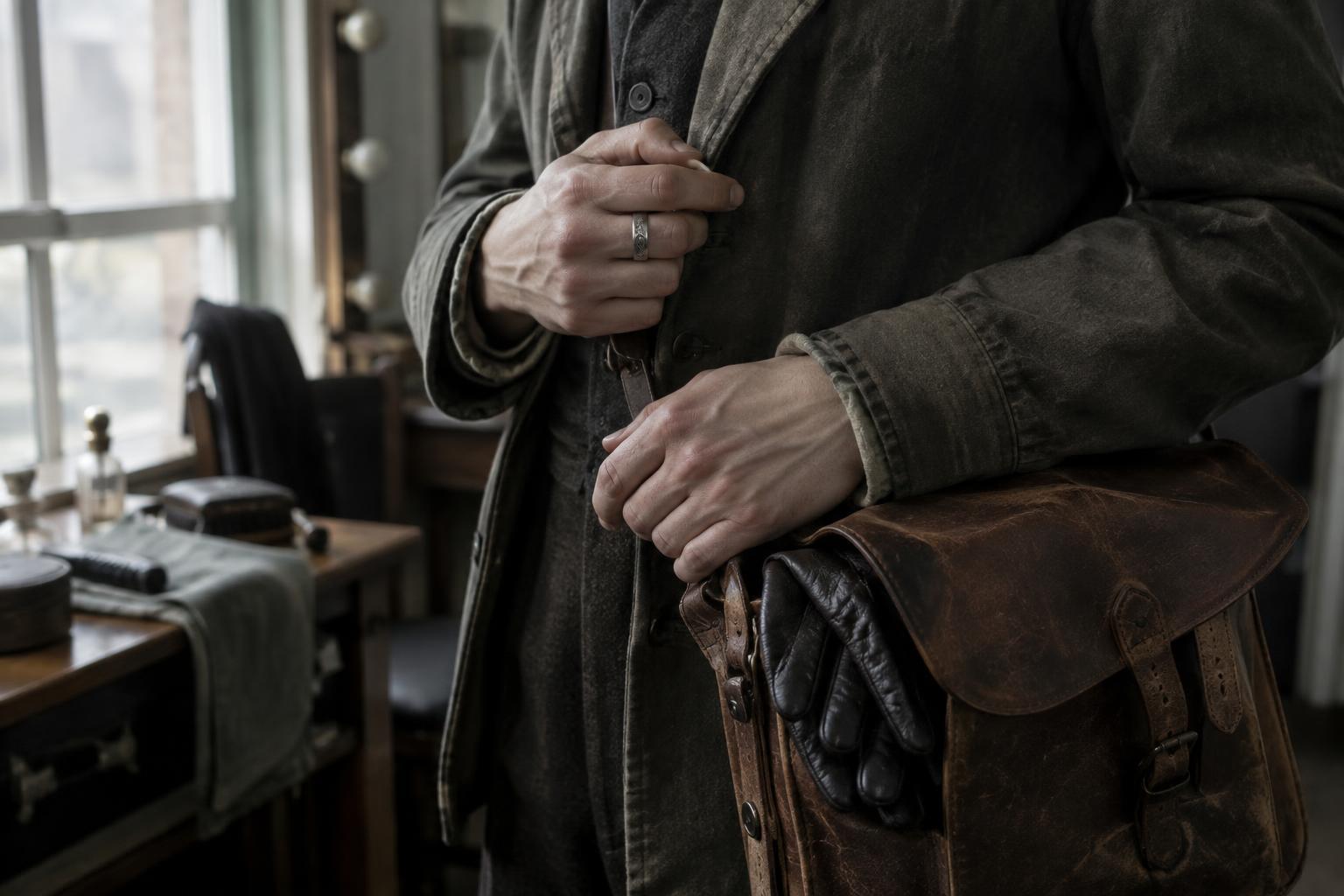
Repeating a garment gives it a history. A jacket worn through several turning points can become more revealing than a succession of new looks, particularly if its use changes. At first it might function as protection or a uniform; later, the character may wear it out of habit, lend it to someone or choose to leave it behind. The object remains recognizable, allowing the audience to measure change against something familiar.
Wear and repair matter for the same reason. A scuff, altered hem or replaced button can suggest that life has continued between scenes. Such details are most persuasive when they follow from actions the audience can understand. They need not be pointed out in dialogue. Part of the pleasure of costume storytelling is discovering that an item has accumulated meaning while the narrative has moved forward.
Look for choices that complicate the story
The strongest costume arc is not always a move from dull clothes to expressive ones. A character may dress more boldly while feeling less secure, adopt a uniform for reasons of belonging or return to an old outfit with a new sense of ownership. Clothing can show what someone wants others to believe as well as what they feel. That gap gives a performer room to create tension between appearance and behavior.
To follow a costume arc, pay attention to what a character wears at moments of choice, not just at major entrances. Ask what they repeat, what they abandon and whether a change appears voluntary. Then consider the practical question: could this person plausibly choose and obtain these clothes? When costume, setting and performance support one another, a wardrobe shift can feel less like a symbol placed on a character and more like a decision the character has made.