A different mix for every position
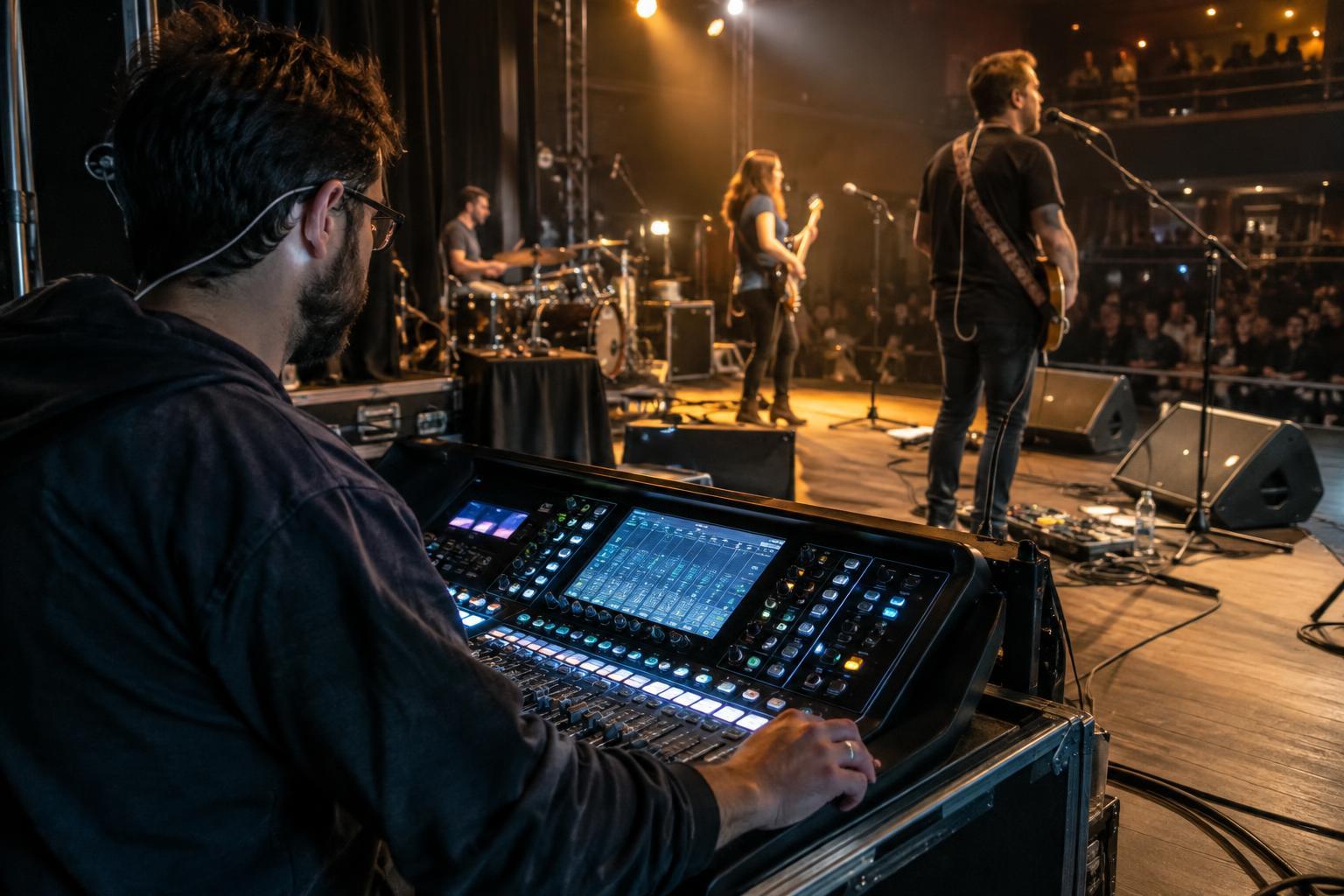
At a concert, the sound reaching the audience is not necessarily the sound a singer or drummer hears. Instruments, amplifiers, other performers and the room all reach different parts of the stage in different ways. A singer may struggle to hear the pitch of their own voice over a drum kit, while the drummer may need a clear vocal cue to follow the shape of a song. The monitor engineer’s job is to turn those competing sounds into mixes performers can use.
This work is distinct from mixing for the audience. A front-of-house engineer shapes what people hear in the room; a monitor engineer concentrates on what performers hear through floor speakers, often called wedges, or through in-ear monitors. Each performer may ask for a different balance. A guitarist might want more lead vocal to follow an entrance, while a keyboard player might rely on bass and drums to lock in a groove. The aim is not always a polished recording-style mix. It is a dependable guide that makes the performance easier to navigate.
Building the sound at soundcheck
A monitor mix starts with the available signals: vocal microphones, instrument microphones, direct connections and any playback used in the show. During soundcheck, the engineer checks that each source reaches the correct destination and listens for problems such as a noisy connection or a microphone picking up more of a neighboring instrument than expected. The performers then help set priorities. “More vocal” is useful feedback, but finding out which vocal, in which song and against which instrument leads to a more helpful adjustment.
Clarity often matters more than sheer volume. Turning everything up can make individual parts harder to distinguish, particularly when sound from wedges spills into microphones. The engineer may lower less important sources, change a wedge’s position or adjust the tone of a signal so a crucial cue stands out. With in-ear monitors, the separation from room sound can be useful, but some performers prefer a little sense of the surrounding stage or audience. Where the setup allows it, ambient microphones can bring some of that space into their mix.
A good soundcheck also establishes a shared language. Performers may describe what they need in musical terms rather than technical ones: a stronger pulse, a clearer starting note or more of a bandmate’s harmony. The engineer translates those requests into changes that work for the person asking without creating problems elsewhere. Once a useful starting mix is in place, it becomes a reference point for the show rather than a setting that must never change.
Choosing between wedges and in-ear monitors
Floor wedges project sound toward performers from the stage. They let musicians hear a mix while retaining much of the natural sound around them, and performers can often move closer to or farther from a speaker to change what they hear. Their sound can also enter open microphones, however, raising the possibility of feedback: the familiar ringing that occurs when amplified sound repeatedly returns to a microphone. Monitor engineers manage that risk through placement, sensible levels and careful adjustments.
In-ear monitors deliver a mix through earpieces. They can give performers a consistent reference as they move around, provided the wireless or wired system remains reliable. They may also allow more separation between an individual’s mix and the sound onstage. But that separation changes how a performance feels; a mix that seems clear in isolation can feel disconnected from the band or audience. Neither format is automatically better for every act. Some productions use both, and the engineer’s task is to make the chosen setup feel practical and familiar to the people performing.
Keeping the mix steady when the show changes
Live performances rarely unfold exactly like soundcheck. A singer may move to a different part of the stage, a guest may join for one song or an instrument may suddenly become louder. The monitor engineer listens, watches and responds while preserving the cues performers already depend on. A small change made at the right moment can be more valuable than a dramatic overhaul that leaves someone searching for their place.
Communication is part of that responsiveness. Before the show, an engineer may agree on hand signals for simple requests and confirm how spoken cues will reach the performers. During the set, they must distinguish between a momentary change and a problem that needs attention. The best monitor work may be almost invisible to an audience: performers can hear their entrances, respond to one another and focus outward instead of fighting to find the song. Behind that ease is a mix built around listening to what each person needs.