Why a background detail can become a production decision
A character walks into a café, and the camera follows them past framed prints, a painted mural and a row of recognizable drink cans. To a viewer, these objects help the place feel lived in. To the production team, each may raise a different question: Who created it? Who owns the relevant rights? Was its appearance approved, or would another object work just as well?
The work of answering those questions is often called clearance. It is not a single permission slip for everything visible in a shot. Artwork, packaging, logos and location signage can involve different people and agreements. The questions also depend on how an object is used: a blurred poster deep in the background presents a different practical problem from a painting that fills the frame while a character discusses it.
Artwork: ownership is not always permission to film
Buying or borrowing a physical artwork does not necessarily give a production permission to reproduce its image in a finished film or show. The person who owns a canvas, for example, may not control the copyright in the painting. A team planning to feature a work prominently may need to identify the rights holder and seek a license that fits the intended use. The details can vary by work, agreement and jurisdiction.
This is one reason set decorators and art departments benefit from talking with clearance staff early. They can choose work made for the production, commission an artist under a suitable agreement, license existing work, or select material whose rights status has been checked. Commissioning is not automatically simpler: the paperwork still needs to address how the work may appear in the production and related promotional material. Clear records help everyone know what can remain in a shot when filming or editing plans change.
Brands: visibility is not the same as endorsement
Logos and product designs create another set of decisions. A recognizable brand may make a setting feel specific, but its presence does not automatically mean the brand paid for, approved or endorses the production. Conversely, filming any visible logo does not automatically require a deal with its owner. Context matters, including whether a product is merely present, plays a role in the story or could leave viewers with a misleading impression of a relationship.
Productions may decide to seek approval, use an unbranded alternative, create fictional packaging or adjust the framing. Those choices are creative as well as practical. A fictional label can give a production control over its visual world; a real item can quickly establish the texture of an everyday place. Either choice needs consistency. If a prop appears across several angles or shooting days, the team must be able to reproduce it without a label suddenly changing between cuts.
Clearance starts before the camera rolls
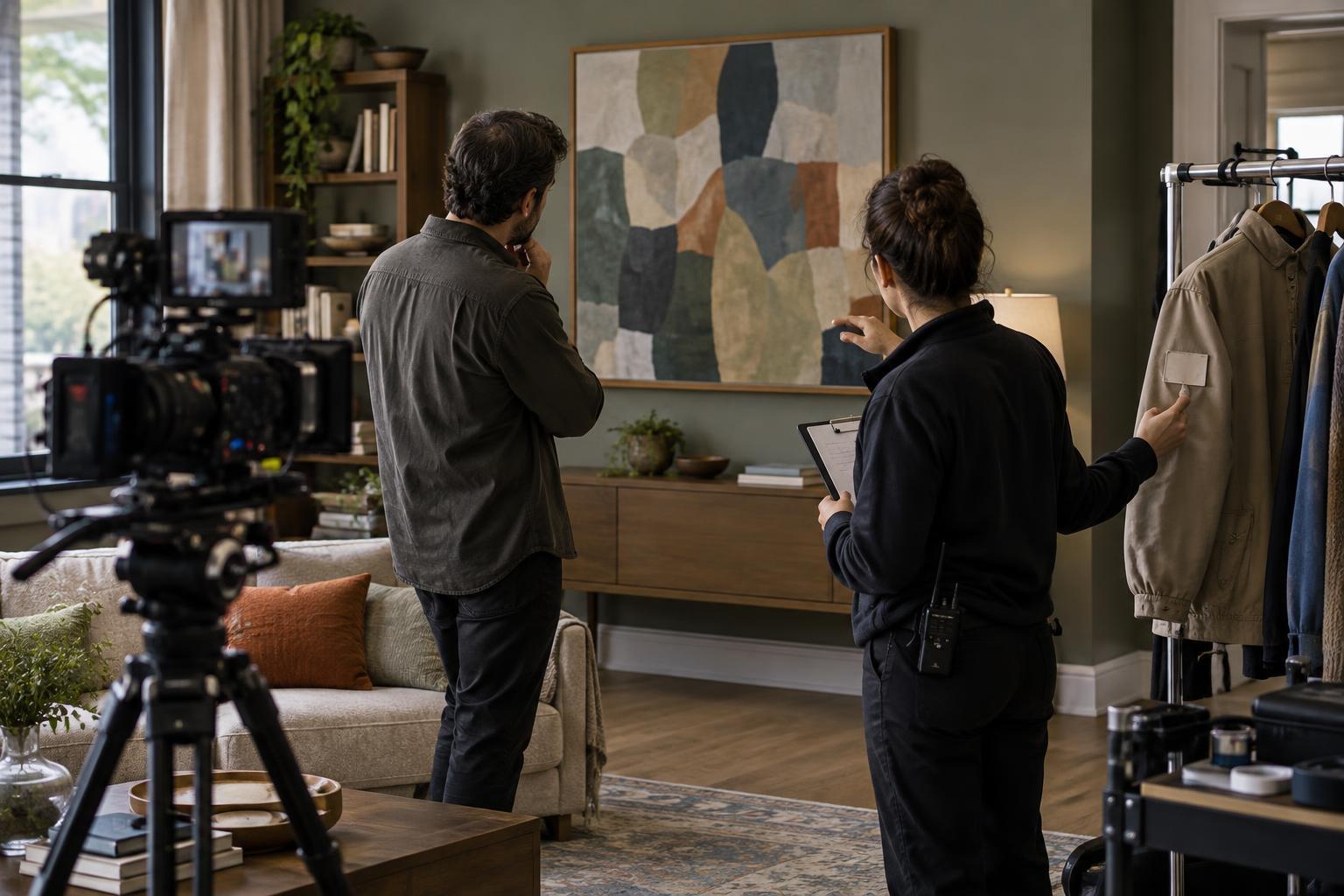
Good planning begins with a close reading of the script and a look at proposed locations, costumes and set dressing. A script might call for a character to study a magazine cover, wear a distinctive graphic shirt or hold up a record sleeve. Each of those details is more likely to attract attention than a similar object glimpsed in a wide shot. Flagging such moments early gives the director and designers time to decide what the audience needs to see.
The camera test can reveal issues a written list misses. A sign that seemed unobtrusive during a location visit might sit directly behind an actor’s face; a mural may dominate a reverse angle. Teams can then ask about permission, move the camera, dress over the item or replace it. Keeping notes about approved items and any limits on their use makes later decisions easier, especially when a scene is reshot or a close-up is added.
What happens when an issue appears in the edit
Not every clearance question is resolved on set. Editors may discover that an artwork is more visible than expected or that a branded object becomes prominent when a scene is shortened. Depending on the circumstances, a production might confirm its existing permission, obtain additional permission, choose a different take, crop the frame, obscure the item or use visual effects. Each fix has a cost in time, money or storytelling clarity.
That is why clearance is best understood as part of visual storytelling rather than a final administrative hurdle. Early conversations let creative teams keep the details that matter and find substitutes for those that do not. The aim is not to empty every frame of familiar culture; it is to know which details carry meaning, which carry uncertainty and which can be changed without losing the scene.