The cue script is a map, not a stopwatch
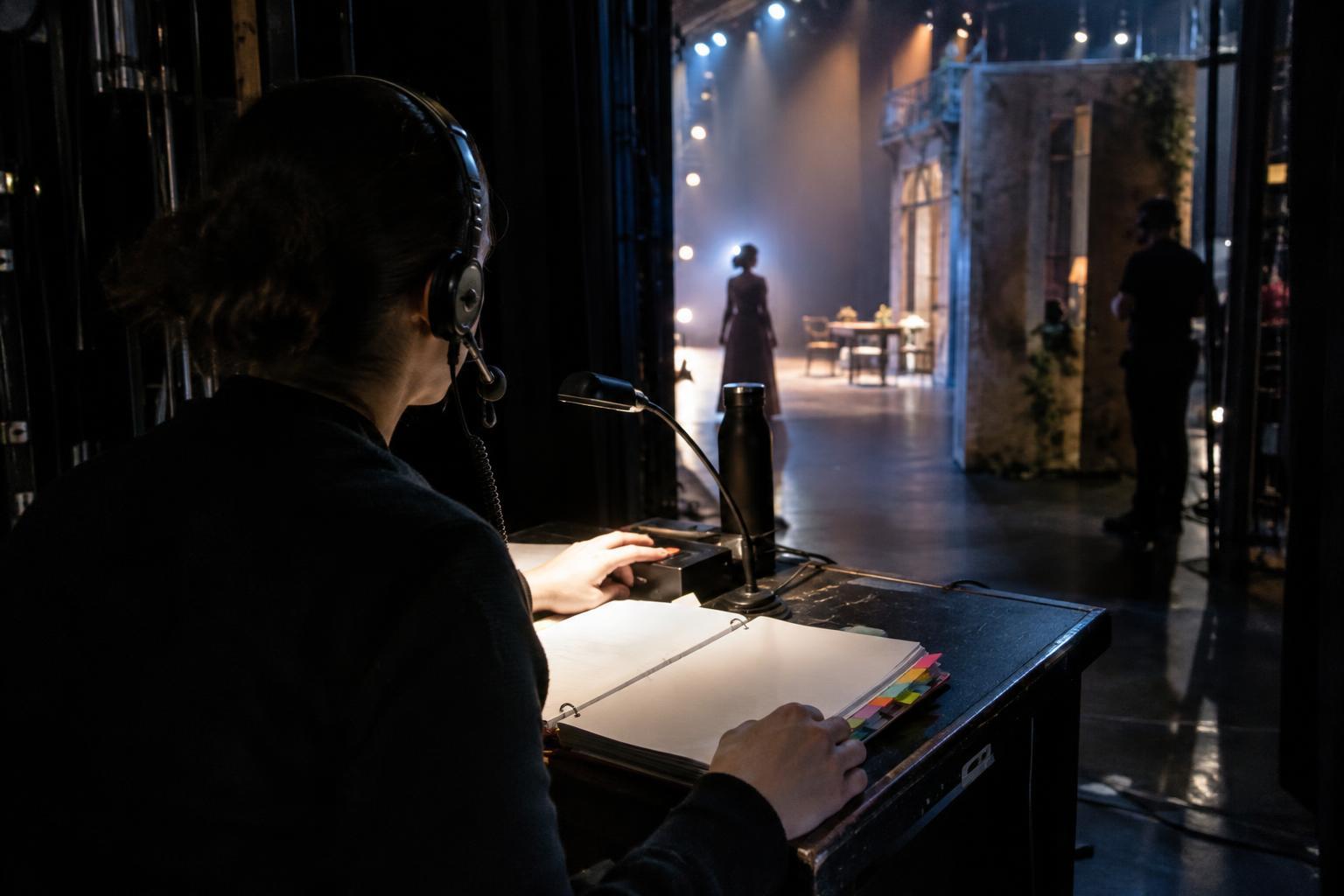
A cue is an action that needs a signal: a light changes, music begins, a projection appears or a scenic piece moves. During rehearsals, the stage manager records these moments in a prompt script, often called a prompt book. Beside the dialogue or stage directions, they mark where each cue should happen and which department is responsible. The result is a working map of the show.
Some cues follow a precise word or movement. Others depend on a performer reaching a position, a piece of scenery clearing the stage or a musical phrase resolving. That distinction matters because live performances do not run at exactly the same pace every night. Rather than rely only on elapsed time, a stage manager follows what is actually happening onstage.
Standby prepares the team; go starts the action
The stage manager typically speaks to crew members through a headset system. Before an action is due, they give a standby call naming the relevant cues, such as a lighting change and a sound effect. This alerts the operators to find their places and prepare. When the chosen moment arrives, the stage manager calls “go.” The operator then carries out the cue.
A clear call separates preparation from execution. Calling “go” too early may reveal a scene change or cut across an actor’s line; calling it too late may leave a transition hanging. Stage managers therefore watch and listen for the agreed trigger. If several departments must act together, a single go call can bring their prepared cues into the same moment.
Rehearsal turns artistic choices into repeatable signals
Cue calling begins well before an audience arrives. In technical rehearsals, performers and crew work through transitions so the team can establish triggers, test equipment and adjust timing. A designer might want a light to fade as an actor turns toward a doorway, for example. Rehearsal reveals whether that turn is a dependable trigger and whether the fade supports the scene.
The stage manager updates the prompt script as choices change. They may add notes about a pause before a line, a sightline needed to see an entrance or an order in which cues must occur. The aim is not to make every performance mechanically identical. It is to give the crew a shared plan that can follow the performers while preserving the intended sequence.
Calling a show means listening beyond the script
During a performance, the stage manager tracks dialogue, music and movement while monitoring information from the crew. A sound operator may be ready with an effect, but an actor’s delivery determines the moment to play it. In a scene change, the next lighting look might need to wait until the stage is clear. The stage manager’s job is to connect those separate observations to the next call.
The exact arrangement varies by production. A smaller show may have one person calling cues and handling other backstage duties, while a larger one may divide responsibilities among a calling stage manager and assistants. Whatever the structure, concise communication helps: everyone needs to know which cue is coming, when it is released and whether a change to the plan has been communicated.
When something changes, the priority is a safe, coherent show
An entrance can be delayed, a prop can land in an unexpected place or equipment may not respond as planned. A stage manager cannot solve every problem by pushing the next cue forward. They may need to hold an action, skip a cue that no longer makes sense or coordinate with the crew before proceeding. Physical effects and moving scenery deserve particular care because timing can affect the people nearby.
This is why cue calling is more than reading notes aloud. It combines preparation with attention to the performance unfolding in real time. When it works well, the audience notices the rhythm of a scene rather than the network of signals behind it. The stage manager helps make that possible by giving each department a reliable moment to act—and knowing when to wait.