Start with a person, not a period
Period clothing is often reduced to a few instantly recognizable signals: a dramatic hat, a narrow waist, an elaborate collar. Those shapes can help locate a story, but they cannot tell us how everyone in a particular place dressed. Before collecting reference images, define the character’s circumstances. What do they do each day? What can they afford? Who sees them, and when do they need to make an impression? A garment that feels right for a formal entrance may make little sense for a long shift at work.
The production’s setting matters just as much as its year. Region, season, occupation, age, community and social expectations all shape clothing choices. A useful research question is not simply “What did people wear?” but “What might this person choose, keep, repair or be expected to wear here?” That shift turns costume from a visual label into part of a character’s life.
Look beyond the most reproduced images
Portraits, fashion plates and surviving garments can offer valuable details, but each shows a particular slice of dress. A formal portrait may record someone at their most carefully presented; a fashion illustration may show an aspiration rather than a typical outfit. Museum collections may preserve special garments more readily than items worn hard and discarded. None of these references needs to be rejected. Each becomes more useful when the designer asks what it shows, whom it represents and what it leaves out.
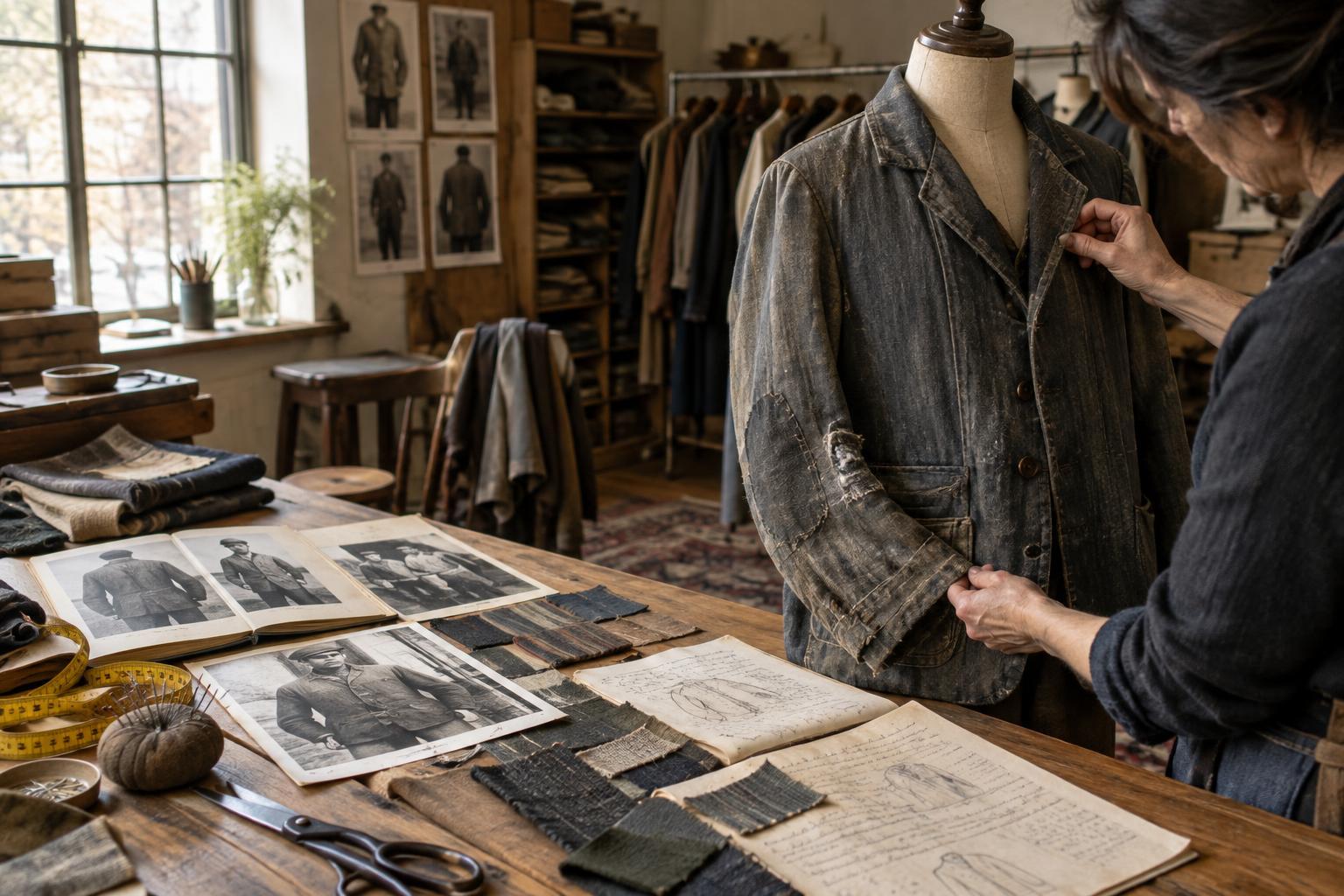
Build a reference set with different kinds of evidence where possible: garments and their construction, photographs or illustrations of everyday settings, written descriptions of dress, and images of people at work or at leisure. Note where references agree and where they differ. If a detail appears only in a narrow group of images, it may belong to that group rather than to an entire era. Keeping those distinctions visible helps prevent one striking image from becoming the template for every character.
Pay attention to use, wear and change
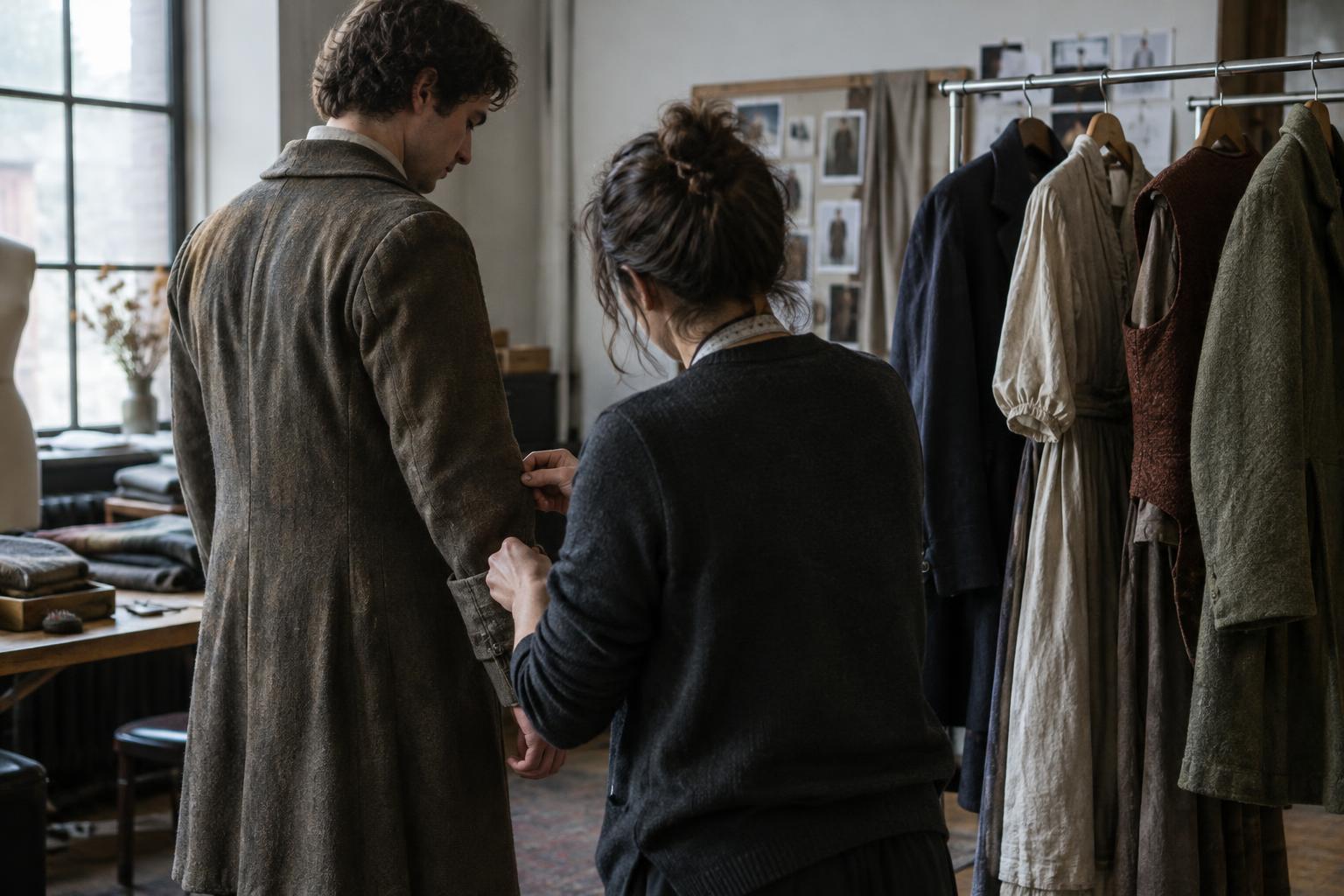
Clothes have histories within a story. A person might alter a hem, reuse a coat, save a good outfit for public occasions or wear an older style because it still serves them. Clothing can also carry signs of care without looking distressed: a carefully brushed jacket or neatly replaced button says something different from a pristine garment. Such choices should come from the character and the setting, not from a rule that all past clothing must look worn.
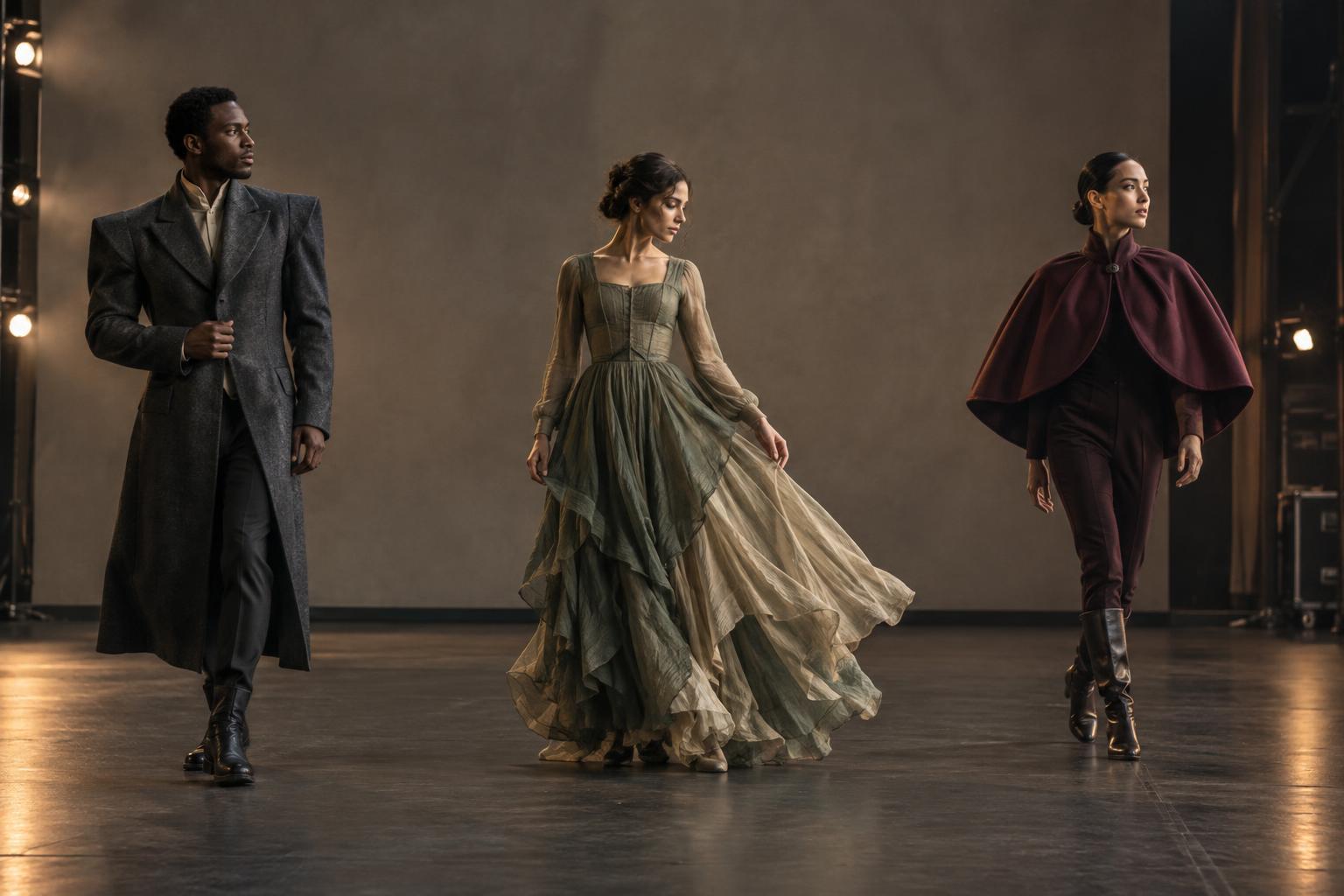
It is worth asking how a costume works through a full scene. Can the performer sit, reach, dance or handle a prop? Where does the fabric pull or fold? How does an outer layer come off, and what does that reveal underneath? These practical questions are not separate from historical research. They help a costume feel inhabited rather than displayed, while giving performers physical details they can use.
Separate a useful shortcut from a stereotype
Film and stage sometimes need a clear visual idea that an audience can grasp quickly. The problem is not simplification itself; it is allowing a familiar image to stand in for every person from a place or period. If all wealthy characters wear immaculate finery, all working characters wear drab rags, or an entire community is represented by one decorative motif, the design loses distinctions the story could use.
Test each strong visual choice by asking what it communicates and whether a quieter alternative would be more specific. Contrast can come from fit, condition, fabric, layering or the way someone wears an item, rather than from an exaggerated period outline. When a production deliberately departs from likely historical dress, that choice can still be coherent. It works best when the team knows what it is changing and why, instead of mistaking a theatrical convention for a historical fact.
Make the research usable for the whole production
A folder of attractive references is only the beginning. Organize findings around decisions the team must make: which clothes are for public life, which are for private moments, what is new or inherited, and which details matter to movement or a change of scene. Brief notes explaining why an image is relevant can be more helpful than a large collection with no context. They also make it easier to spot when two references answer different questions.
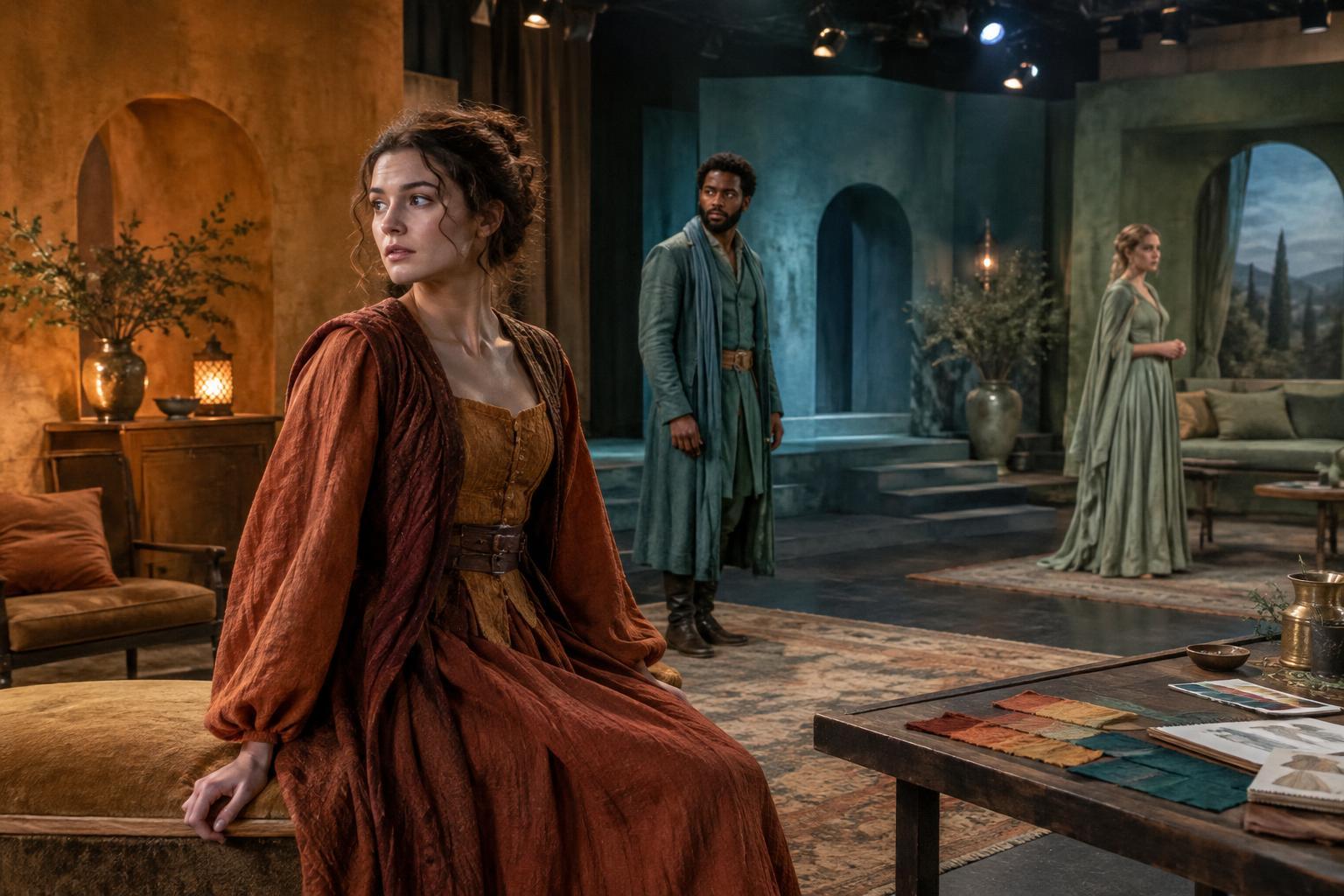
Share those choices with the director, performers, hair and makeup team, and anyone responsible for sets or lighting. Color and texture may read differently under stage light or against a particular background; a garment’s cut may affect a gesture the performer has developed. Period research should support those conversations, not end them. The result need not resemble a museum display. It should give the audience a believable sense that these characters have dressed themselves for lives continuing beyond the frame or stage.