The shape that arrives before the detail
A character enters, and the audience reads the outline before it can make out a button, print or piece of jewelry. That outline is the costume’s silhouette: the broad shape made by shoulders, waist, sleeves, hem and the space between garment and body. On a stage, it may be visible from the back row. On screen, it can register in a brief wide shot or against a doorway.
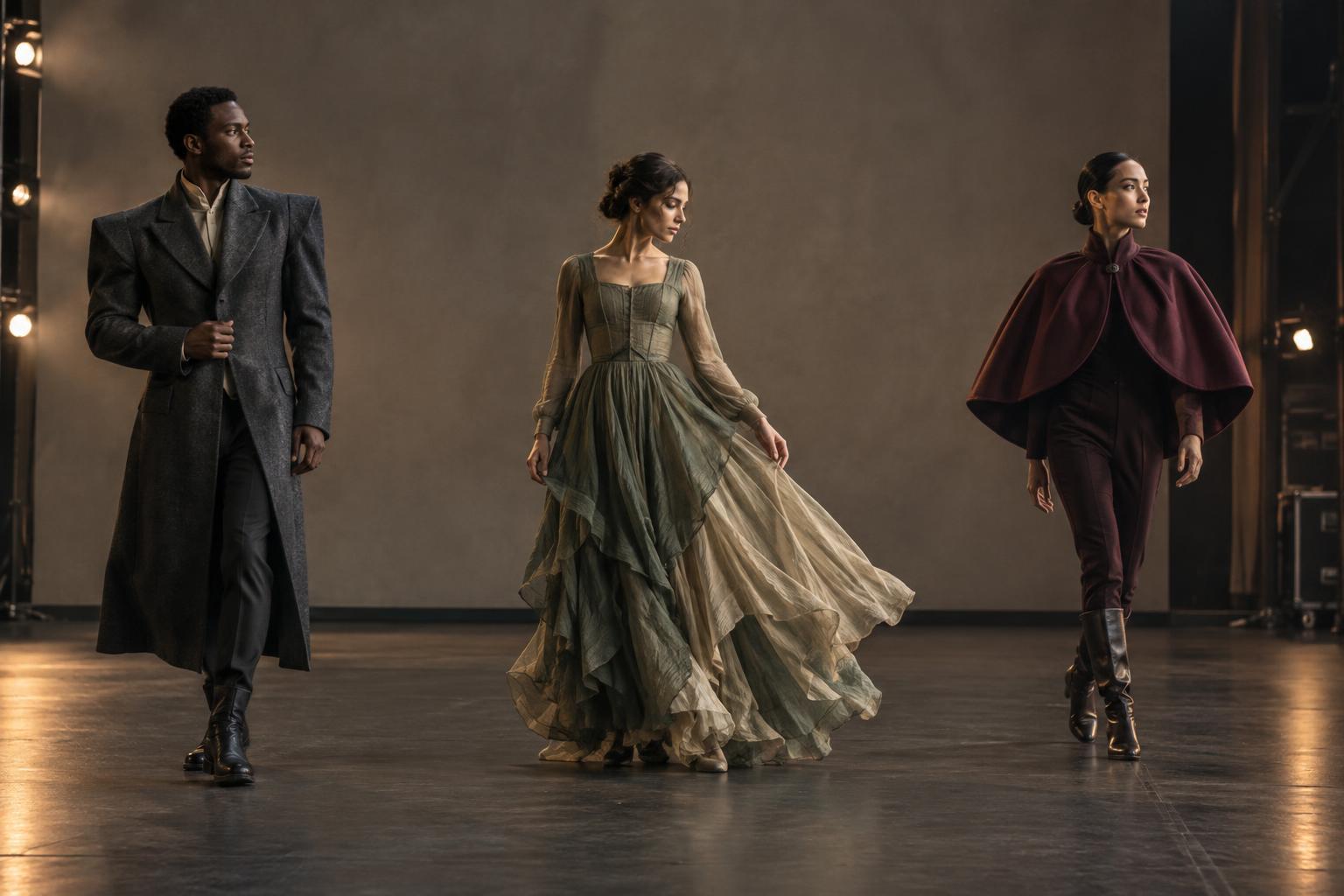
Silhouette is useful because it gives an audience a starting point, not a complete explanation. A long, narrow coat might make a figure seem contained or severe; a wide skirt might give an entrance sweep and presence. Neither shape has one permanent meaning. Performance, setting, lighting and the other costumes in the scene all affect what viewers perceive.
Proportion suggests a way of occupying space
One way to read a silhouette is to ask where its visual weight sits. Broad shoulders draw attention upward and may make a character appear imposing, protected or deliberately composed. Volume around the hips or at the hem changes the space a character needs to move through. A sharply defined waist divides the figure differently from a loose, uninterrupted line. These choices can make two people standing side by side feel distinct before either speaks.
Scale matters as much as shape. An oversized jacket can appear borrowed, fashionable, defensive or comfortable, depending on its fit and context. A close-fitting costume may imply precision, restriction or simply a preference for clothes that stay out of the way. Rather than assigning a personality trait to every garment, notice what the proportion lets the performer do. Can they stride, turn, sit or reach easily? Does the costume encourage an upright posture, or invite a slouch? The actor’s use of that shape often completes the impression.
Movement changes the outline
A costume does not hold still for long. Fabric can trail behind a performer, swing away from the legs, bunch at the elbows or retain a crisp shape through a turn. Those responses give the audience information about pace and energy. A soft, flowing layer may extend a gesture beyond the body; a structured garment may keep the figure’s outline steady even during quick movement.
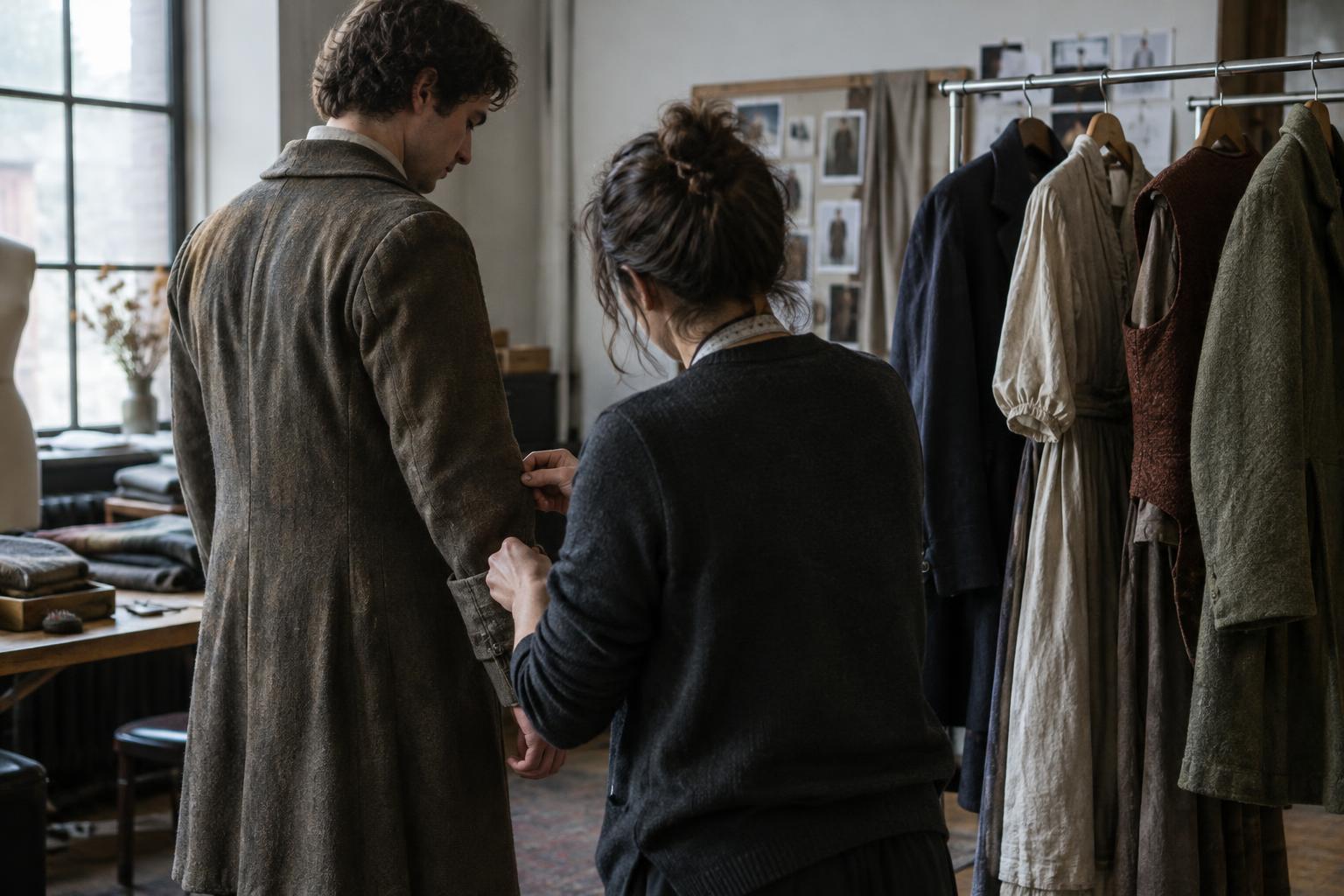
That is why a costume can look different in a fitting than it does in a scene. Walking, dancing, climbing stairs and sitting each reveal a new shape. Designers and performers need room to discover how a garment behaves under the action it must support. Even a small adjustment, such as changing sleeve width or hem length, can alter both the visible silhouette and the performer’s freedom to use it.
Contrast gives a shape meaning
An outline becomes especially legible when compared with its surroundings. A character in a clean vertical line may stand out among people dressed in rounded layers. Someone whose clothes occupy a great deal of space can feel conspicuous in a narrow, crowded room. Within a group, repeated shapes might suggest a shared role or social expectation, while one departure from the pattern can direct attention without a word of dialogue.
Silhouette can also change across a story. A character might begin in rigid layers and later wear a softer shape, but the change should not be reduced to a simple visual formula such as ‘loose means free.’ Perhaps the new costume reflects a different setting, a practical demand or a choice the character is still unsure about. Reading the shift alongside the performance makes it more interesting than decoding it in isolation.
A simple way to look closer
The next time a character enters a scene, try looking at the outline before the details. Where is it widest? Is the shape symmetrical? Does it reveal the body’s movement or hold its own form? Then look at the neighboring characters and the space around them. A silhouette that seems dramatic in one setting may blend in elsewhere.
Finally, watch what happens after the entrance. The first impression is only the opening question. A performer may inhabit an imposing coat with uncertainty or move through a delicate-looking costume with force. When costume and performance complicate each other, the audience gains more than a quick visual label: it gains a character worth continuing to watch.