Clothing offers clues, not a personality test
A costume can introduce a character before the audience knows their name. A carefully pressed jacket may suggest someone who values control or wants to appear dependable. A coat worn long past its best might hint at attachment, limited resources or simple indifference to fashion. None of these details has one fixed meaning. Their power comes from the way they work alongside a performer’s movement, the setting and the story.
Costume designers begin with questions rather than a list of personality traits. What does this person do each day? Which clothes would they choose, and which would circumstances choose for them? Do they dress to belong, to stand out or to avoid being noticed? Thinking through the character’s routine helps create a wardrobe that feels lived in instead of assembled only for the camera or stage.
Fit shows how a character inhabits a role
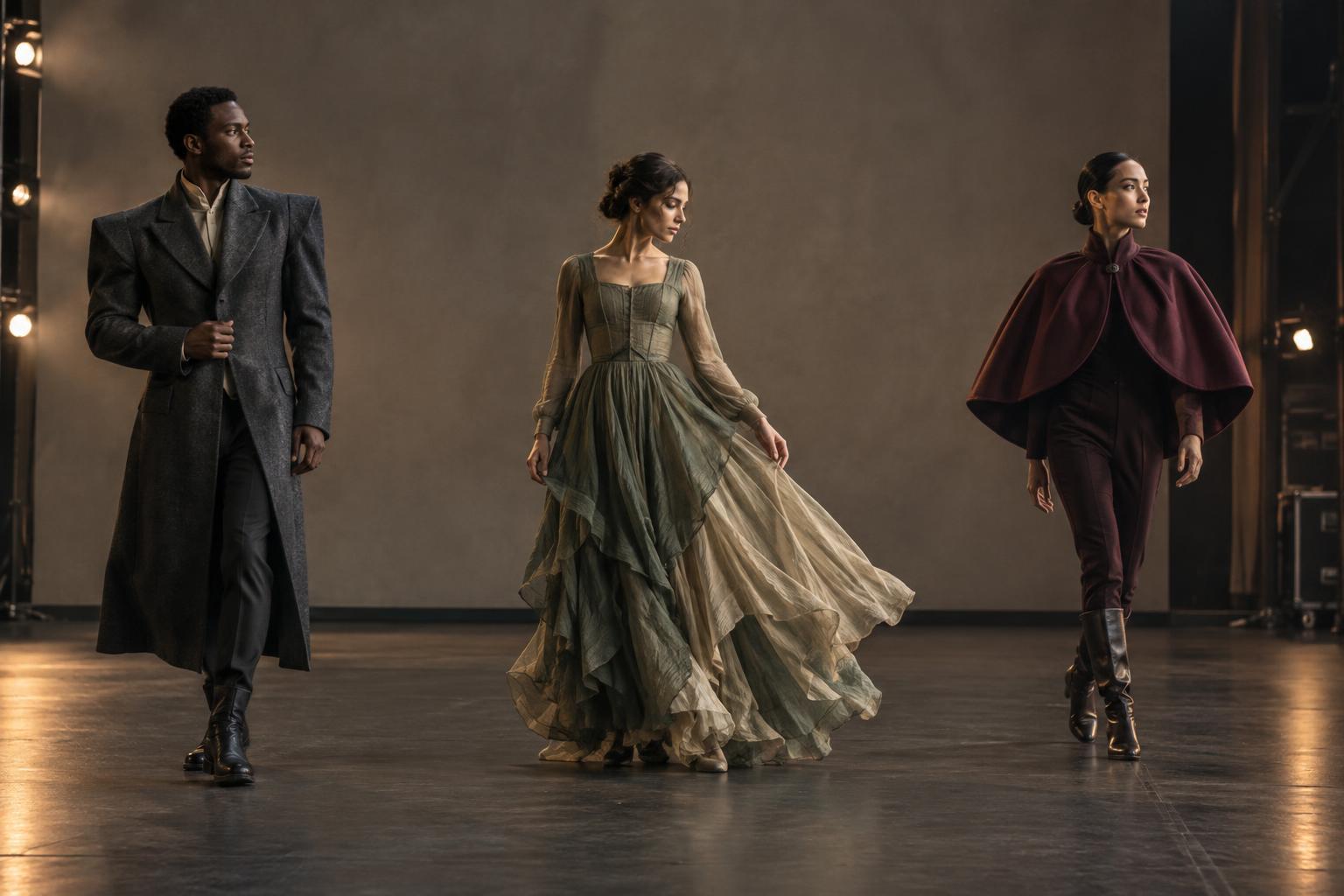
The silhouette of an outfit can shape a first impression. Structured shoulders, crisp lines and clothes that hold their form can make a character seem composed. Soft layers or pieces that hang loosely may create a more relaxed impression. Fit also reveals a relationship to the body: a character might wear something tailored because they enjoy precision, or something too formal because they are trying to meet another person’s expectations.
How the performer uses the costume matters just as much as how it looks on a hanger. A stiff collar may prompt a small adjustment during a tense conversation. Deep pockets might give someone a place to hide their hands. Designers consider whether a garment allows a character to stride, fidget, work or withdraw. These practical effects can make a choice feel expressive without turning it into an obvious symbol.
Color and texture build a visual vocabulary
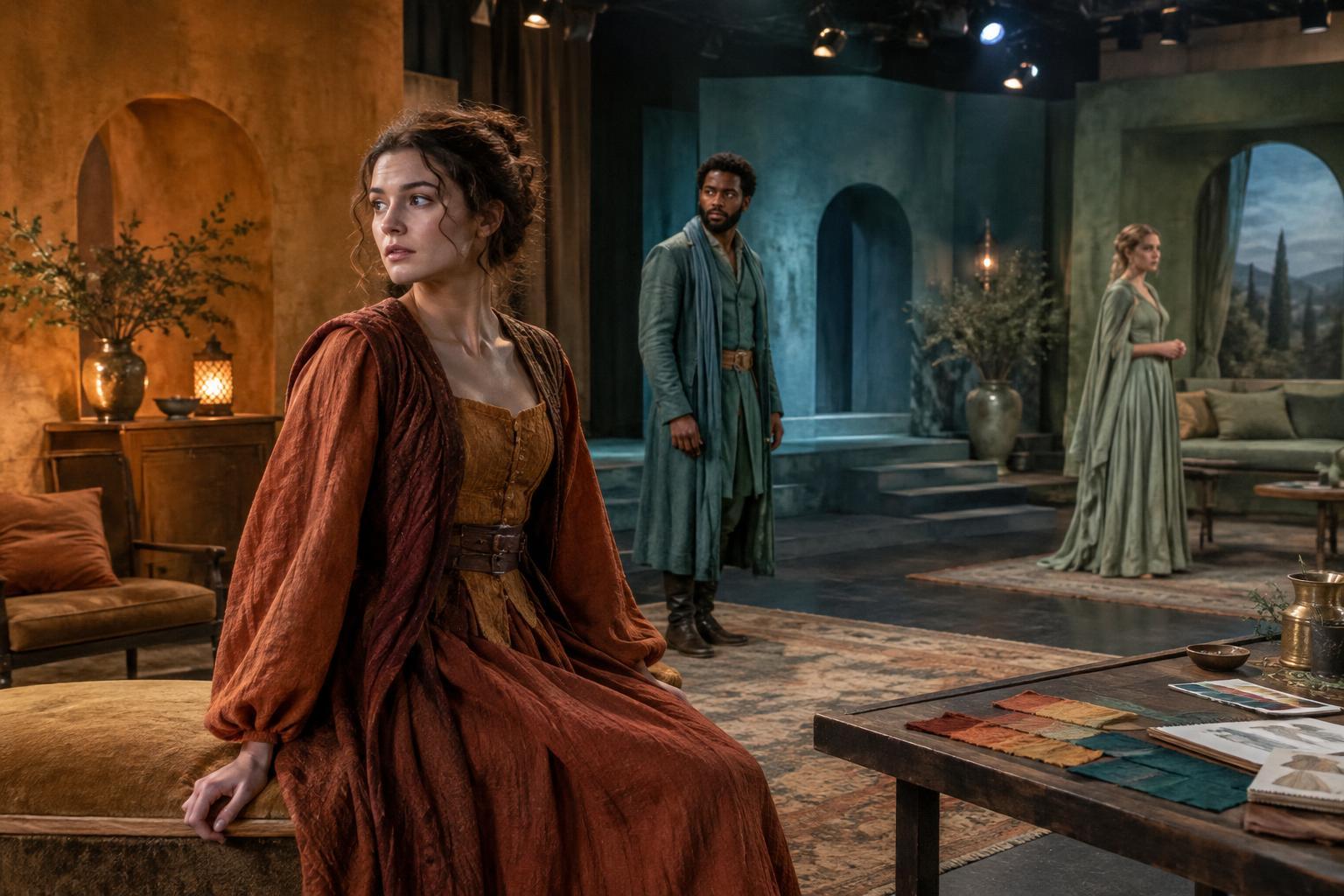
Color helps audiences distinguish people and notice shifts, but its meaning depends on context. Bright clothing might reflect confidence in one story and a need for attention in another. A character who usually wears muted tones may appear different after adding a vivid scarf, even if the change is small. The contrast within that character’s wardrobe often communicates more than any supposedly universal meaning of a color.
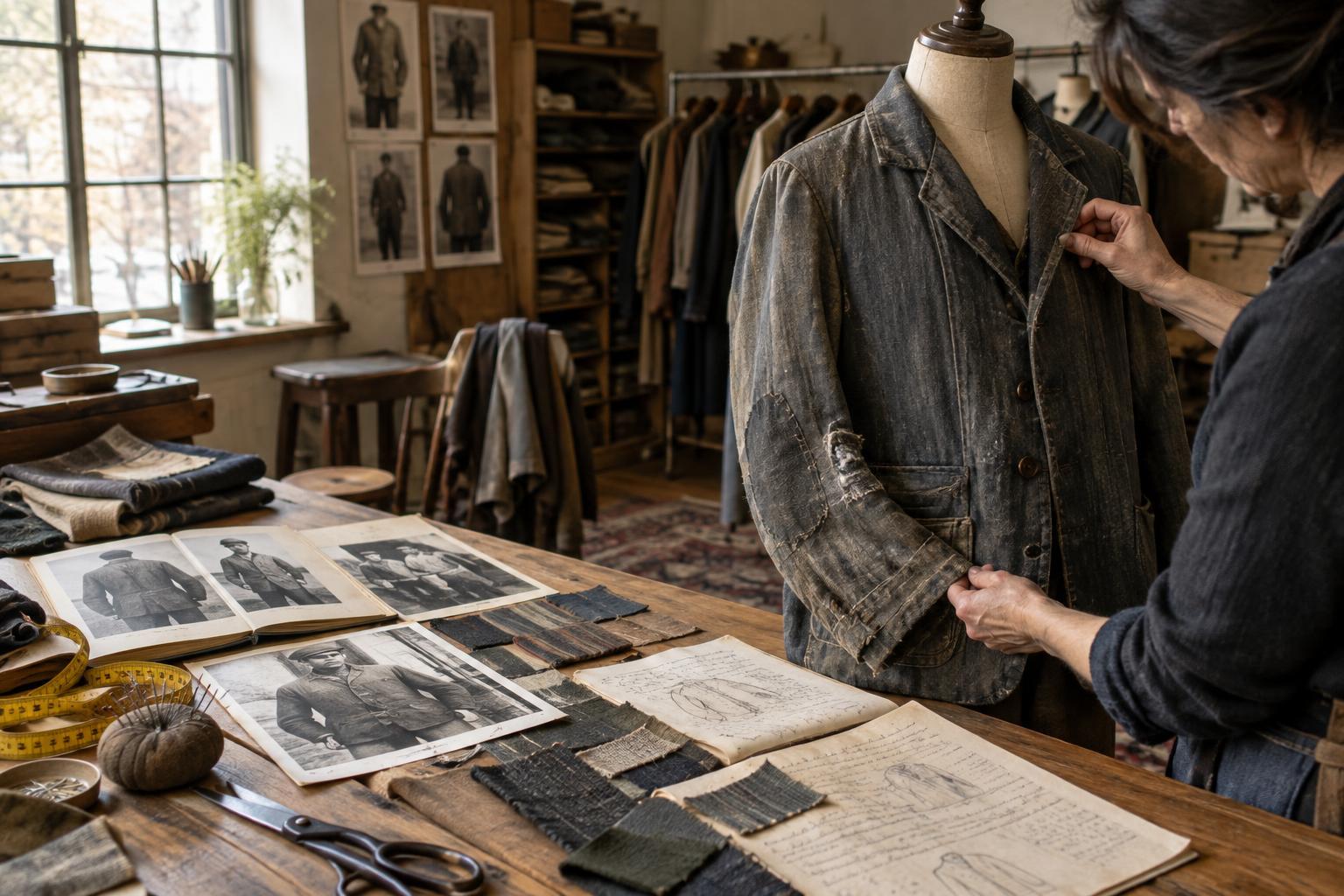
Texture adds another layer. A smooth, immaculate fabric can look guarded beside a worn knit or a rumpled shirt. Faded areas, repaired seams and polished shoes suggest different kinds of care. These details are especially useful in close views, while broader shapes and stronger contrasts may need to carry the impression from the back of a theater. In either setting, the designer must consider lighting and the surrounding set so that a meaningful detail remains visible rather than disappearing into the scene.
Repetition makes change legible
A wardrobe feels more convincing when a character repeats clothes. Most people have favorites, uniforms and pieces they wear out of habit. Repetition gives the audience a baseline: once a familiar look is established, a departure from it can signal that something has changed. A character who stops dressing for an old job, for example, may be testing a new sense of self before they can describe it.
Change does not always mean a dramatic makeover. It might be a button left undone, an accessory removed or an outfit worn with less care than before. The reverse can be revealing too: someone may hold tightly to a familiar style as their situation changes. Costume design can trace growth, resistance or uncertainty through small adjustments, allowing the audience to notice a shift without being told what to think.
Personality emerges in relation to other people
An outfit tells a richer story when it is seen beside other costumes. Members of the same workplace or family may share a dress code while interpreting it differently. One person follows every rule; another keeps a distinctive detail. Those choices can suggest how each character understands belonging, status or independence. Designers can also create visual echoes between people who influence one another, then let those echoes fade as their relationship changes.
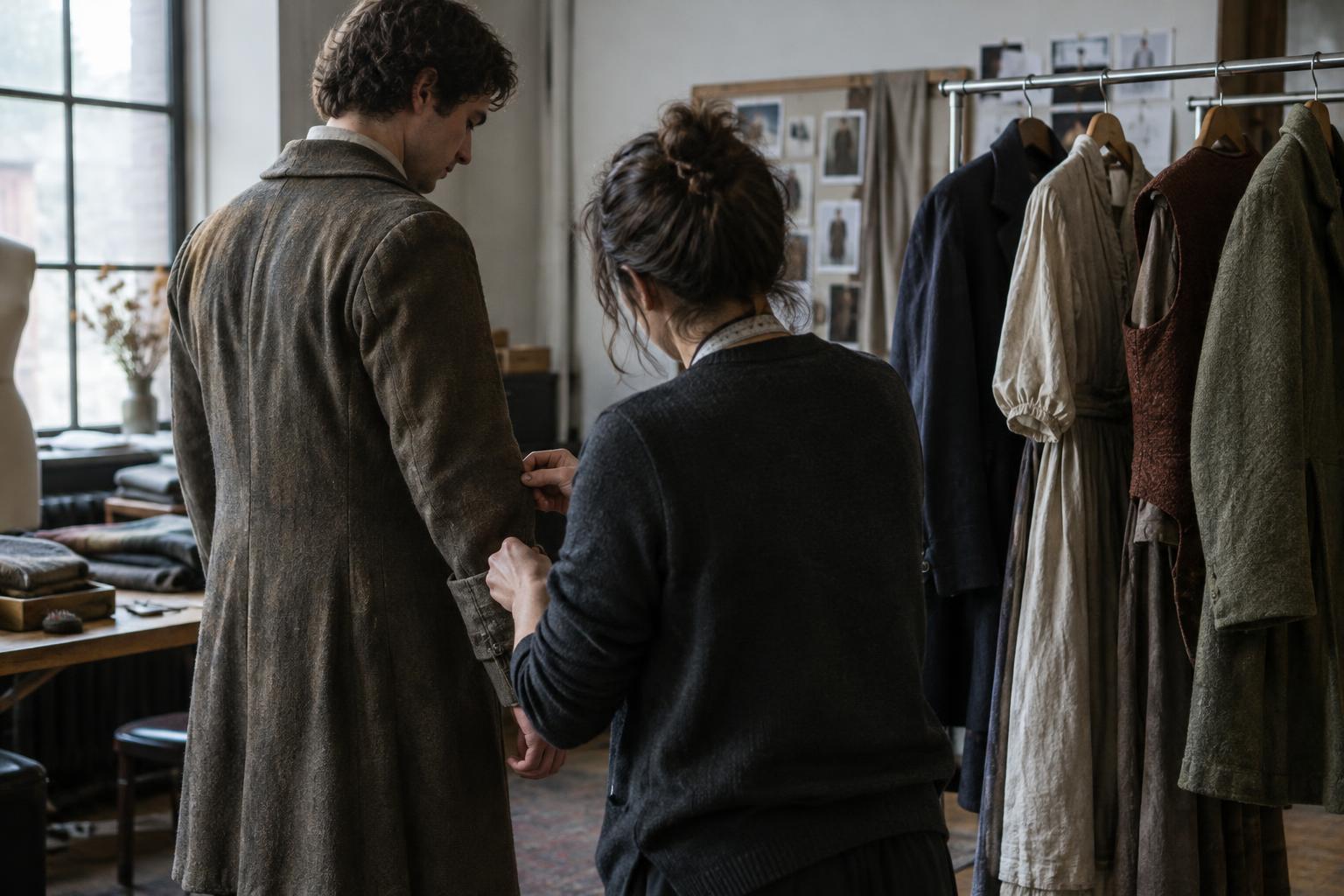
The final effect depends on collaboration. Designers work with performers and other creative teams to make sure clothing suits the action, the setting and the character’s perspective. The most effective costume is not necessarily the one an audience notices first. Often it is the one that makes a person’s choices feel plausible, then rewards a closer look when a repeated garment, altered fit or carefully kept detail takes on new meaning.