Two kinds of preparation
A rehearsal asks, “Can we perform this together?” A soundcheck asks, “Can this performance work through today’s sound system, on this stage?” Both may involve playing songs, stopping, and making adjustments, which is why they can look similar from a distance. Their goals, however, are different. Rehearsal develops the decisions musicians bring to a show. Soundcheck tests how those decisions translate into a specific space.
The distinction matters when time is limited. A band that spends soundcheck debating a song’s ending may leave too little time to fix an inaudible vocal or a monitor mix that makes the tempo hard to follow. Equally, a polished soundcheck cannot settle an arrangement the musicians have not agreed on. Each process works best when it has a clear job.
Rehearsal builds the shared performance
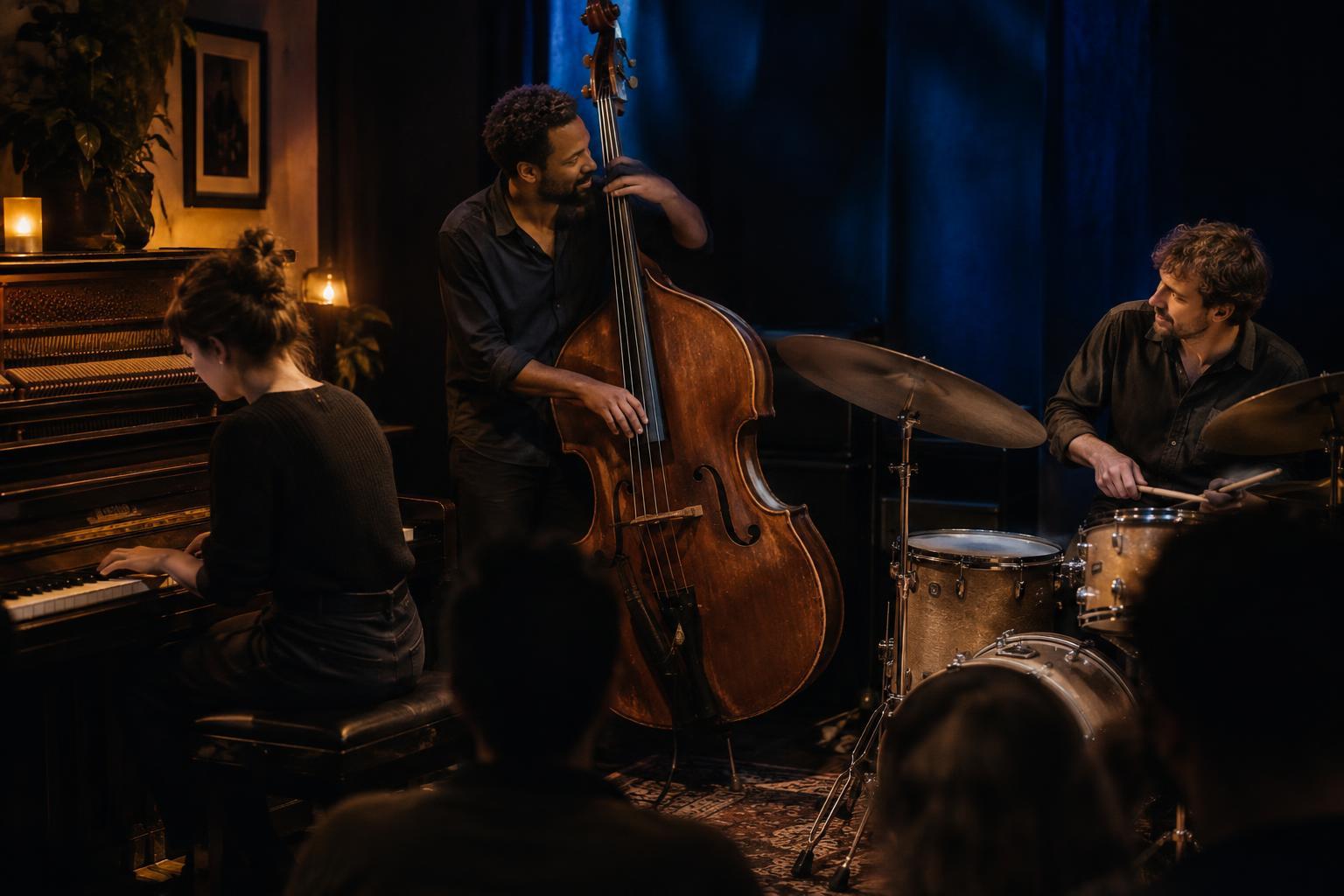
Rehearsal is where musicians learn the material and decide how to present it. That can mean settling an intro, choosing who takes a solo, practicing a transition between songs, or working out how a quieter passage should grow. Repetition helps players recognize cues without having to discuss them onstage. It also reveals practical problems: an instrument change may take longer than expected, or a backing vocal may be difficult to sing while playing a demanding part.
A useful rehearsal need not be a full run-through every time. Musicians can isolate a rough transition, practice starting a song from a cue, then play a set without stopping to see whether it flows. That last step prepares more than notes and rhythms. It lets performers consider pacing, where they need a breath, and how they will recover if someone misses an entrance.
Technical choices belong here too, at least in their broad form. If a song depends on a particular effect, playback track, or instrument swap, rehearsing with that element exposes what everyone else needs to hear and when. The aim is not to recreate every venue. It is to arrive with a workable plan that can be adapted.
Soundcheck adapts the plan to the room
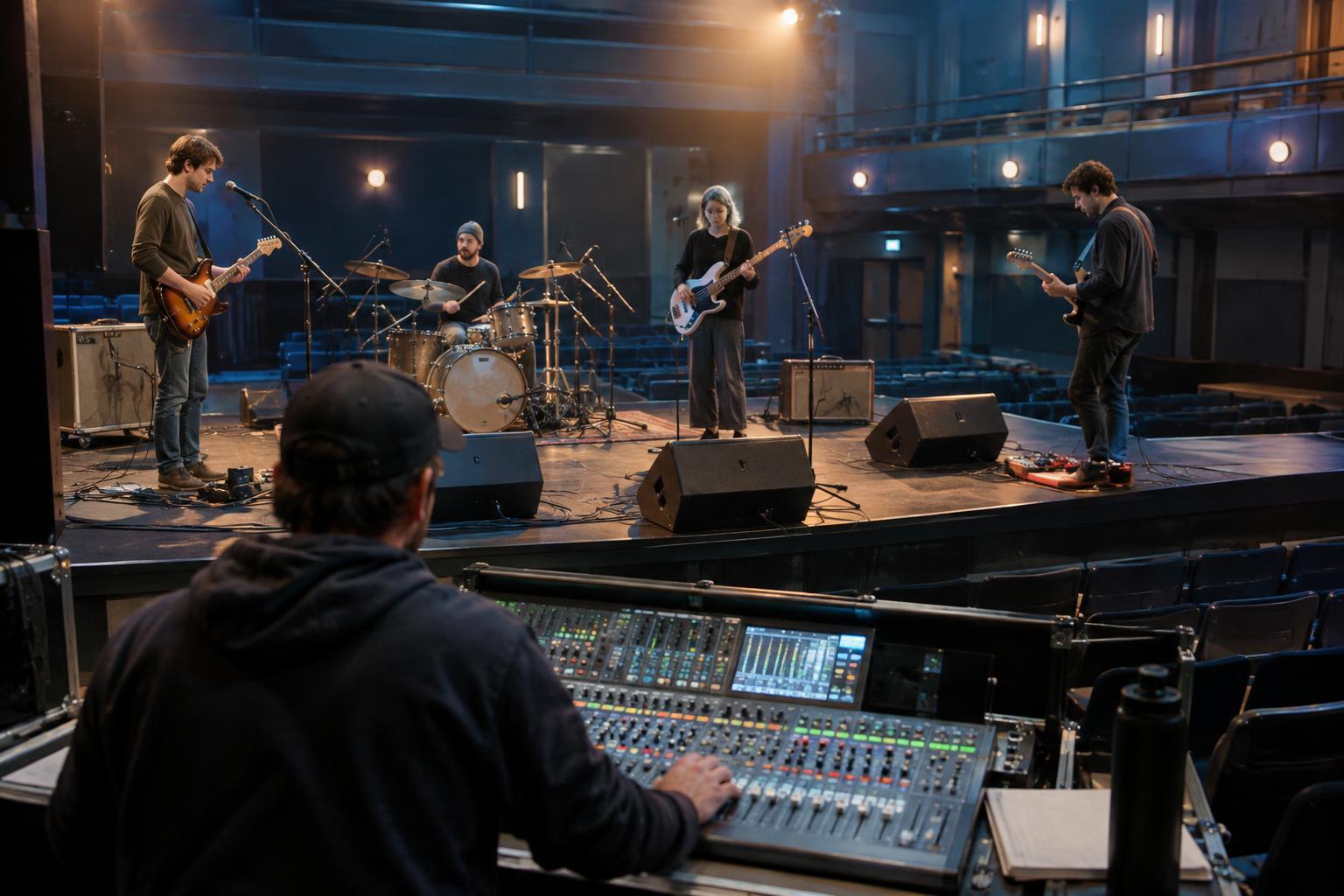
At soundcheck, musicians and the audio crew test the inputs and listening conditions they will use for the show. They may confirm that microphones, instruments, and playback sources reach the sound system; set levels; and adjust what performers hear through floor monitors or in-ear monitors. The crew also listens to how the performance comes across to the audience. A venue’s layout and equipment can change what is easy to hear, even when the musicians play the same parts they rehearsed.
A soundcheck is therefore not an audition for the whole set. Short, representative passages are often more useful than complete songs: a quiet vocal line, a loud chorus, a solo, or a section with several instruments playing at once. When something is wrong, a specific request helps. “I need more lead vocal in my monitor” gives the crew a clearer starting point than “It sounds strange.”
Sometimes there is little room for a full soundcheck. A brief line check may confirm that each source is connected and working without allowing much time to refine the mix. That makes preparation and concise communication especially valuable, but it does not turn the line check into a substitute for rehearsal.
What each process cannot fix
Rehearsal can make an ensemble confident, but it cannot guarantee that the singer will hear the keyboard clearly in an unfamiliar room. Soundcheck can improve that listening situation, but it cannot teach the ensemble where the keyboard enters. Treating one process as a cure for the other often creates frustration: players may push their volume to compensate for a monitor problem, or keep adjusting equipment when the real issue is an unsettled arrangement.
It helps to identify the type of problem before trying to solve it. If the group disagrees about the tempo, structure, or cue, make a note for rehearsal. If a part is correct but cannot be heard, raise it at soundcheck. Some issues overlap. A dense arrangement may be difficult to mix clearly, and soundcheck can reveal that difficulty. The lasting solution may still be to simplify or rebalance parts when the musicians next rehearse.
Make the handoff from practice to stage
Before a show, musicians can agree on a set order, confirm entrances and endings, and note any changes of instrument, microphone, or playback source. At the venue, they can tell the crew about those needs early and use soundcheck to test the moments most likely to cause trouble. Listening matters as much as playing: each performer should know whether they can hear the cues they rely on and whether a requested adjustment actually helps.
The goal is not to remove every surprise from live performance. Rehearsal gives musicians a shared foundation for responding together; soundcheck gives them the best available conditions for doing so in that room. When both serve their own purpose, performers can spend less of the show solving preventable problems and more of it communicating the music.