A costume needs a past
A new jacket may fit a character perfectly and still look wrong on screen or stage. Crisp seams, even color and spotless cuffs can suggest it was bought yesterday, even if the story says its owner has worn it for years. Aging and distressing are the techniques used to close that gap. They give a garment signs of use so that its appearance supports the character and the world around them.
The aim is not simply to make clothes dirty. A believable costume carries a specific history. A coat worn on a long daily commute might have polished elbows, softened pocket openings and a collar that has lost its stiffness. A performer’s stage outfit might remain carefully maintained while showing wear at the fastening used every night. Those differences help distinguish a person who takes pride in an old possession from one who has had little time to care for it.
Start with the character, not the sandpaper
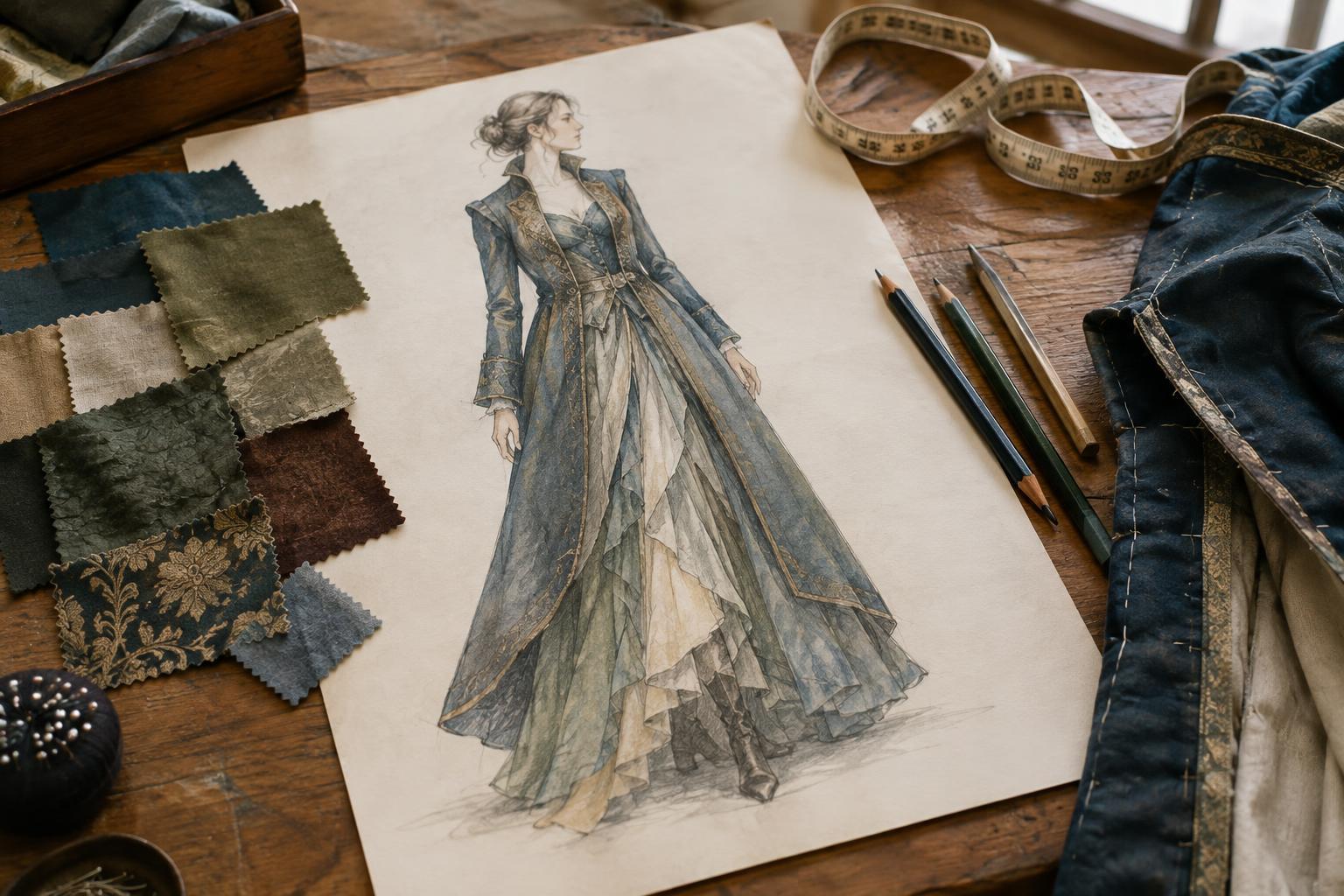
Before changing a garment, costume teams can map its imagined life. How long has the character owned it? Is it workwear, a treasured gift or something borrowed in a hurry? Where do they keep their hands, what do they carry, and how do they move? These questions point toward useful details. A bag strap may rub one shoulder; keys may pull at a pocket; repeated kneeling may soften the fabric at the knees.
The environment matters too. Dust, rain, heat and indoor routines leave different impressions, but they should not appear everywhere at once. A character who travels mainly through clean interior spaces need not look as though they have crossed a muddy field. Restraint often makes aging more convincing: a handful of consistent marks can tell a clearer story than an even coating of grime.
Material sets limits. Denim, wool, leather and delicate synthetics respond differently to abrasion, moisture and color treatment. A sensible process begins with a small test on a swatch or hidden area, particularly when a costume must survive repeated performances or cleaning.
Build wear in layers
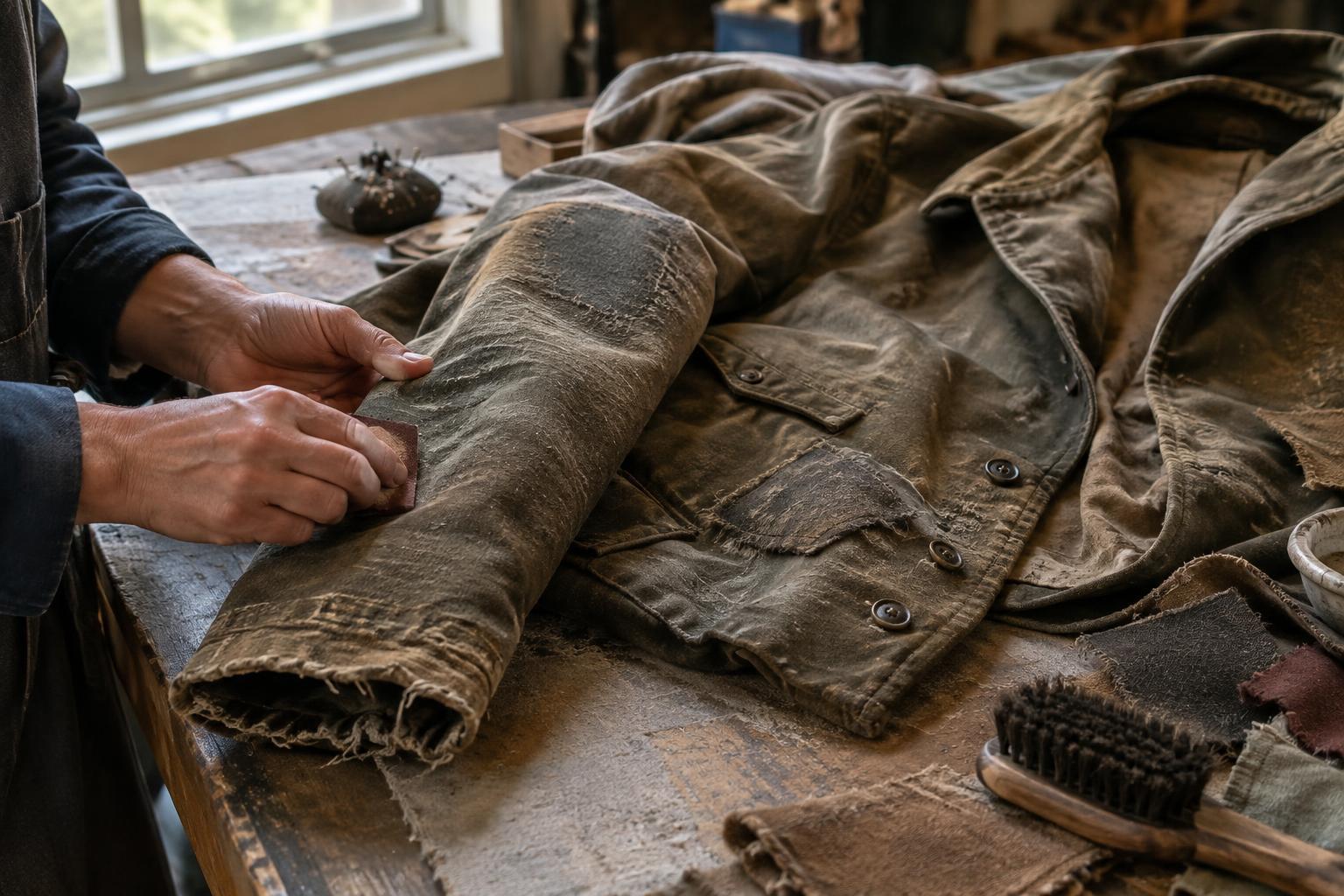
Costume aging often begins with shape and texture. Softening a stiff garment, easing a crease or reducing the sharpness of an edge can change how it sits on a body. Wear tends to collect where fabric meets friction: cuffs, hems, elbows, knees, pocket mouths and closures. Working lightly in these places helps the garment look used without making it appear accidentally damaged.
Color can add another layer. Subtle fading may suggest exposure and laundering, while uneven tones can give a costume depth under bright lights or a close camera. Carefully applied, removable surface color can imply dust or handling. Any method should suit the fabric and the production’s needs; some finishes may transfer to skin, other costumes or a set if they are not tested.
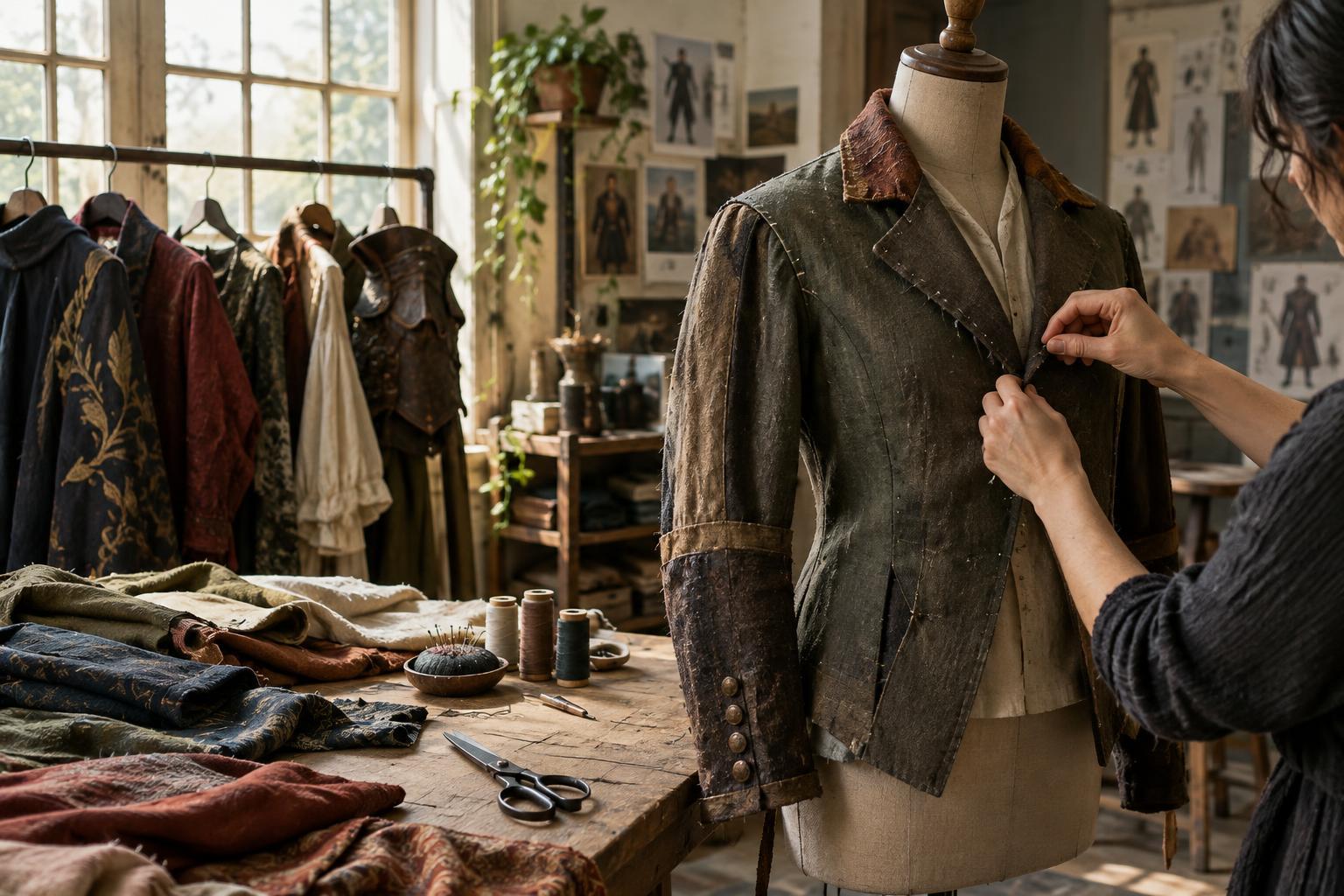
Repairs are especially expressive. A replaced button, a visible stitch or a patch made from a near-matching fabric can imply that the wearer chose to keep an item going. Placement matters: a repair should answer a plausible problem, not just fill an empty-looking space. Taken together, texture, color and mending make the garment feel accumulated rather than decorated.
Let the performance guide the detail
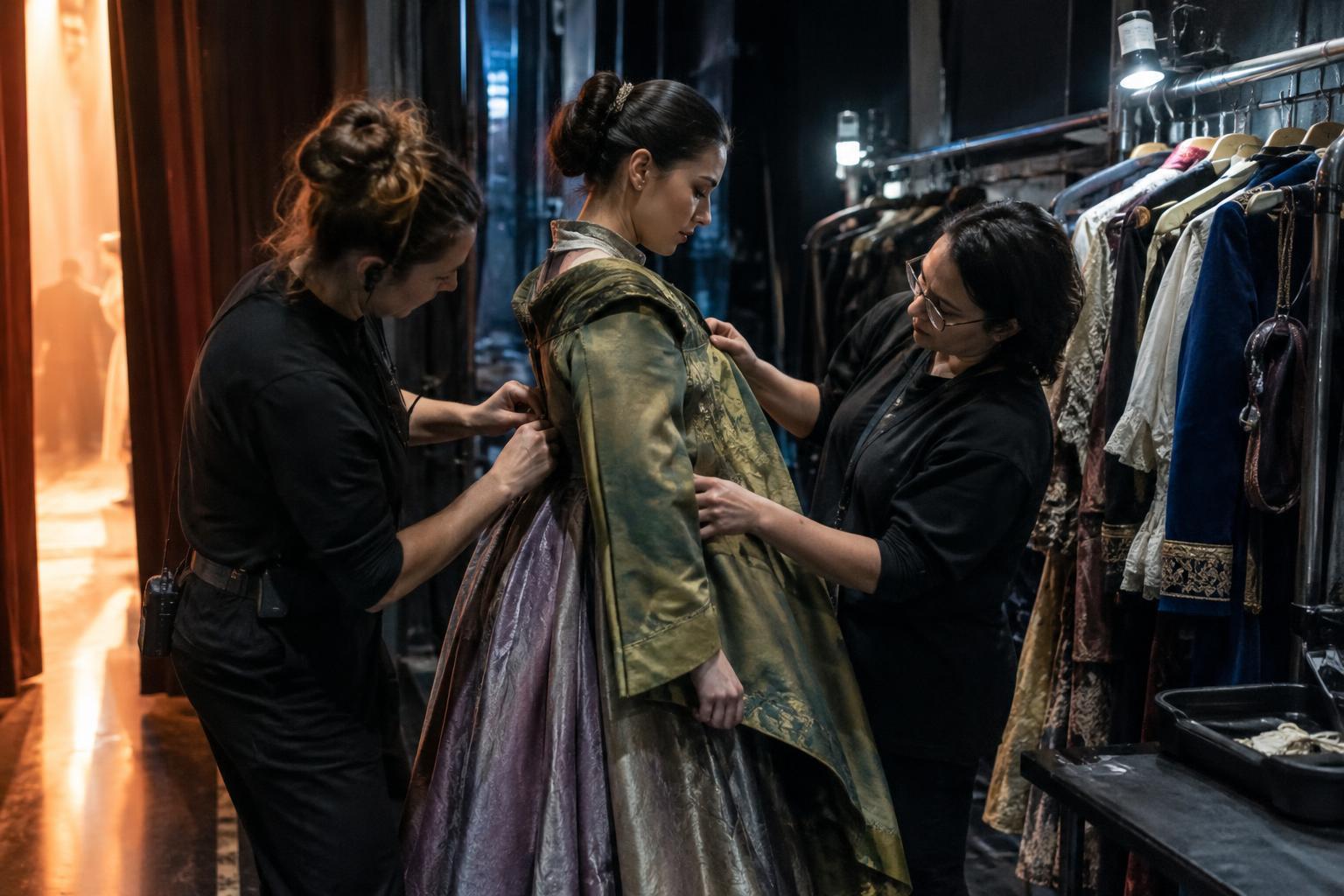
A costume is seen in motion, not only on a hanger. An actor may repeatedly roll a sleeve, grip a lapel or tuck an object into the same pocket. Watching those habits can reveal where wear would naturally develop. It can also show where distressing would interfere with a gesture, snag a prop or draw attention away from the performance.
Distance changes what reads. A tiny frayed seam may be visible in a close-up but disappear from the back of a theater. Conversely, a broad stain that feels subtle on a worktable may dominate under stage lighting. Fittings, movement checks and looks under the intended lighting help the team judge whether the marks communicate the right amount of history.
Keep the story consistent
Productions may need more than one version of a costume, especially when a story shows it before and after a journey, an accident or a change in circumstances. Wear then becomes a timeline. Recording the location and intensity of marks helps each version make sense, while photographs and notes can help maintain continuity between scenes or performances.
Good distressing rarely announces the work behind it. Viewers may not notice a softened cuff or a carefully faded shoulder on its own. They simply accept that the garment belongs to the person wearing it. That is the craft’s quiet achievement: making something newly constructed feel as if life has already happened in it.