Start with the character, not the clothes
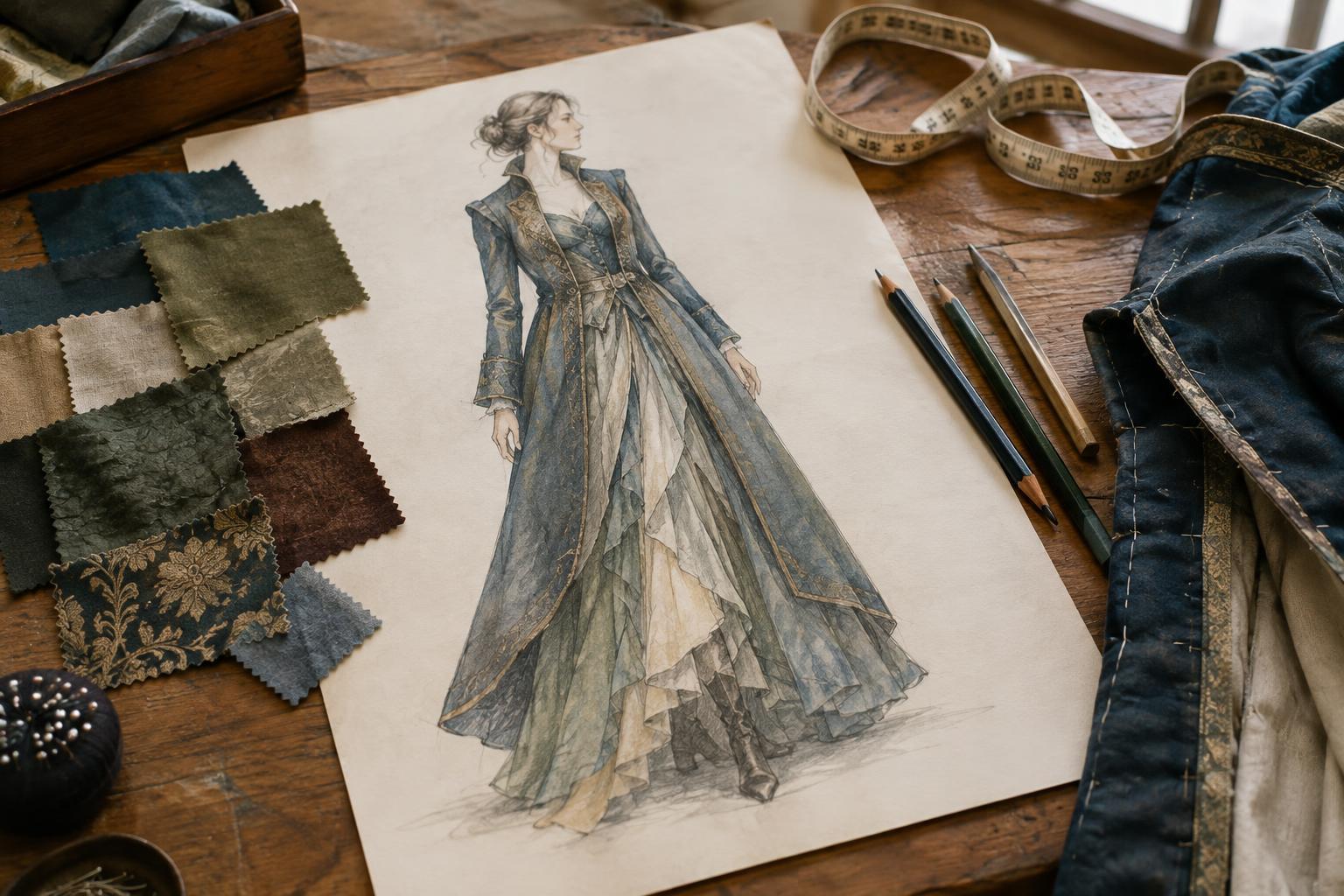
A costume design sketch offers a possible answer to a storytelling question: what should an audience understand when this character enters a scene? Before naming garments, note the impression the figure makes. Does the outfit seem guarded or open, carefully maintained or worn down, suited to a particular occasion or out of place? Those observations give you a starting point without assuming you know the designer’s intentions.
Next, look for context. A sketch may include a character name, scene reference, production title or short written notes. Read those before interpreting a color or accessory as a symbol. If you have no context, keep your conclusions modest: “The high collar makes the figure look contained” is an observation you can discuss; “The character is hiding a secret” is a story you have invented. Good analysis separates what is visible from what remains a possibility.
Read the silhouette from a distance
Silhouette is the overall shape the costume makes around the body. Narrow your eyes or imagine the sketch reduced to a small image. Where is its visual weight: at the shoulders, waist, hips or hem? Is the outline close-fitting, loose, angular or rounded? A long coat can make a figure appear taller, while a wide skirt can change how much space that figure seems to occupy. These effects may matter even when an audience cannot see every seam.
Then look at proportion and layering. An oversized jacket over slim trousers creates a different balance from two equally loose pieces. A cape, train or trailing sleeve may extend the shape as the performer moves. Ask which elements are essential to recognizing the design and which are quieter supporting details. This helps you move beyond a list of garments toward an account of how the costume works as one image.
Examine color and surface without overreading them
Identify the dominant colors, then notice where contrasting colors appear. A bright lining revealed only when a coat opens creates a different effect from an entirely bright coat. Repeated colors can connect separate pieces, while a single contrasting glove or scarf can draw attention to a gesture. Consider whether the palette might help distinguish characters or make this figure stand out from a surrounding group.
Surface marks need careful reading. Shading, hatching or a wash of paint may suggest shine, softness, wear or texture, but a sketch is not always a precise fabric specification. Written labels or attached swatches, when present, provide stronger clues. If a sleeve looks glossy, describe it as “rendered with a glossy finish” unless the material is identified. Texture also has a practical side: stiff and fluid fabrics can produce very different shapes on a moving performer.
Look for clues about movement and construction
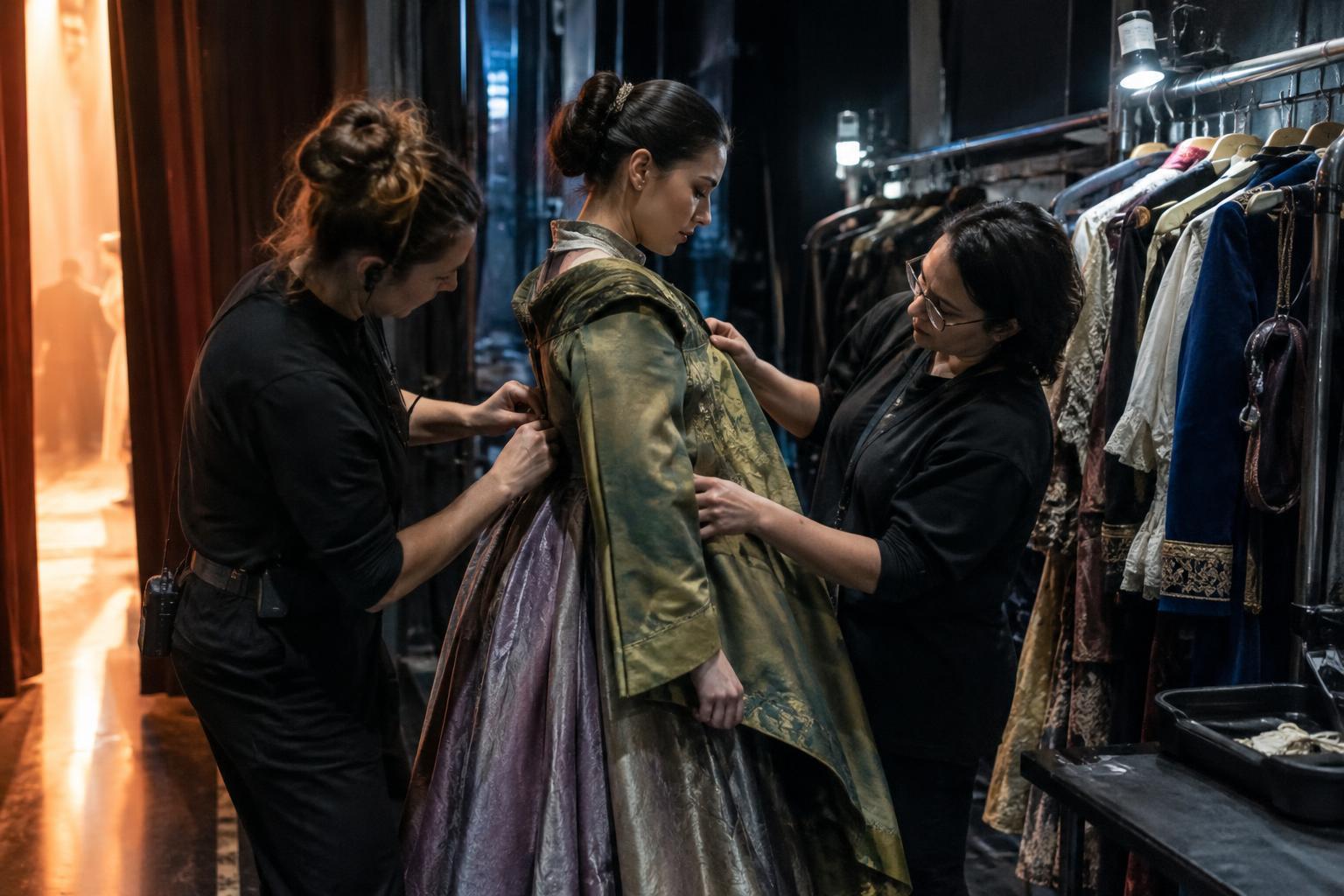
A costume has to be worn, not just viewed. Study the pose in the sketch and ask what the clothing would do if the performer sat, danced, climbed or reached overhead. A fitted shoulder, heavy headpiece or floor-length hem might present a practical challenge, though a drawing alone cannot tell you whether the finished costume solves it. Sketches with front and back views can reveal closures, layers and details that a single dramatic pose conceals.
Zoom in on features that might help the costume function: a belt holding layers in place, a visible fastening, a shorter hem at the front, or shoes appropriate to the action. Note what you cannot see, too. Undergarments, quick-change methods and hidden supports may be crucial to a finished look without appearing in the drawing. Treat your questions as part of the breakdown rather than as flaws in the design.
Put your observations together
Once you have examined the details, write a brief description that links them to an overall effect. For example: “The broad shoulders and dark outer layer give the figure a formal outline, while the lighter fabric underneath softens it when the coat opens.” That sentence explains a relationship between visible choices. It does not claim that every viewer will read the character in the same way.
Finally, remember what kind of document you are looking at. A sketch can be an exploration, a proposal or a guide for making a costume; it is not necessarily a photograph of the finished result. Materials, fit and details may change as people test the design on a performer and in the performance space. Reading a sketch well means noticing both its storytelling ambition and the practical decisions still to be made.