Start with the story, then count the seconds
A fast costume change is a storytelling problem with a deadline. The audience needs to recognize a new character, setting or mood, while the performer needs to arrive at the next entrance ready to work. Begin by asking what must visibly change. A new jacket, silhouette or color may communicate the transition more clearly than a complete replacement of every garment.
Next, map the sequence from the performer’s final moment onstage to their next cue. Include the route offstage, any prop handoff, the change itself and the trip back. The time available for dressing is only part of that interval. A change planned around the total gap between scenes can become impossible once stairs, crowded wings or a microphone adjustment are taken into account. Treat the first timing plan as a working estimate to test in rehearsal.
Design the costume as a sequence of layers
When one look must become another quickly, build the later look into the earlier one where the design allows. A removable outer layer can reveal a different color or shape underneath; an accessory can establish a new identity without changing the base costume. Layering is useful only if the first look still makes sense under stage lighting and the performer can move comfortably in it.
Choose closures for the person who will actually operate them. Large, easy-to-find fastenings can be more dependable backstage than small buttons or hard-to-reach hooks. Concealed magnets, snaps and other quick-release details may help, but each needs testing during the performer’s real movements so it does not open early. Consider hair, jewelry, shoes and microphones as part of the costume plan: a neatly layered outfit does little good if the next entrance depends on an awkward shoe swap.
Make the backstage space easy to read
A change station works best when every item has a predictable place. Lay out garments in the order they will be handled, with openings ready and accessories grouped with the look they complete. Mark items clearly for the crew rather than relying on memory, especially when similar costumes share a rack. A dressing table or rail should leave enough room for the performer and assistants to move without blocking an exit or another change.
Plan what happens to the costume coming off as carefully as what goes on. A designated basket, hook or rail keeps discarded pieces from tangling with the next look or creating a trip hazard. If a performer changes in a wing or shared backstage area, agree on privacy needs before choosing the location. Good organization is not simply tidiness; it gives everyone a repeatable path through a hectic moment.
Rehearse the people, not just the clothes
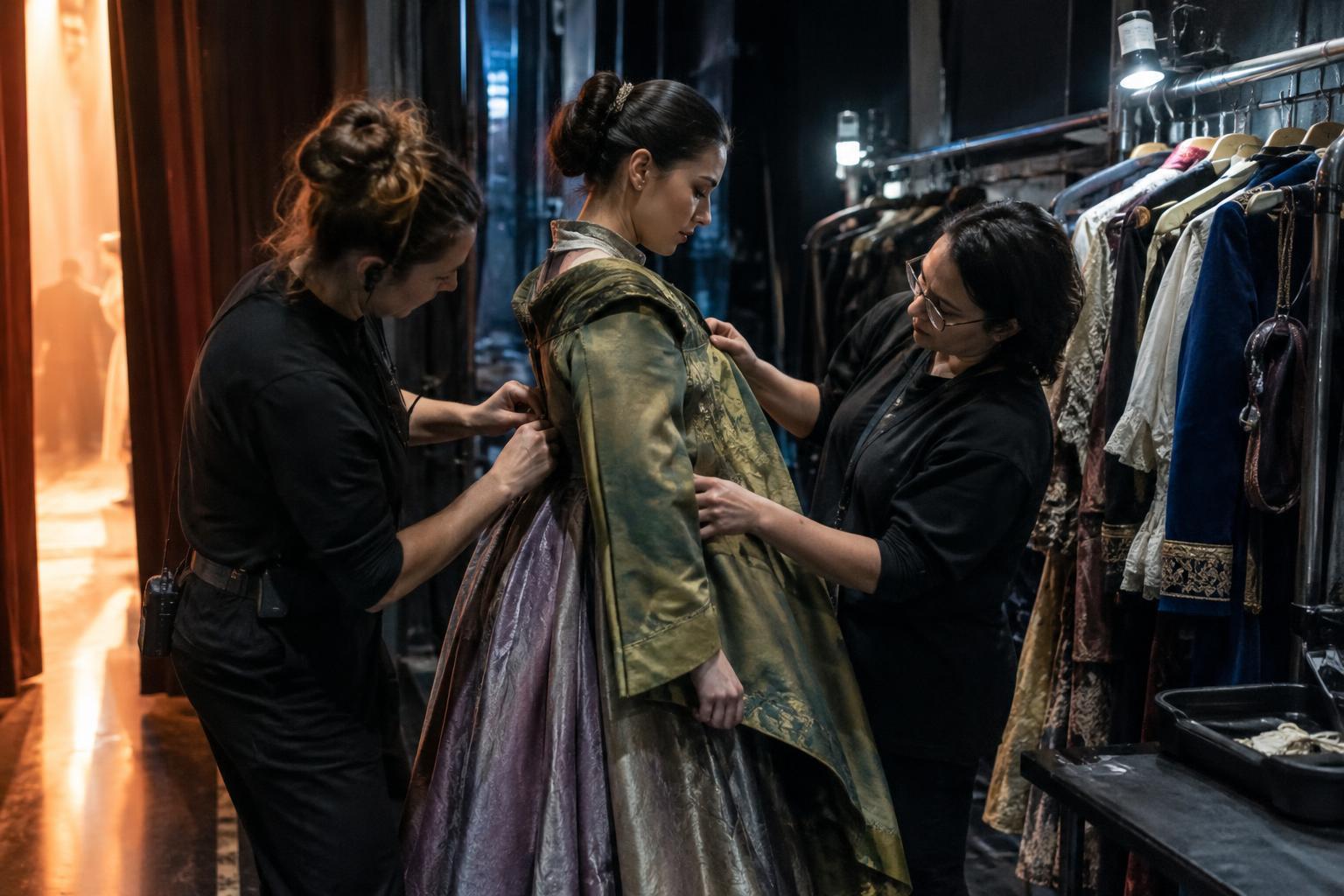
Give the change a simple choreography. Decide who removes each piece, who holds the replacement, who handles accessories and who gives the final visual check. The performer should know where to stand and which movements help, rather than trying to anticipate several assistants at once. Clear roles also reduce the temptation for multiple people to reach for the same fastening.
Run the change with the actual costume pieces whenever possible, then add the conditions of the show: movement, lighting, sound cues and any objects the performer carries. A successful run while everyone is standing still is not the same as a change after an energetic exit. Rehearsal may reveal that an accessory needs to be dropped, a fastening moved or a backstage route cleared. Those are useful design findings, not failures.
Build in recovery, comfort and a final check
Even a well-rehearsed change can be disrupted by a caught sleeve or a delayed exit. Identify which elements are essential for the audience to understand the next look and which can be skipped if time is short. Keep spare fastenings or replacement accessories accessible, and establish how the crew will respond to a problem without pulling the performer into an unsafe rush.
Before the next entrance, someone should check the visible silhouette, secure closures, footwear and any equipment that must sit correctly. The aim is not merely to beat the clock. It is to let the performer step back into the light able to move, speak or sing with confidence. The strongest quick changes feel effortless from the audience’s seat because the costume, crew and timing have been planned as one performance.