A show begins with a plan
For a touring concert, load-in is the process of moving the production into a venue. Strike is the reverse: taking it apart and packing it for departure. Between those two tasks, the crew has to build a stage environment that performers can use and that the audience will experience as a coherent show. The work can look hectic from a distance, but it relies on an agreed sequence, clear responsibilities and steady communication.
Before equipment moves, the touring team and venue staff need a shared understanding of the space. They consider access routes, stage dimensions, available power, where cases can wait and which areas must remain clear. A production manager or another designated lead typically coordinates the schedule, while department heads guide the work in their areas. Plans matter because sound, lighting, video, instruments and scenery often need the same limited floor space at different moments.
Load-in: moving gear without losing the order
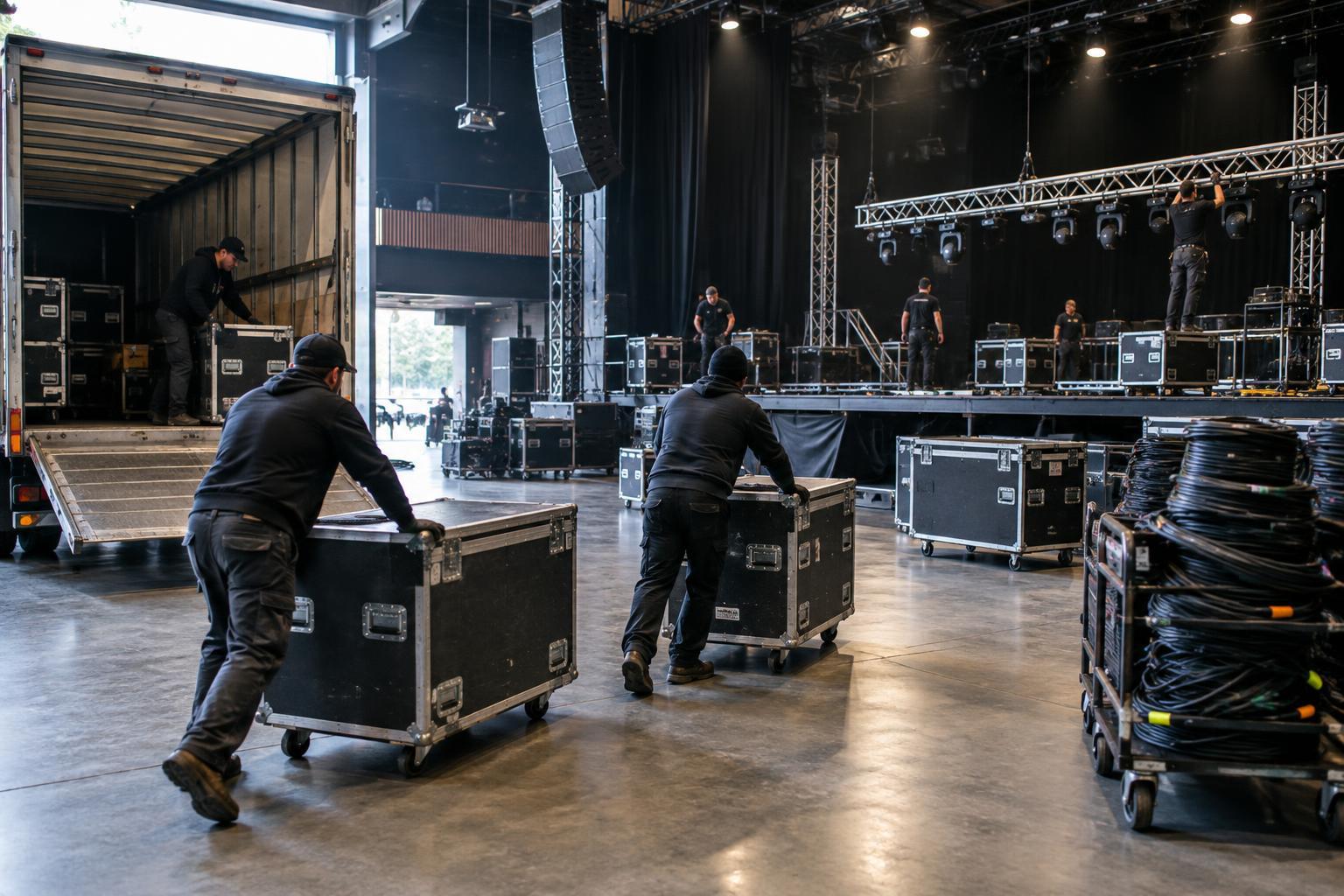
The first challenge is not simply getting equipment off a truck. It is getting the right equipment to the right place at the right time. Road cases and containers are commonly labeled or organized by department, making it easier to separate what belongs onstage from what belongs at a control position, backstage or in storage. Crews try to keep doorways and routes usable as gear moves through the building.
The order of unloading supports the order of construction. Items needed to establish the stage and its infrastructure may have to arrive before instruments or decorative elements. Some equipment stays in its case until the area where it will be used is ready. That restraint can save time: opening everything at once creates clutter, obscures labels and makes it harder for people to work around one another.
Local venue crews may know the building’s tight turns, loading dock and house systems, while touring crew members know the particular show. When those groups exchange information early, small problems are easier to resolve before they interrupt the rest of the day.
Setup happens in layers
Once gear is in position, departments build the show in overlapping stages. Staging or scenery may establish where performers and equipment will go. Qualified personnel handle overhead equipment and other work that calls for venue-specific procedures. Power distribution, lighting, video and audio follow their own plans, but each depends on access to the same physical space. A lighting position, for example, has to make sense alongside sightlines, screens and the places musicians need to stand.
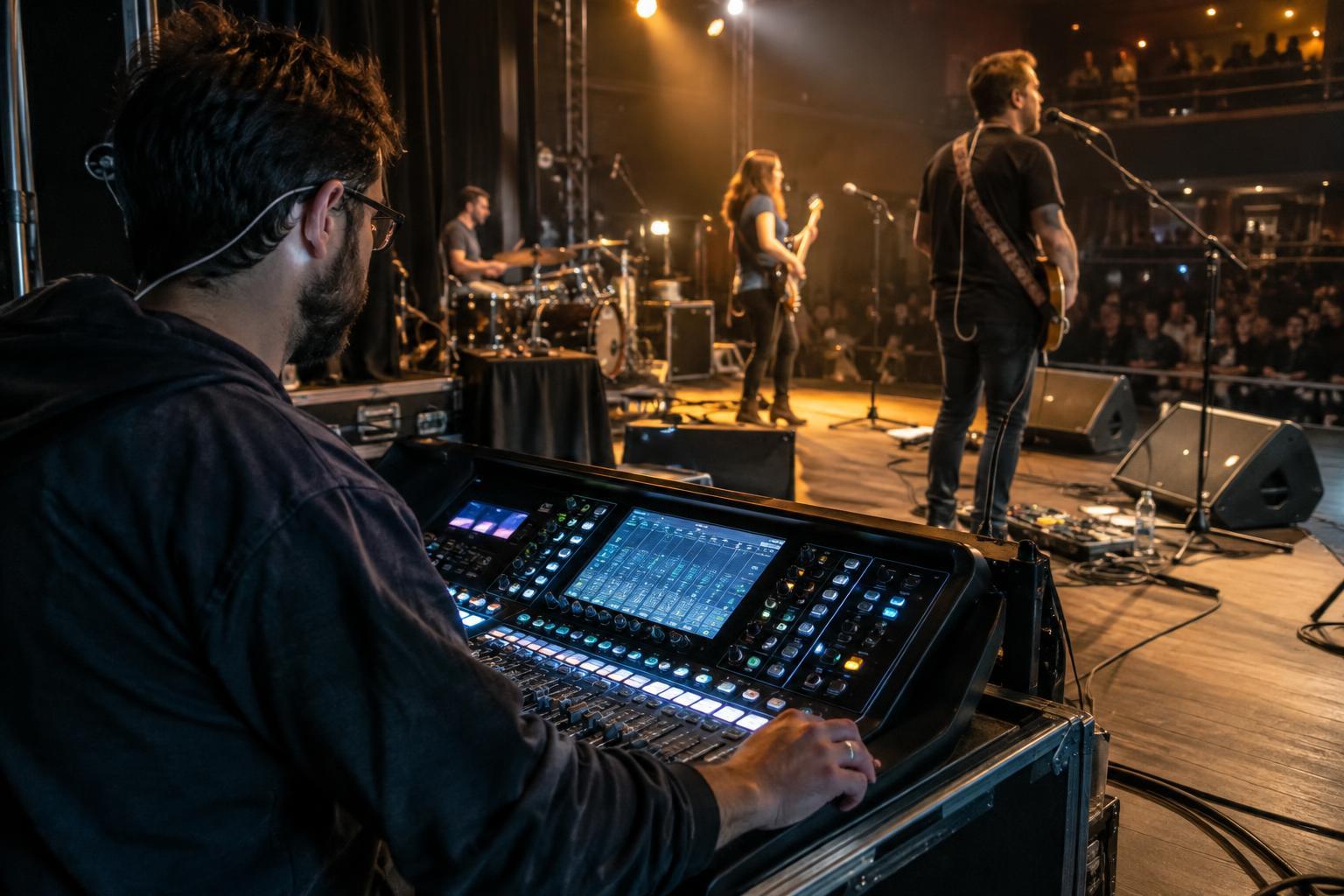
The audience may notice microphones and instruments, but much of setup is less visible. Crews route and secure cables, place monitor equipment, prepare control stations and check that planned cues can be executed. Backline technicians set up and test instruments and associated equipment. Audio crews confirm that signals reach the intended destinations; lighting and video teams check their fixtures, displays and playback paths. Departments also leave room for performers to enter, move and exit as intended.
These checks are not a single dramatic test at the end. They happen throughout the build. Finding a disconnected cable or an obstructed position early is easier than discovering it when performers are waiting for a sound check.
Checks turn a build into a performance
When the physical setup is ready, the focus shifts from assembly to use. Sound check gives performers and audio crews a chance to hear the stage and adjust what the audience will hear. Lighting, video and stage teams may also rehearse transitions or confirm cues. Not every show has the same amount of rehearsal time, so crews prioritize the elements most important to the performance and keep track of changes made during the day.
As doors approach, loose cases are cleared, working areas are tidied and departments confirm that equipment is where it needs to be. During the concert, the crew continues working: technicians watch for faults, stagehands prepare changes, and operators follow cues. A smooth performance often depends on people making many small decisions without drawing attention away from the artists.
Strike is a carefully ordered exit
After the final song, the stage does not disappear all at once. Strike follows dependencies much like setup does, but in reverse. Teams secure or power down equipment as appropriate, remove items that can be cleared immediately and leave other pieces in place until it is safe to take them apart. Cables must be identified and collected, instruments protected, and cases packed so their contents can be found again at the next venue.
Packing is also a space-management task. Gear needs to move through exits without blocking colleagues who are still working. A well-planned truck pack protects equipment and supports the next load-in; if the first items needed tomorrow are buried behind everything else, the next day starts with avoidable work. Before departure, touring and venue teams account for their equipment and restore the space they used.
Load-in, setup and strike rarely receive applause, yet they shape what an audience sees and hears. Their craft lies in making a complicated sequence feel effortless: each department does its work, hands space to the next and leaves the show ready for its next stop.