Before the first cut
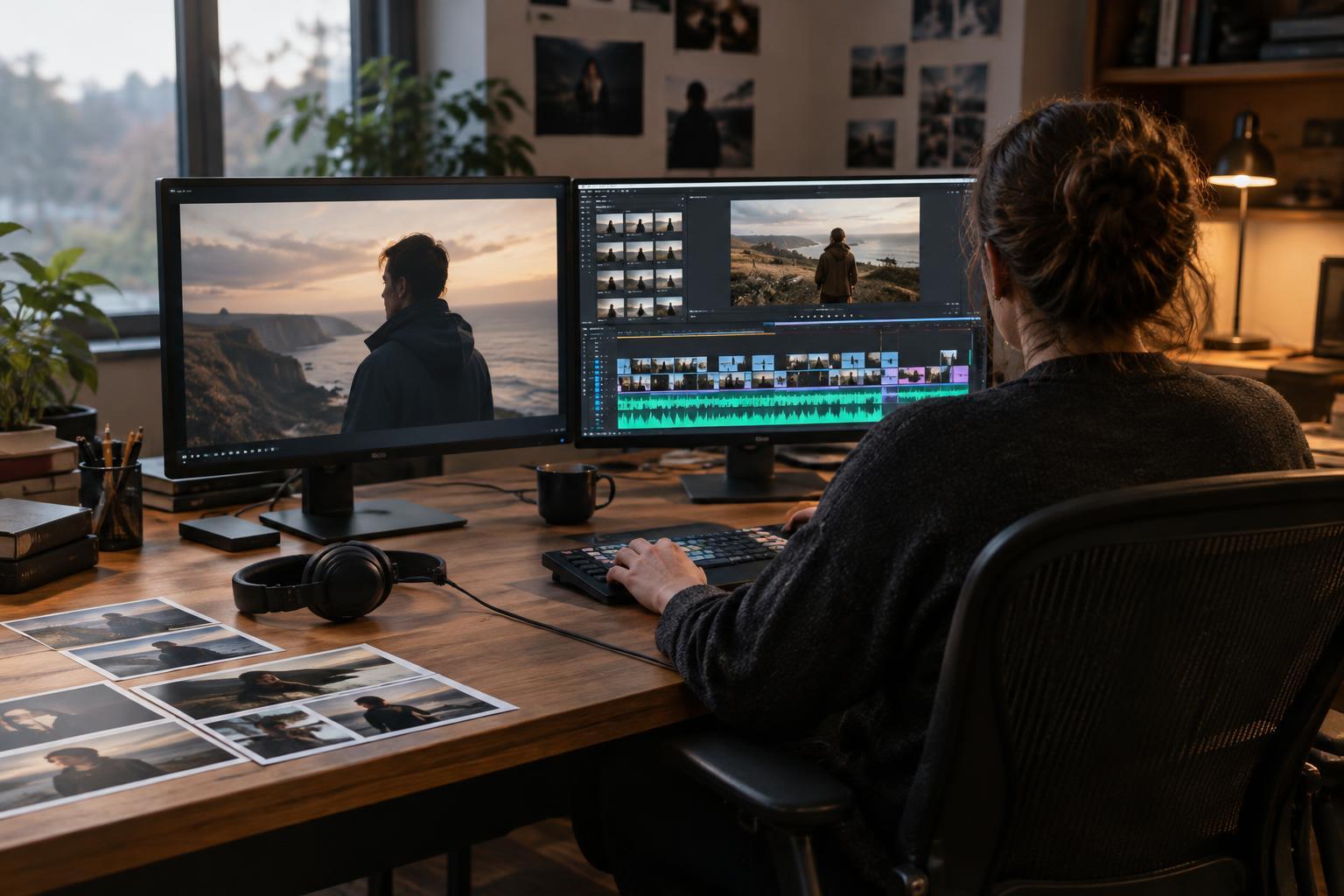
Editing begins with a practical question: can the team find and understand everything that was filmed? Footage and production sound need to be organized, labeled and, where appropriate, synchronized. An editor may group material by scene and take, keep track of script notes, and flag technical issues or especially useful moments. Clear organization makes creative decisions easier later, when a small change to one scene may require a quick search through many alternatives.
The editor also learns what each scene offers beyond its intended place in the script. One take may have the cleanest dialogue, while another carries a more revealing glance. A wide shot can establish a room; a close-up can redirect attention to a reaction. These choices are not simply about selecting the “best” take in isolation. They are about finding pieces that work together and give the viewer the information and feeling the story needs.
The first assembly: putting the whole story on screen
A first assembly places scenes in sequence so the film can be watched as a whole. It often follows the script closely and may leave room around entrances, exits and pauses. At this stage, completeness matters more than polish: the team needs to see whether the planned story is present in the footage and how it plays when one scene leads into the next.
Watching an assembly can reveal problems that were hard to spot on the page or during production. An explanation might arrive after the audience already understands it. Two scenes may do the same dramatic work. A quiet moment may need more space than expected, while an exciting passage loses momentum when viewed in context. None of these discoveries necessarily means the material has failed. The assembly provides a map of what the film is actually doing, rather than only what its makers hoped it would do.
Rough cuts: finding structure and momentum
In the rough-cut stage, the editor and director can make larger changes without treating any scene as untouchable. They may shorten exchanges, move scenes, build transitions or try a different opening. If a character’s decision feels abrupt, the answer might be an earlier reaction shot rather than another line of dialogue. If a sequence drags, the issue might lie in repeated information rather than the speed of individual cuts.
Sound plays a role even before the final mix. Temporary music and effects can help a sequence play coherently, but they can also disguise a weak rhythm. It is useful to ask whether a moment works because of the images and performances, or because a temporary track is supplying the emotion. Rough cuts are a place to test those possibilities. Versions can be compared, notes can be gathered, and choices can be reversed while the film remains flexible.
Fine cuts: making each choice count
As the overall shape settles, attention shifts toward precision. The editor refines the length of a look, the point where dialogue gives way to a reaction, or the instant a scene ends. A cut made a little earlier can create urgency; holding longer can allow discomfort, humor or tenderness to register. Continuity still matters, but a perfectly matched action is not always as valuable as a truthful performance or a clear emotional turn.
Feedback becomes more specific at this stage. Rather than asking whether an entire sequence belongs, collaborators may ask what the viewer understands at a particular moment and whose perspective the scene follows. The editor must also keep the film consistent across revisions: changing one transition can affect music, pacing and the meaning of a later scene. Fine cutting is therefore both detailed and structural, with each small adjustment checked against the experience of watching the whole film.
Picture lock and what comes next
Picture lock means the team has agreed not to change the timing or order of the images as part of the normal editing process. It is a milestone, not a claim that every element of the film is finished. Once the cut is stable, sound editors, composers, visual-effects artists and colorists can work against dependable picture timing. The exact handoffs vary by production, and some work may already be underway before lock.
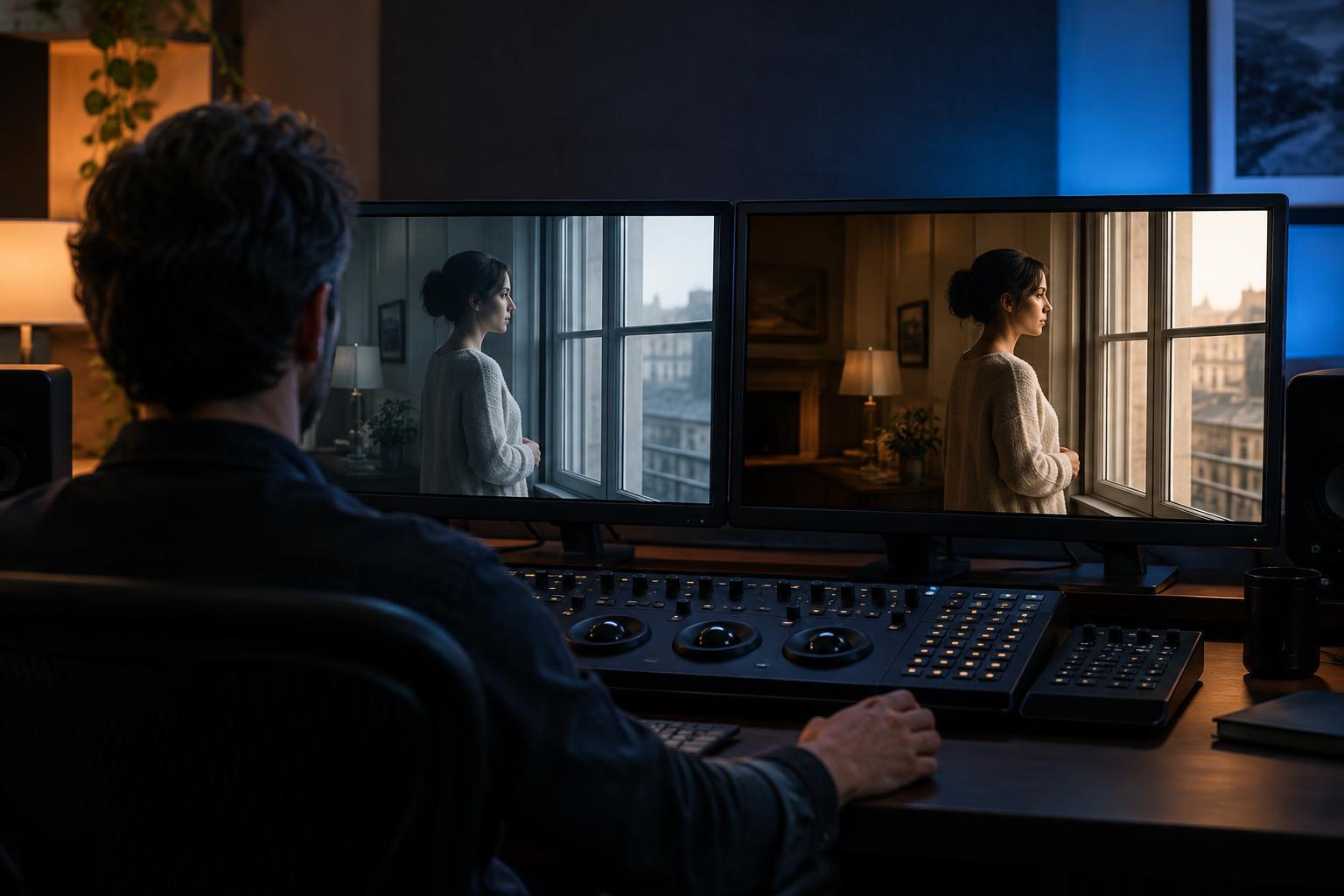
A locked picture gives those finishing teams a reliable framework for shaping detail: a sound can lead into a cut, a visual effect can be completed for its final duration, and a color grade can support the look of a finished sequence. Changes may still be possible, but they can create work across several departments. That is why picture lock matters. It marks the point where the film’s visual storytelling has been tested closely enough for the rest of its craft to come together.