Start with the equipment, not a hiding place
A costume may look effortless from the audience, but a performer wearing a microphone and bodypack needs more than a discreet pocket. The microphone must stay in a useful position, its cable needs a secure route, and the pack has to remain accessible. Those practical requirements are easiest to solve while an outfit is being designed, rather than after it has been finished.
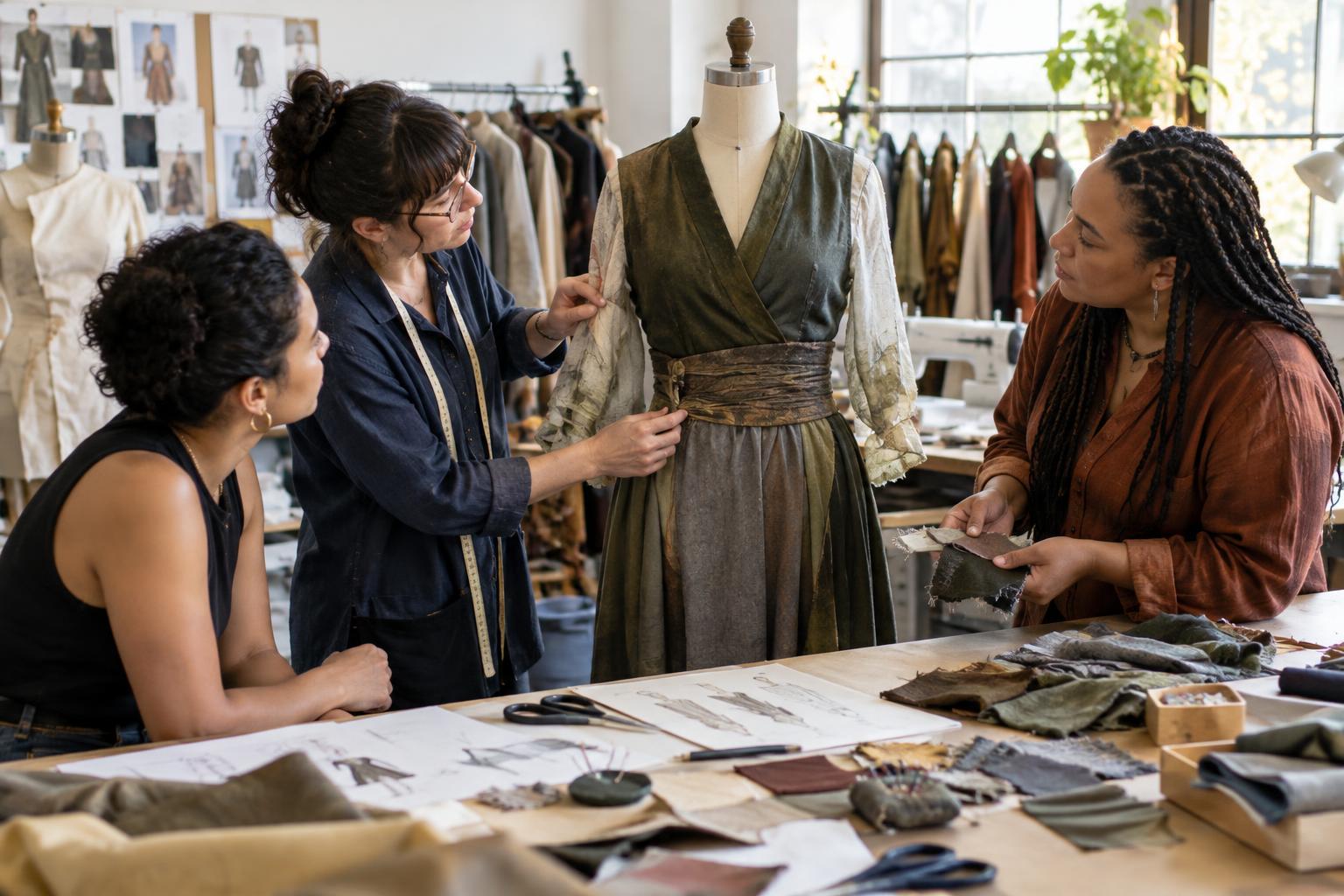
The first conversation should bring together the performer, costume team and sound team. What type of microphone will be used? Where does the sound team expect to place it? Will the performer dance, sit, lift their arms or change clothes during the show? The answers shape the garment. A close-fitting costume, a flowing jacket and a quick-change outfit each create different opportunities and constraints. If the equipment is not yet final, the design can leave room for more than one placement instead of relying on a single narrow solution.
Make the microphone part of the silhouette
A small microphone can still affect the look of a collar, neckline or hairstyle. Its best position depends on the sound setup and the performer’s movement, so costume design should support the placement chosen with the sound team rather than force the microphone into a visually convenient spot. A neckline that repeatedly brushes the capsule, for example, may create noise even when the microphone is nearly invisible.
Fabric choice matters as much as shape. Stiff trims, loose embellishments and layers that rub together can become distracting near a microphone. A design does not have to avoid texture altogether; it needs to account for which surfaces will meet as the performer moves. Before committing to decorative details, it helps to test the costume while the performer speaks, sings or performs the relevant movement. What looks clear in a fitting-room mirror may behave differently during a full rehearsal.
Give the bodypack a secure, reachable home
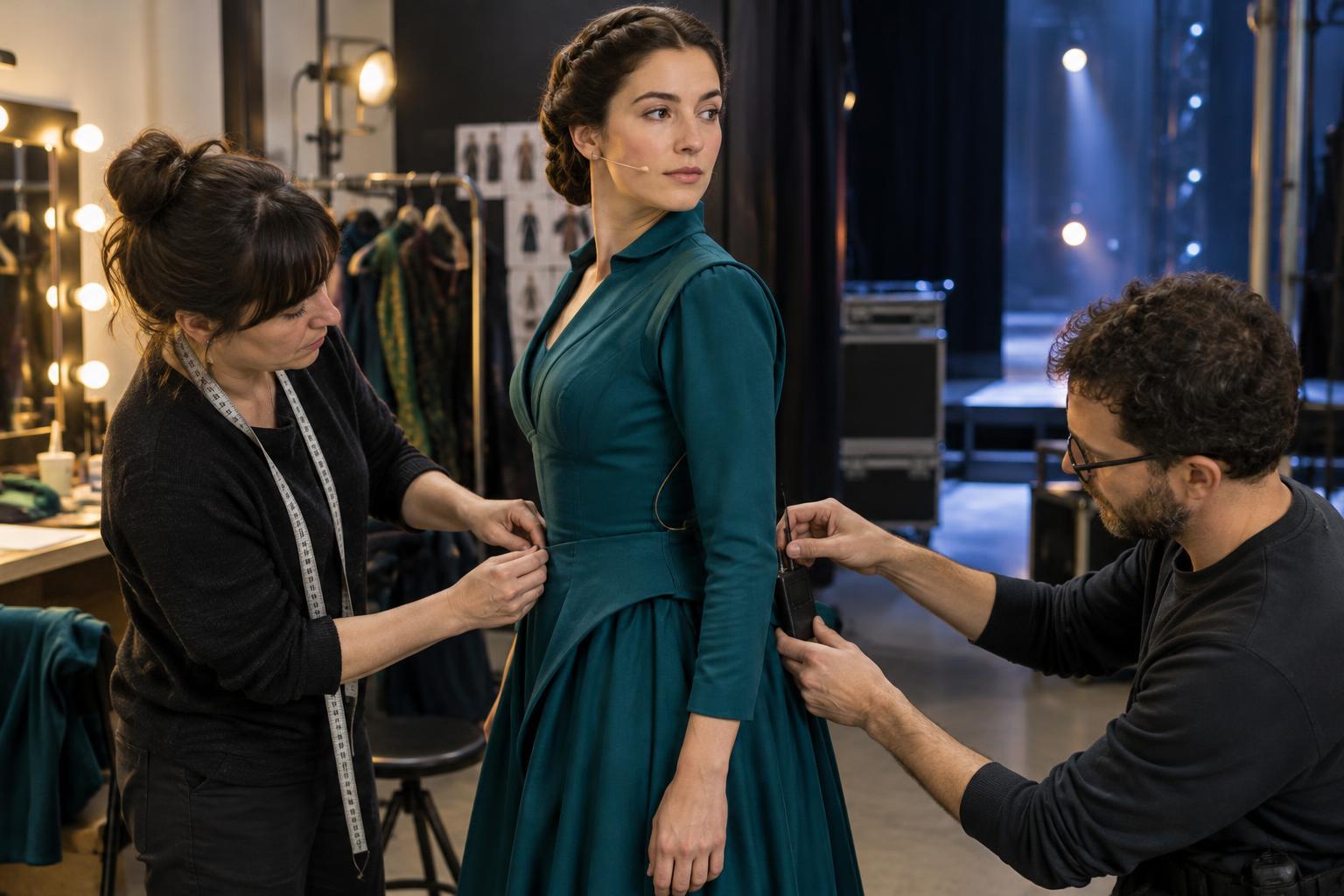
A bodypack needs to stay put without pulling the costume out of shape. Depending on the outfit and the production’s equipment, it might be held in a purpose-made pouch, a structured costume pocket or a separate wearable holder. The chosen position should be comfortable for the performer and stable through the movements the performance demands. It should also avoid creating a conspicuous bulge at an important point in the silhouette.
Concealment is only half the job. Crew may need to reach the pack for checks or adjustments, and the performer may need to remove the costume quickly. Fastenings, linings and overlapping layers should not turn a simple task into a search. Cable routing needs similar care: a cable should have enough allowance for movement without hanging loose where it can snag. The sound team can guide how to secure it for the specific equipment, while costume staff can make sure that solution does not strain seams or interfere with dressing.
Rehearse movement, changes and repeat performances
A static fitting cannot reveal every problem. Run-throughs show whether a pack shifts during choreography, a cable catches when a jacket comes off, or a collar begins to brush the microphone after several minutes. Testing should include the actions that put the outfit under pressure, not just a walk across the room. Listening to the microphone while the performer moves is particularly useful: costume noise may be easier to hear than to see.
Quick changes deserve their own rehearsal. Everyone involved should know which pieces come off first, which equipment stays with the performer and who handles each fastening. Clear routines reduce the risk of tugging on a cable or leaving a pack in a discarded garment. For repeated performances, the team should also consider what happens after cleaning, repairs or alterations. A replacement lining or a slightly changed closure can affect a carefully planned equipment route.
Keep comfort and collaboration visible
An outfit that hides equipment beautifully but distracts its wearer has not solved the problem. The performer should be able to say whether a pack presses uncomfortably, whether a cable restricts movement or whether a placement feels insecure. Bodies, choreography and costumes vary; a setup that works for one person may not suit another. Checking comfort and privacy during fittings is part of good design, not a compromise of it.
The strongest solutions often look unremarkable because they have been worked out in advance. Costume design protects the visual story, sound design protects audibility, and the performer brings both into motion. When those perspectives meet early and are tested together, microphones and bodypacks become practical elements of the outfit rather than last-minute obstacles.