Start with what the costume must do
A production costume is more than an outfit that looks right on a hanger. It helps establish a character, supports the performer’s movement and remains consistent from one appearance to the next. Before deciding where to get it, identify the costume’s job: Does it need to define a silhouette, suggest a particular setting, survive repeated quick changes or withstand close-up scrutiny? The answer may differ for a lead’s signature look and an outfit seen briefly in the background.
It helps to list requirements before looking at suppliers or sewing patterns. Note the intended appearance, the performer’s movements, any planned alterations, the number of duplicates needed and how the costume will be cleaned. For screen work, continuity across takes matters; for stage work, durability across performances may take priority. A useful sourcing decision weighs the whole life of the costume, not just the effort of finding it.
Choose custom-made for specific demands
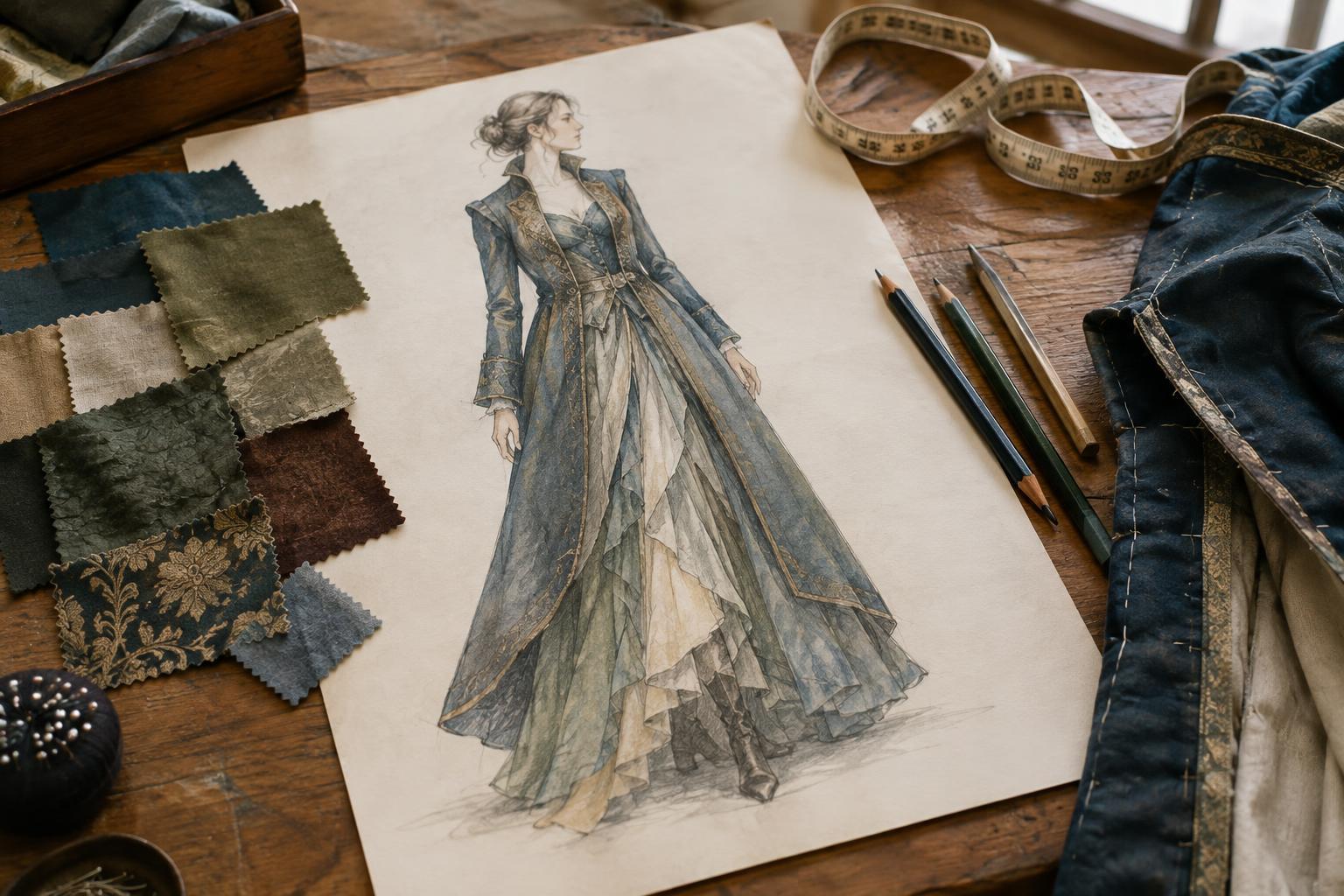
Making a costume from scratch offers the greatest control over shape, fabric, fit and construction. It can be especially useful when a design carries much of the character’s identity, when an unusual movement requirement needs to be built into the garment or when an existing piece cannot be altered without losing its effect. A custom approach also lets the team plan practical details, such as discreet fastenings for a quick change or matching versions of a garment.
That control takes time. Designs must become patterns or working plans, materials must be sourced, and fittings may reveal changes that require further work. Custom does not necessarily mean elaborate: a simply constructed piece may be the clearest way to achieve a precise look. Conversely, a highly detailed design may be difficult to repair or reproduce. Build fitting, testing and adjustment into the schedule rather than treating the first finished version as final.
Rent when access and flexibility matter
Rental collections can offer a wide range of garments without requiring a production to create or keep every piece. They are worth considering for period-inspired looks, ensembles or designs whose main elements already exist. Seeing and trying on a garment can also clarify a character faster than choosing from a description alone. The strongest rental choice is not simply the closest visual match; it is one that fits the performer and the production’s working conditions.
Before committing, confirm what can be altered, who handles cleaning and repairs, and when the items must be returned. A garment that cannot be permanently changed may need temporary adjustments, and a unique piece may be hard to replace if a duplicate becomes necessary. Check the full look under the intended lighting or camera setup where possible. Color, texture and wear can read differently in performance than they do in a stockroom.
Buy with alteration and upkeep in mind
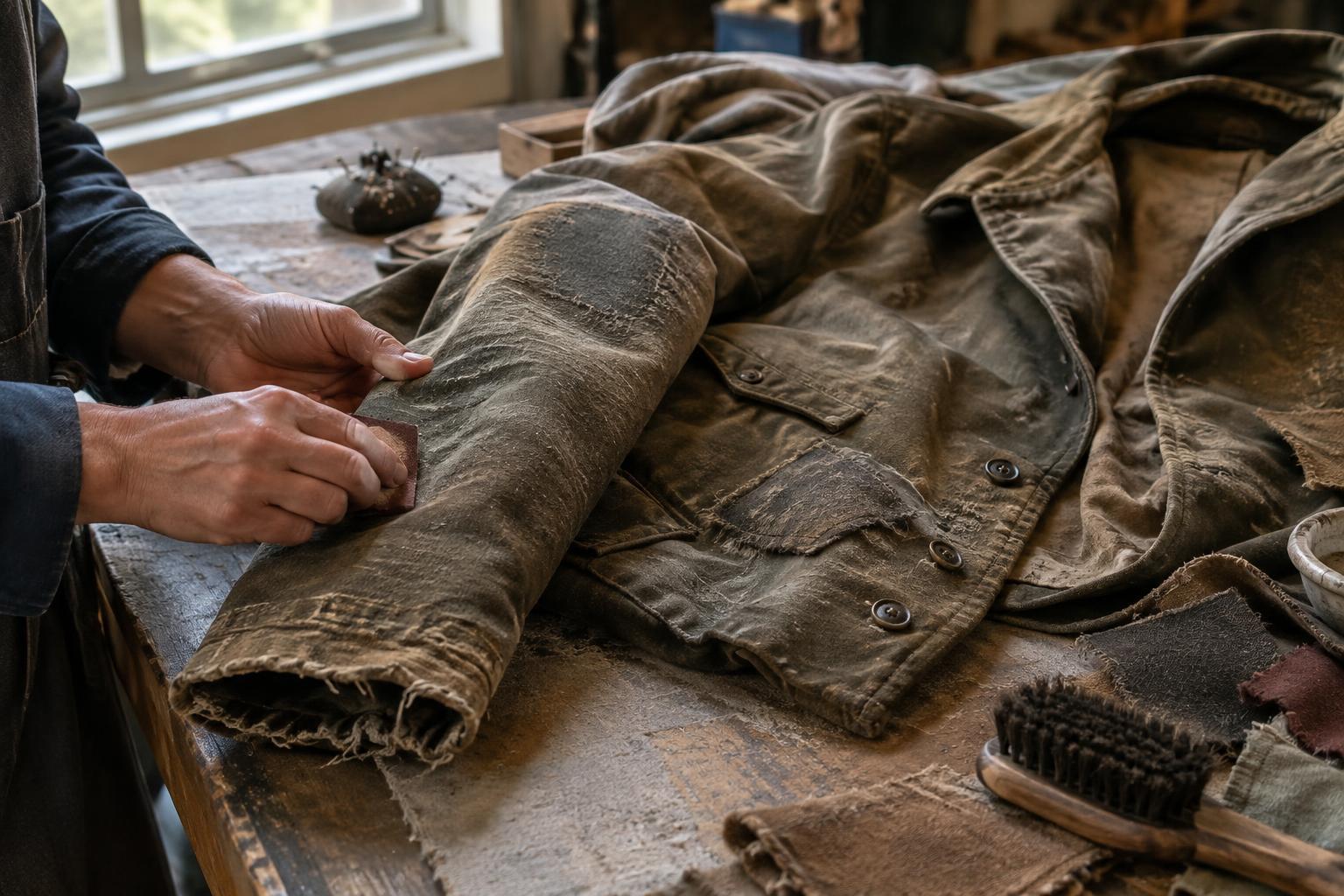
Buying ready-made clothing can be a practical route for contemporary characters or pieces meant to feel familiar. Secondhand finds may bring useful signs of wear, while new garments can be easier to match when multiples are available. Neither route eliminates costume work. Hemming, reshaping, dyeing or distressing may be needed to turn an ordinary purchase into a deliberate design choice.
Availability deserves attention. If a garment is central to a scene, ask whether another can be obtained or whether a substitute would be noticeable. Shoes and accessories need the same scrutiny as jackets and dresses: they affect posture, movement and the completeness of the look. Keep records of sizes, alterations and where pieces came from. Those notes make repairs and replacements easier when a production extends or a look must be recreated.
Use a mixed approach, then test it in action
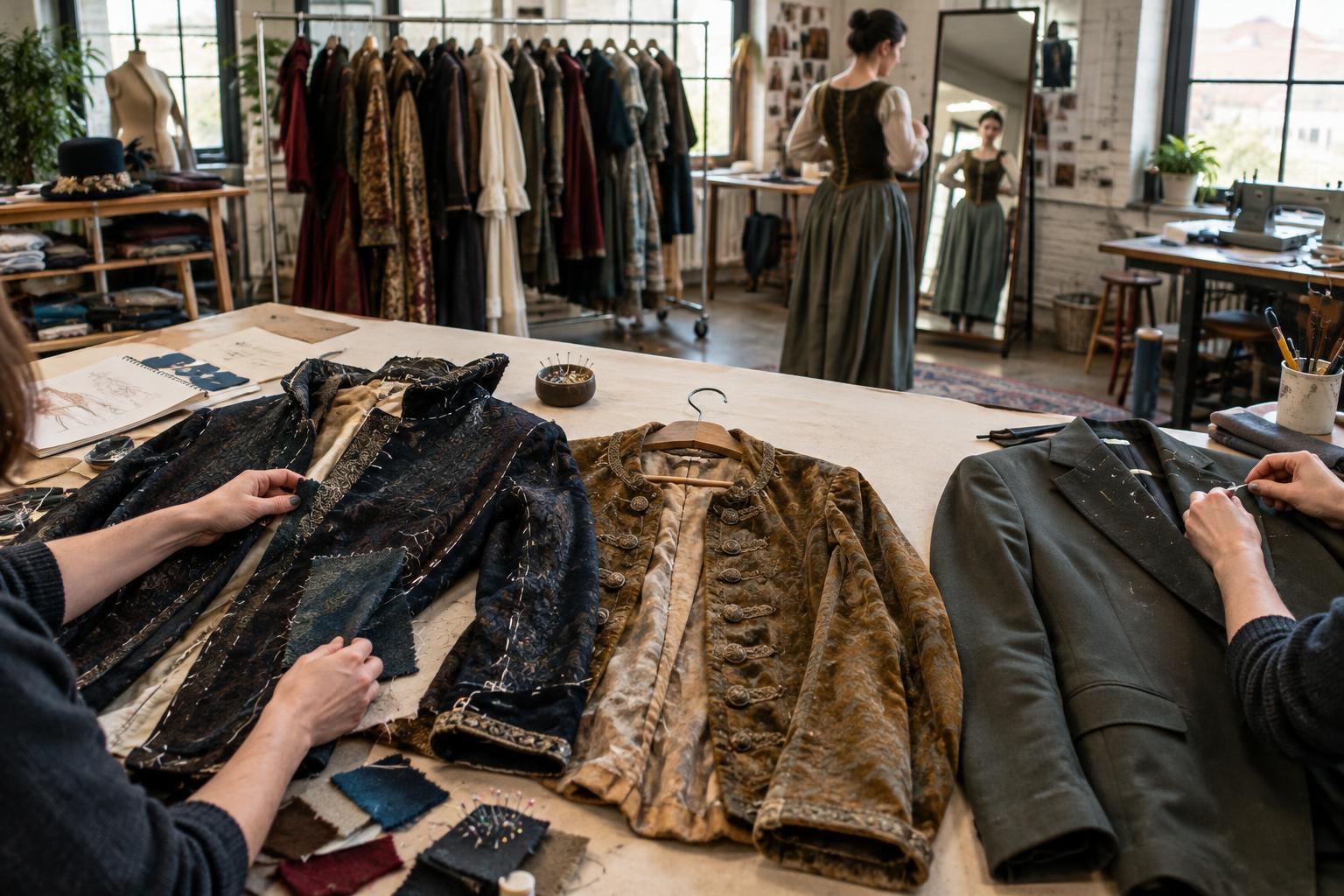
Most productions need not choose one sourcing method for every costume. A custom outer layer might sit over bought basics; a rented garment might be paired with newly made accessories. This lets the team concentrate its effort where the audience will notice it most. It also leaves room for a character’s wardrobe to evolve without rebuilding every look from the ground up.
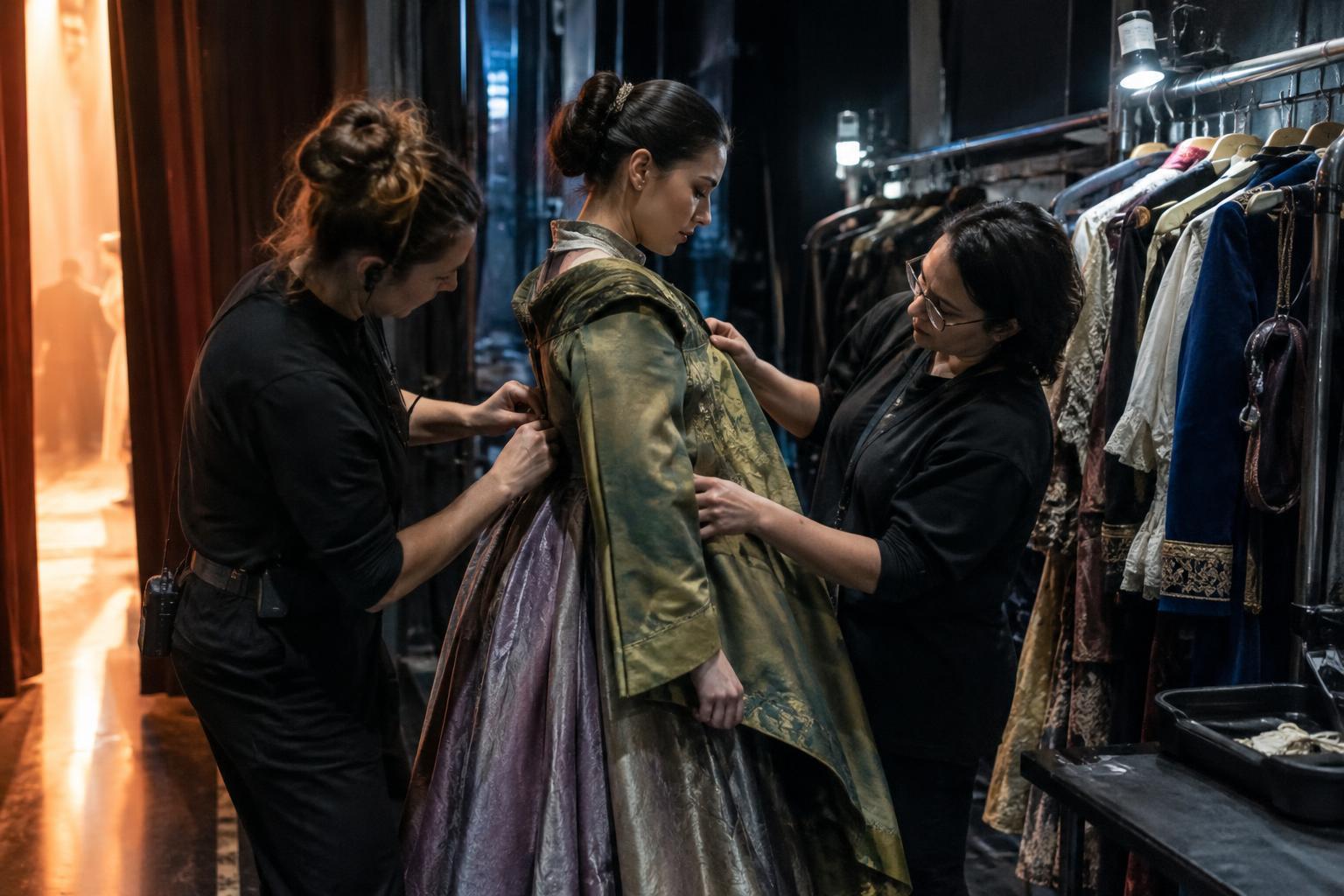
The final test is rehearsal or a camera test, not the fitting-room mirror. Watch how the performer sits, runs, gestures or changes clothes. Listen for noisy materials, check whether fastenings hold and note anything that distracts the performer. Then decide what to adjust, replace or duplicate. Whether a costume was made, rented or bought, its source is successful when the finished look serves the character and keeps working after the first entrance.