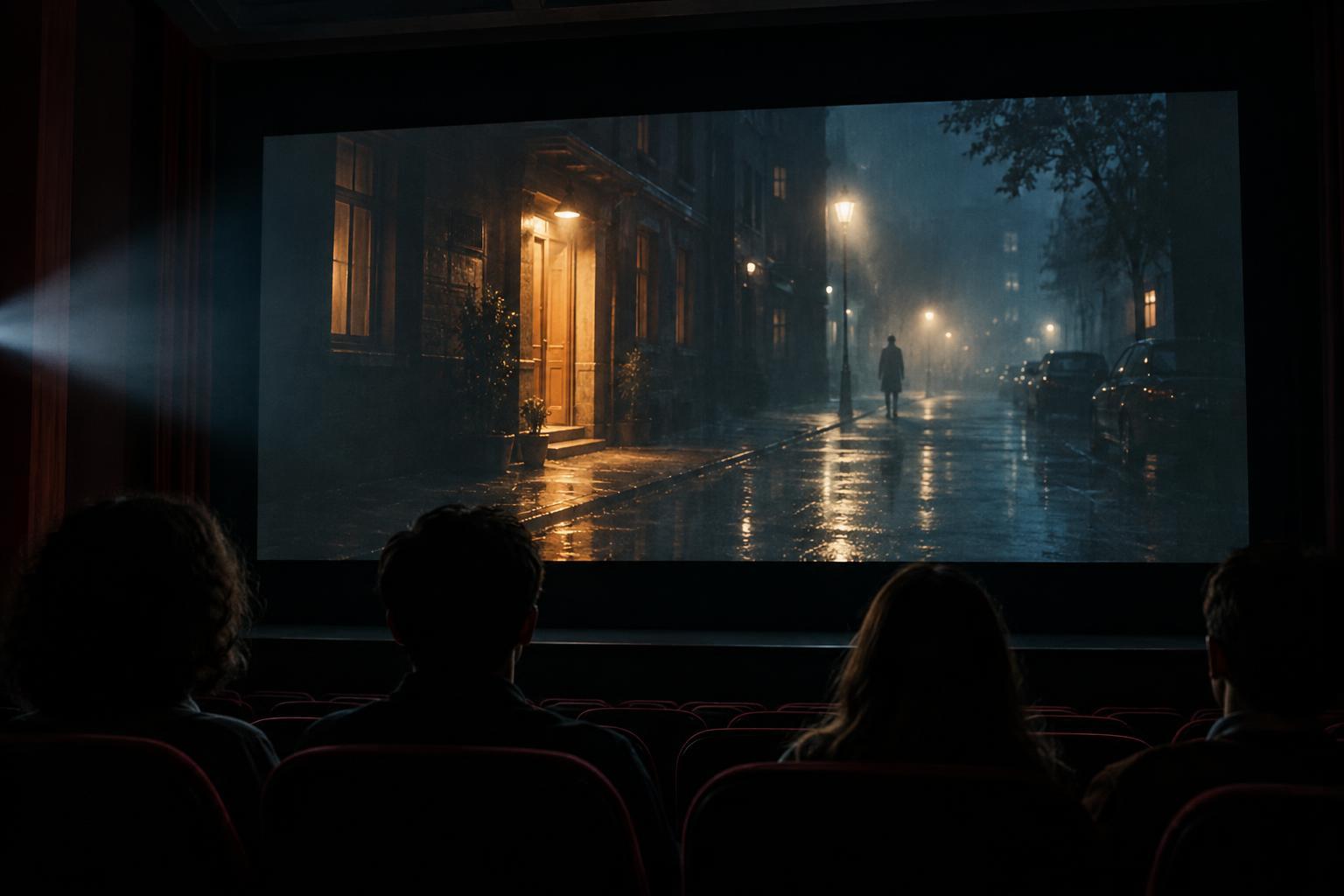
A genre is a promise, not a rulebook
Before a film begins, its genre offers a rough idea of the experience ahead. A mystery invites us to watch for clues. A comedy suggests that awkwardness or conflict may lead to laughter. A horror film asks us to notice what might be hiding just outside the frame. These expectations help viewers find their footing, even when the setting and characters are unfamiliar.
Genres are not rigid checklists. A film can contain a chase without becoming an action film, or tell a love story without being primarily a romance. What matters is the pattern of attention the film encourages: which questions feel urgent, which moments receive emphasis and what kind of payoff seems possible. Filmmakers can follow that pattern closely or let another genre interrupt it.
The tools that make a genre recognizable
Conventions appear in story structure, character roles, sound and visual design. In a detective story, an unanswered question often organizes the plot, while interviews and overlooked details give viewers material to interpret. In a musical, a song can express a feeling that ordinary dialogue has kept contained. Neither device belongs exclusively to one genre, but repeated use makes it familiar enough to set expectations quickly.
Craft choices reinforce those signals. A long pause before a door opens may make an ordinary room feel threatening; brisk cutting and a buoyant score could make the same entrance feel playful. Lighting, costume and performance style also tell us how to read a scene. These elements need not announce a genre loudly. A few well-placed cues can prepare viewers to look for danger, intimacy or humor.
How subgenres sharpen the promise
A broad label rarely describes the whole experience. Within horror, a haunted-house story may build tension around a place and its history, while a creature feature may focus on encounters with a visible threat. A romantic comedy typically makes courtship and comic obstacles central; a romantic drama may give more room to loss, compromise or uncertainty. Subgenres help audiences form a more precise sense of what a film will spend time doing.
They also give filmmakers a useful starting point. A heist film often introduces a goal, a team and a plan, allowing viewers to enjoy both the preparation and the moments when preparation fails. A courtroom drama can create suspense through testimony and competing interpretations rather than physical pursuit. Familiar shapes leave space for distinctive characters, settings and choices; they do not dictate how any particular story must end.
The pleasure of meeting—and missing—expectations
Recognizing a convention can be satisfying. When a mystery plants a small detail early and later reveals its importance, viewers may enjoy seeing how the pieces fit. When an action sequence makes clear where everyone is and what each person wants, its turns become easier to follow and more exciting. In both cases, the film delivers a promised pleasure through careful execution, not simply by repeating a familiar beat.
Surprise works differently when a film has established a pattern first. A comedy can let a joke give way to an unexpectedly sincere moment. A thriller can reveal that the apparent source of danger was a distraction. Such turns are most effective when they remain believable within the film’s world. If a story changes direction without giving viewers a reason to reconsider what they have seen, surprise may feel less like discovery than a broken promise.
Watching genre with curiosity
Genres often overlap. A film might use the investigation of a mystery, the atmosphere of horror and the relationships of a family drama. Rather than asking which single label is correct, it can be more revealing to ask which conventions shape each scene. Does the camera want us to search for evidence, fear what we cannot see or understand a character’s private conflict?
That question makes genre a way to appreciate craft, not just a way to sort films. The next time a scene feels comforting, tense or unexpectedly funny, notice what prepared you to feel that way. A recognizable convention may have guided your attention—and a small change in its timing, sound or performance may have made the moment memorable.