Start with the experience, not a checklist
Comparing a film with its source can be enjoyable detective work. A familiar line disappears; a minor character gains a larger role; a quiet ending becomes a dramatic confrontation. It is tempting to sort every difference into two columns: faithful or unfaithful. That approach can reveal what changed, but it says little about why the change matters.
Begin instead by recalling your experience of each version. Where did your attention settle? When did you feel close to a character, and when were you asked to judge them from a distance? What question lingered after the ending? These impressions give you something more useful to compare than a count of retained scenes. If possible, revisit the source after seeing the film, or leave some time between them. The first version you encounter can feel like the natural one simply because it established your expectations.
Ask what the change makes possible
A page can pause inside a thought, describe a memory, or withhold information through the voice telling the story. A film can put faces in the same frame, let a performance complicate dialogue, or use sound to make an ordinary space feel threatening. Neither set of tools guarantees a particular effect. What matters is how an adaptation uses its tools to replace, reshape, or abandon an effect found in the source.
Take a scene that gives readers direct access to a character’s private doubt. A film might convey that doubt through a hesitation before an answer, a glance at someone else, or a cut away from the character altogether. The useful question is not only, “Where did the inner monologue go?” It is, “What do we understand now, and how did the film lead us there?” Sometimes the new method preserves the emotional tension. Sometimes it creates a productive ambiguity. Sometimes it leaves a gap the story needed to fill.
Follow the theme through the revisions
Plot is the easiest part of an adaptation to compare, but themes often offer a richer thread. Identify one or two concerns that shape the source, such as belonging, ambition, loyalty, or the cost of keeping a secret. Then look at the film’s choices: which relationships receive time, which conflicts become visible, and which consequences remain at the edges? A changed event may still serve a familiar theme, while a scene reproduced almost exactly may take on a different meaning in its new context.
Character changes deserve the same attention. Combining two figures might make a conflict easier to follow, but it can also remove a contrasting point of view. Giving a supporting character more agency might alter whose story the audience believes it is watching. Rather than treating every addition or omission as an automatic gain or loss, trace its effects. Who gets to act? Who gets to explain themselves? Whose perspective frames the ending?
Notice the work of performance and film form
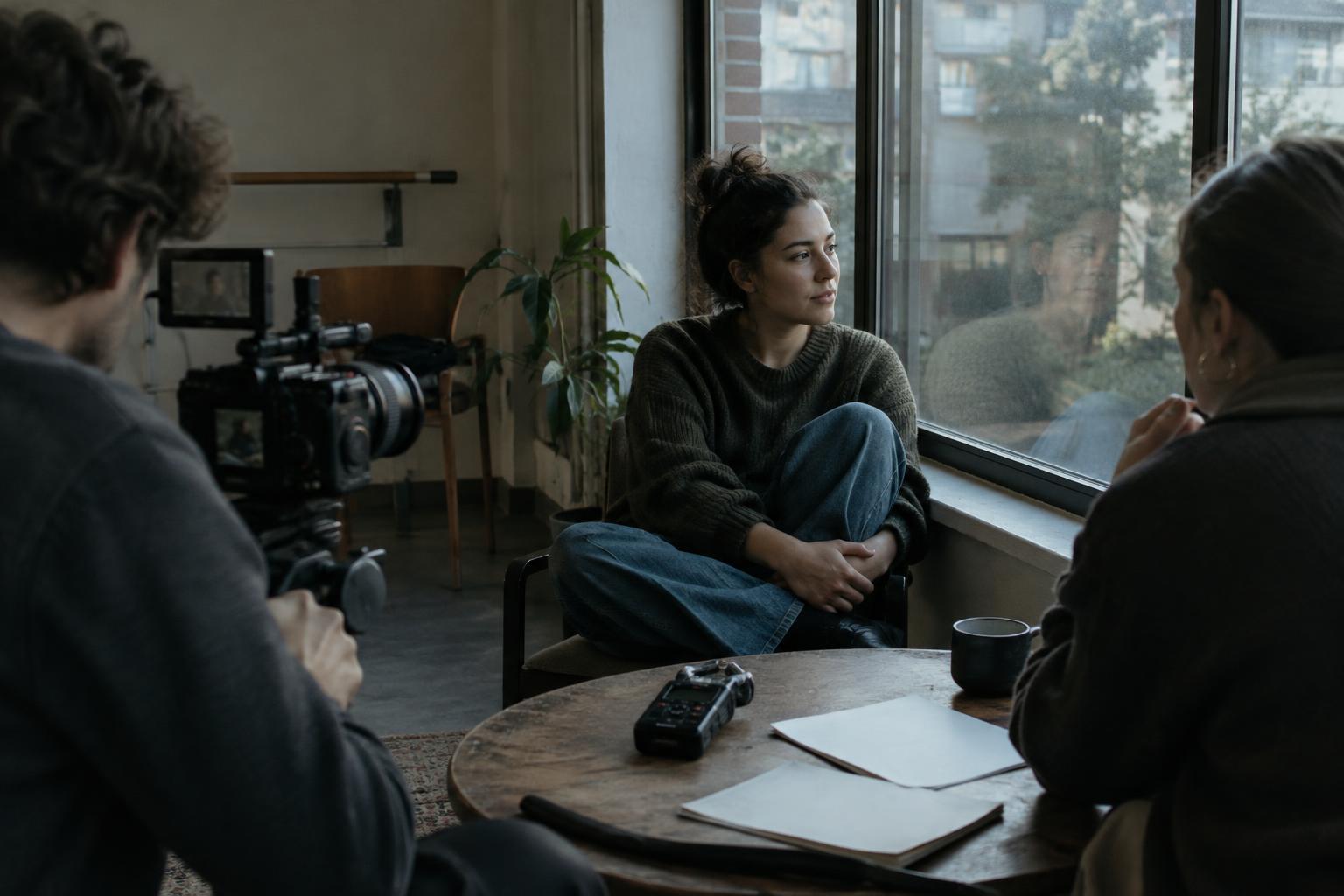
An adaptation is not just a revised script. Casting, acting, framing, editing, music, costume, and production design all influence how a story reads on screen. A line that seems harsh on the page may sound tender in an actor’s delivery. A lavish setting may make a character’s loneliness more striking, or it may pull attention away from it. Look for moments where the film makes an interpretation without stating it outright.
This does not mean every visual choice needs a hidden symbolic meaning. Start with what you can observe. Is a conversation filmed as an exchange, or does one person dominate the frame? Does the pace let discomfort build, or move quickly past it? Do clothes and spaces suggest that a character belongs in their world, or is struggling to fit? Such questions keep the comparison grounded in the film you actually watched, rather than the film you imagined while reading.
Make room for two judgments
It is possible to value a source and think its adaptation fails. It is also possible to prefer the film while recognizing that it narrows an idea the source explored more fully. Try making two judgments before combining them: Does the film work on its own terms? And what does it gain or lose in conversation with the source? This prevents affection for one version from becoming the only standard for the other.
A strong comparison does not have to end in a verdict about which version is better. It can identify a meaningful trade-off: clarity gained at the expense of mystery, intimacy gained at the expense of scope, or a new point of view that changes the story’s emphasis. Fidelity is one possible artistic choice. The more interesting question is whether the choices an adaptation makes add up to an experience worth considering.