Start with what the object lets a character do
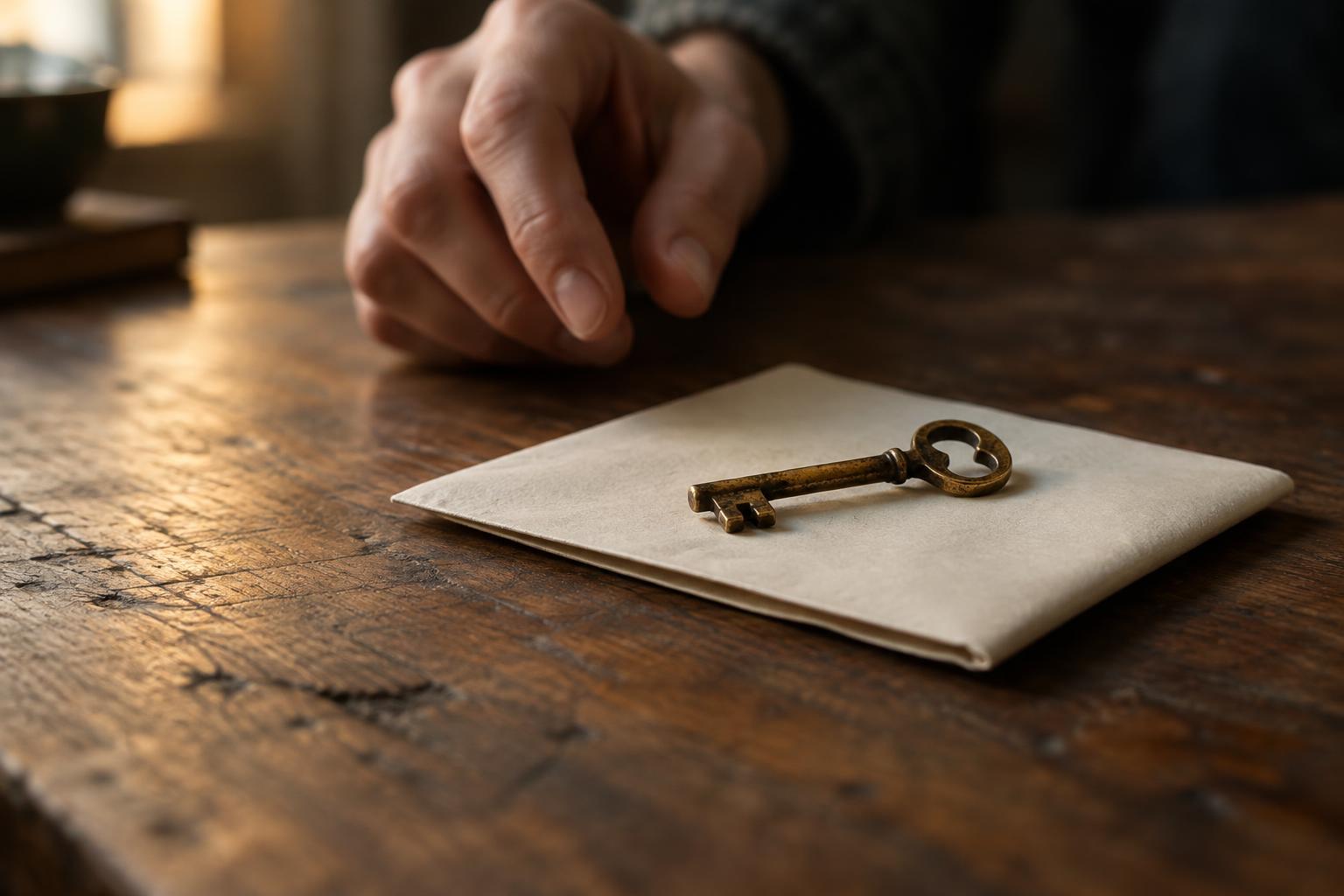
A prop is an object an actor can use or interact with on screen. Some props serve an immediate purpose: a key opens a door, a cup gives someone something to hold, and a letter delivers information. But the action around an object can matter more than the object itself. A character who hands over a key may be offering trust, surrendering control or simply asking someone to lock up. The surrounding scene helps you decide which reading fits.
When watching, try describing the action before assigning it a meaning. Who picks the object up? Who puts it down? Does anyone refuse to touch it? These observations keep an interpretation grounded in what the film shows. They also leave room for ordinary explanations: a cup might help an actor move through a conversation without becoming a symbol of anything larger.
Notice when the film asks you to look
A film can draw attention to a prop through a close shot, a pause before someone opens it, or a reaction from another character. Its placement can matter too. An object left in the middle of a table is easier to notice than one tucked into a crowded shelf. None of these choices guarantees a hidden message. They do suggest that the object is worth remembering, whether it becomes important to the plot or helps establish a character’s habits.
Sound can strengthen that invitation. The click of a latch or the rustle of paper may make an action feel unusually deliberate, even if the object is small. Compare that moment with nearby scenes: does the film usually give everyday actions this much attention? If not, ask what changes because you noticed this one. The answer may be suspense, a piece of practical information or a better sense of how a character feels.
Follow what changes when a prop returns
A returning object gives viewers a useful point of comparison. A photograph kept carefully in one scene and hidden in another may suggest a change in how its owner wants to be seen. An item passed between characters can show a shift in responsibility without anyone announcing it. To follow that shift, note where the object appears, who possesses it and how each person handles it. Its meaning may change even when the object looks exactly the same.
Be cautious about assuming every repeat is a planned clue. Familiar objects also make a fictional world feel lived in. A stronger reading connects the prop’s return to a visible decision or consequence. If removing the object would make a character’s action harder to understand, it is probably doing clear storytelling work. If not, its contribution may be quieter: helping a room, routine or relationship feel consistent.
Separate the film’s use of an object from its real-world history
A period film might put a coin, tool or piece of stationery in someone’s hand to make a setting feel tangible. The scene can tell you what that object means to the characters, but it cannot by itself establish how accurately the object represents its period. Production choices, story needs and the limits of what is visible on screen can all affect what you see. It is useful to keep two questions apart: what does the object do in this scene, and what would I want to learn about it outside the film?
If an on-screen coin sparks curiosity about objects from the past, browse Coin History · The Coin Collector's Desk for further reading on coin history. That detour can be enjoyable without becoming proof that a particular film got every detail right. On a first viewing, focus on the exchange happening in front of you. On a later viewing, look at how the object is introduced, used and returned to. Those simple observations can reveal how much storytelling happens through actions rather than dialogue.