The location changes even when the script does not
An exterior scene may look simple on the page: two characters meet beside a road, exchange a few lines and leave. On location, the surroundings rarely stay still. Sunlight moves, shadows cross faces, wind rises and falls, and ordinary activity can interrupt a take. The crew’s task is not to eliminate every change. It is to decide which changes matter to the scene and how to work around them.
Preparation starts with the planned shots and the conditions each one needs. A wide shot may depend on a particular view, while a close-up may be easier to film when the light is softer. The director, cinematographer and assistant director can use that information to shape the order of work. A useful plan also leaves room to adjust: an exterior schedule that relies on every condition staying exactly the same is a fragile one.
Working with daylight and sound
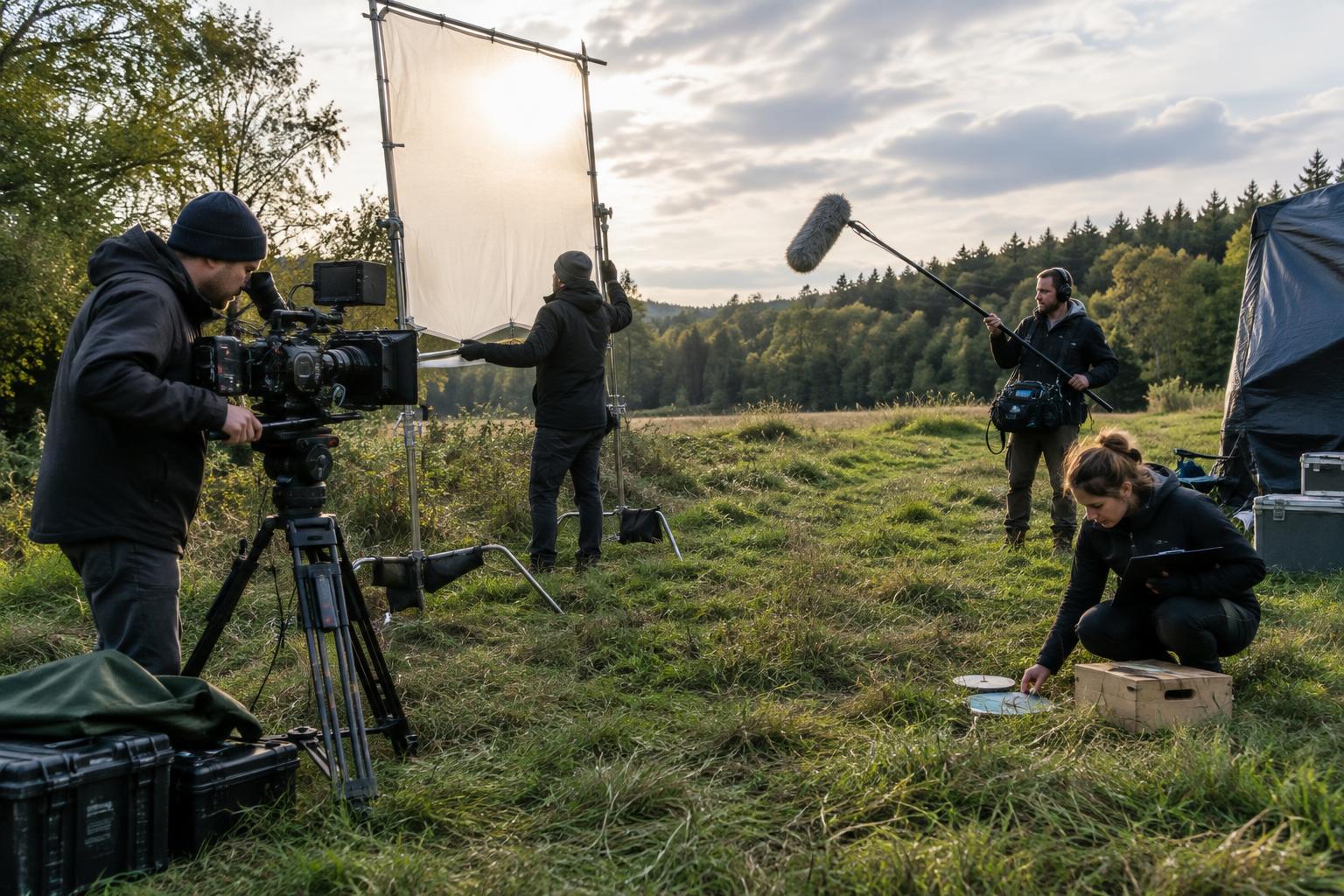
Daylight affects both appearance and timing. If a conversation is filmed over several hours, the angle and strength of the sun may change noticeably between shots. Camera and lighting crews can use shade, diffusion or reflected light to make faces more consistent, depending on the scene and available equipment. They also watch the background. A shadow that moves across a wall can make two otherwise matching takes difficult to cut together.
The sound team faces a different set of moving conditions. Wind can reach a microphone even when it is barely noticeable to the performers. Traffic, aircraft, machinery or nearby conversations may come and go without regard for the shooting schedule. Sound crew members choose microphone positions and wind protection, listen for interruptions, and flag problems before the team moves on. If a location has a recognizable background sound, recording some of that ambience separately may help the edit build a coherent scene later.
Neither department works in isolation. Moving an actor into shade may improve the image but place them closer to a noisy path. Turning the camera to avoid a harsh patch of sunlight may reveal a busy road. Exterior filming often involves small compromises made jointly, with the story’s needs guiding which problems deserve the most attention.
Keeping people, props and ground conditions consistent
Continuity becomes especially visible outdoors. A performer’s hair may shift in the wind, a jacket may be zipped differently, or a hand prop may be set down on a new surface. Script supervision and the relevant departments track details that could affect adjoining shots. They may also note larger environmental changes, such as a path becoming wet between takes or a background area filling with people.
Ground conditions matter beyond appearance. Uneven surfaces can affect camera movement, equipment placement and where performers can comfortably stand. Rain may turn a workable route into a slippery one; strong wind may require crews to secure items that were stable earlier. Department heads and production staff can reassess a setup when conditions change rather than assuming that a plan made at the start of the day still fits.
Wardrobe and makeup teams have their own exterior challenges. Clothing should maintain the intended look across takes, even as layers are added or removed between setups for comfort. Makeup may need attention after heat, cold or rain. These adjustments are not separate from the performance: helping a performer stay comfortable enough to repeat an action can make a demanding outdoor scene more manageable.
Planning for a workable day, not a perfect one
A productive exterior shoot depends on clear priorities. The team needs to know which shots are essential, which can be adapted and when a change in conditions calls for a new approach. The assistant director helps coordinate those decisions across departments so that a sound interruption, lighting adjustment or equipment move does not become a series of disconnected delays.
Outdoor conditions also make observation useful for anyone curious about the craft. On an ordinary walk, notice how quickly a face changes when someone moves from open sun into shade, or how a distant road becomes audible when the wind drops. For more ideas about spending time in changing landscapes, browse Walking and Day Trips · Trail and Thread; for practical considerations around dressing for the outdoors, explore Outdoor Clothing · Trail and Thread; and for a wider range of outdoor topics, look through Outdoor Skills · Trail and Thread.
The finished scene may feel effortless precisely because the crew responded to what the location was doing. Exterior filmmaking is less about forcing the world to stand still than about noticing its changes early, communicating clearly and preserving what the audience needs to follow the story.