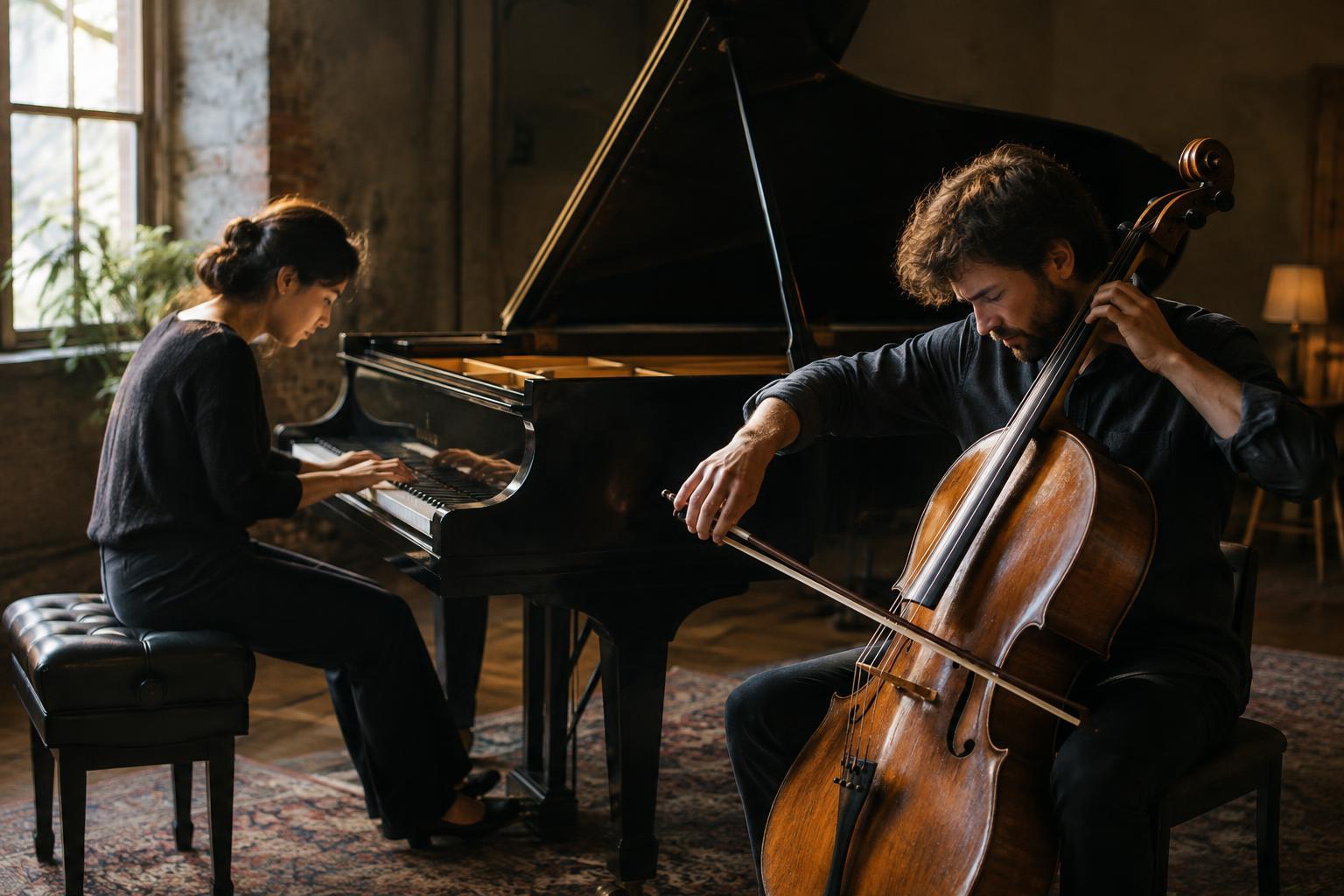
Dynamics give a song its shape
A song can keep the same melody and tempo yet feel different from one performance to the next. One reason is dynamics: the ways musicians vary a sound’s strength and intensity over time. A singer might begin a phrase gently and let it grow. A drummer might hold back during a verse, then play with more force in the chorus. These choices help listeners sense where the music is going, even when the notes themselves do not change.
Dynamics are often described as loud and soft, but volume is only part of the experience. A quiet passage can feel tense if the notes are short and precise. A louder passage can feel open rather than forceful if the musicians play long, smooth tones. Instead of asking only whether a section got louder, ask what changed in its character. That question makes it easier to hear how performers turn a sequence of sections into an expressive journey.
Intensity does not require more volume
Musicians can build intensity without making every instrument louder. A guitarist might play fewer notes but strike each one more firmly. A singer might move from a breathy delivery to a clearer, more direct tone. A keyboard player might shift from widely spaced notes to a denser pattern. Each change draws attention in a different way, and a group can combine them to make a passage feel fuller.
The opposite choices matter too. When several players simplify their parts at once, the music may feel as though it has opened up. If only one instrument remains active, a familiar line can suddenly sound exposed. That moment of restraint gives the next entrance something to contrast with. Constant intensity leaves little room for surprise; variation helps a listener recognize which moments the performers are inviting them to notice.
Contrast works across a whole song
Dynamics can unfold within a single phrase or across an entire arrangement. A gradual build might begin with one instrument, add another, and reach its strongest point near the end of a section. A sudden change can work differently: a full ensemble stops, leaving a voice alone for a line. Neither approach is automatically more effective. Its impact depends on what came before and whether the shift suits the song’s mood.
Performers also have to leave space for one another. If every player emphasizes the same moment with equal force, an important lyric or instrumental figure may be harder to distinguish. One musician can step forward while others ease back. In a live performance, those balances may change from night to night as players respond to the room and to each other. The underlying arrangement can stay recognizable while its small rises and falls remain flexible.
A simple way to listen for dynamics
Choose a recording and listen once without trying to identify every instrument. Notice the points where the music feels closer, more distant, fuller or more exposed. On a second listen, pick one of those moments and ask what produced the change. Did someone play more strongly? Did an instrument drop out? Did the singer change tone, or did the rhythm become busier? Several small decisions may be working together.
Then listen to the passage immediately before the change. A powerful entrance often owes some of its effect to a quieter setup. Likewise, a gentle ending may feel especially calm because it follows a dense section. You do not need technical vocabulary to hear this relationship. Paying attention to contrast can reveal the craft behind a performance: not just what musicians play, but how they guide your attention from one moment to the next.