A setting is bigger than any single shot
A film can show a character standing in a room without showing every wall, doorway or adjoining space. Viewers still form a working picture of the place. They infer where someone could enter, what might lie around a corner and how far apart the characters seem to be. Filmmakers can help build that picture, but they can also leave parts of it uncertain.
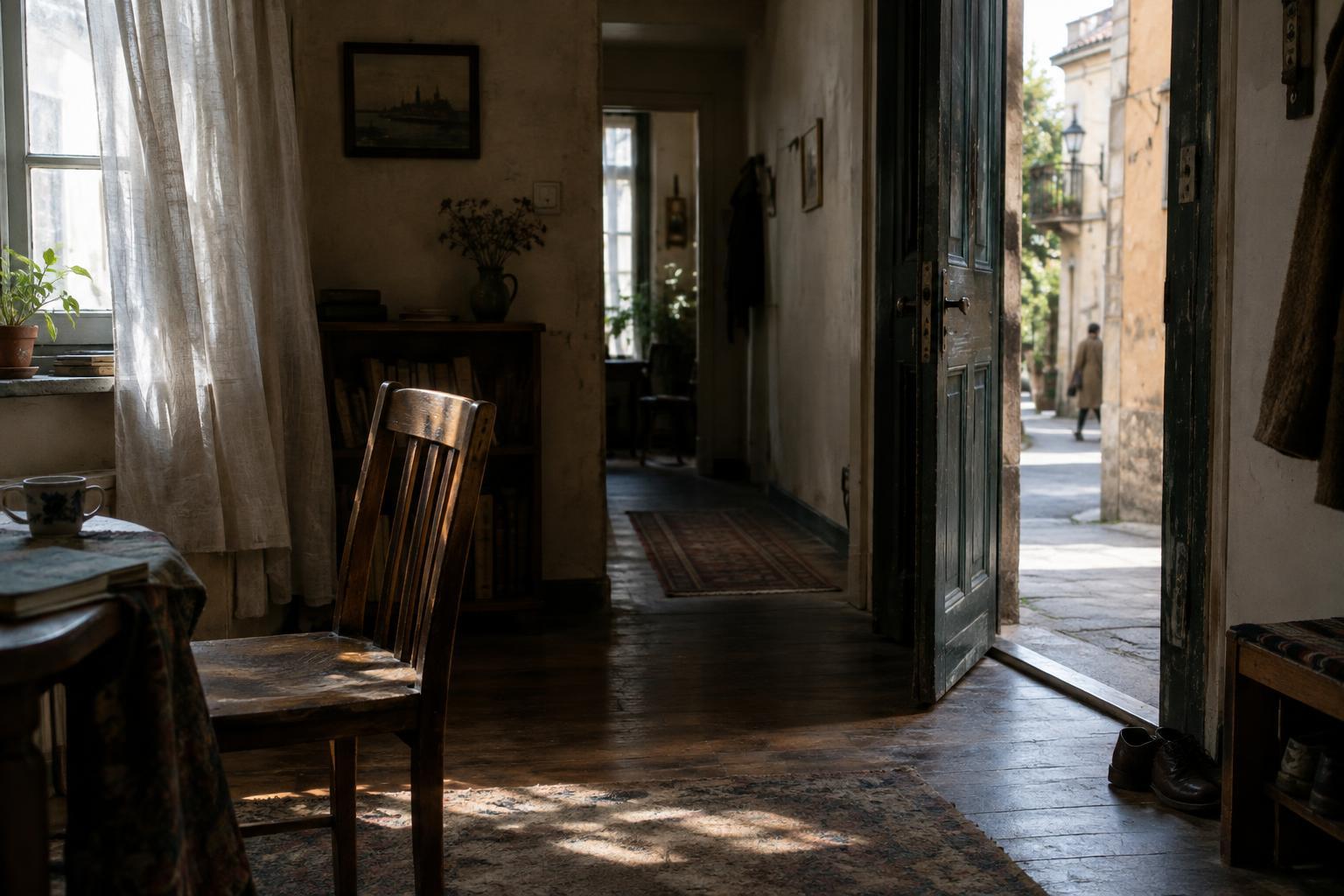
This sense of place matters because space shapes action. A hallway offers a route of escape; a crowded table limits movement; a window can connect an interior scene to the world outside. Paying attention to these features can make an ordinary conversation more revealing. Instead of asking only what the characters say, ask where they are able to look, move and listen.
How a film introduces a location
An establishing view often gives viewers a broad look at a place before the film moves closer to the people in it. It might show a building from the street or a room with several characters already positioned inside it. This wider view provides a useful reference point: when a later shot isolates a face or an object, viewers have some idea of where it belongs.
Not every scene begins this way. A film may start with a close view of a hand unlocking a door, then reveal whose hand it is and what lies beyond the door. That delayed orientation can create curiosity or make viewers share a character’s uncertainty. The question is not whether a film has supplied a complete floor plan. It is whether the information it gives—or holds back—changes how the scene feels.
When watching a new location appear, notice the order of details. Do you see the whole room before the people, or meet the people before you understand the room? Is an exit easy to spot? Does the camera return to the same landmark? Those choices help establish which parts of a place seem important.
What happens outside the picture
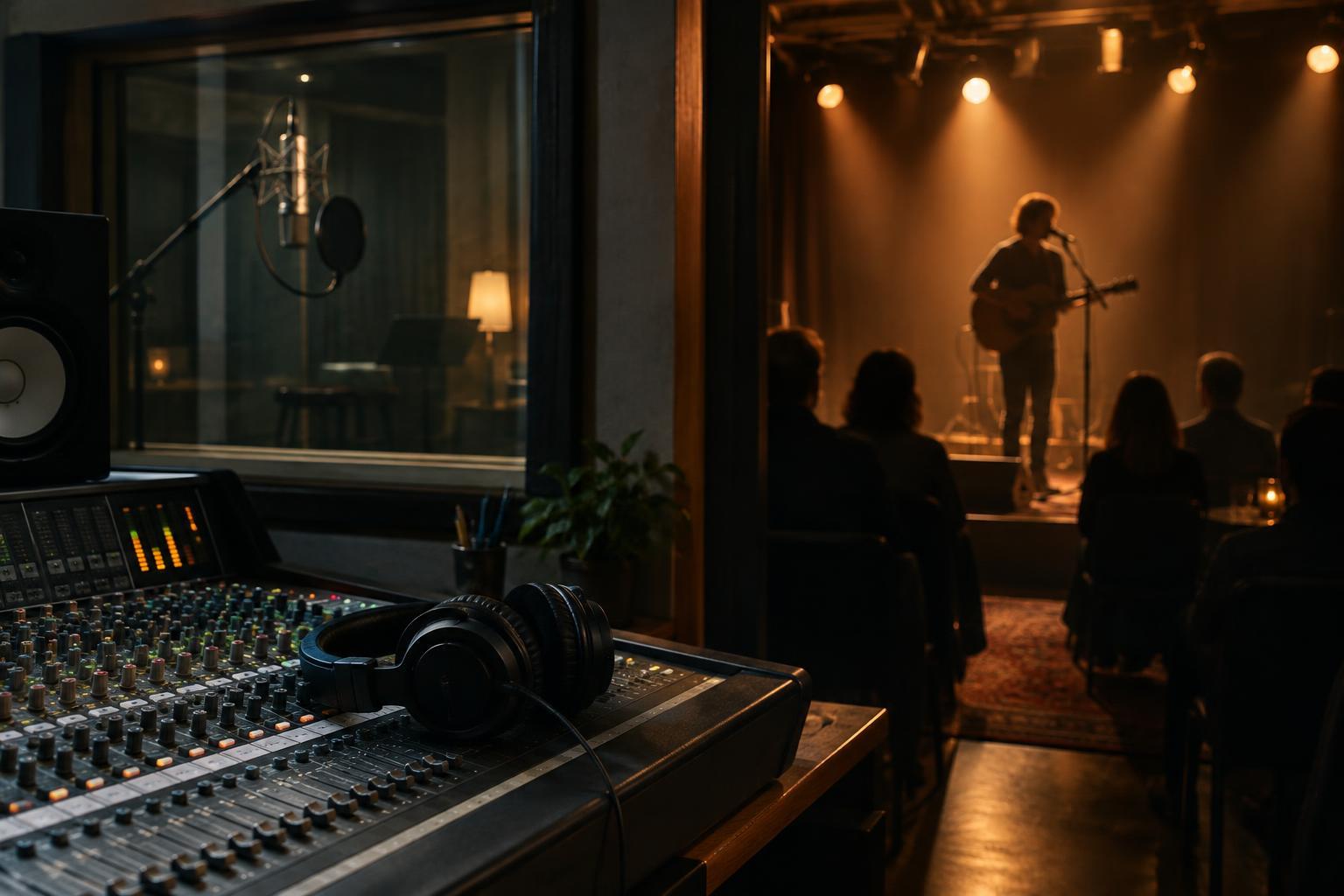
The frame has edges, but a scene’s world does not have to end there. A character might turn toward a voice we hear but cannot see. Footsteps may approach from another room. Someone may leave the picture while the camera stays behind. Each cue encourages viewers to imagine activity outside the visible area, sometimes making a modest setting feel much larger.
Offscreen space can also create tension without showing a threat. If a character keeps watching a doorway, the doorway becomes important even while it remains empty. If a noise comes from behind the camera, viewers may become newly aware of the space they cannot inspect. The effect depends on context: an unseen sound might signal danger in one scene and ordinary household activity in another.
Sound is especially useful for connecting separate views of a place. Conversation continuing across a cut can suggest that two shots belong to the same uninterrupted moment. Background noise, such as traffic heard from indoors, can remind viewers that a room sits within a wider environment. These cues need not identify an exact location to make it feel inhabited.
Small details can redraw the map
A close view of a key, a photograph on a desk or a crack beneath a door can briefly narrow attention to one detail. When the film returns to a wider view, that detail may change how viewers understand the entire space. A door that first looked like part of the background can become the focus of a scene once we know someone is waiting behind it.
Films may also show a place differently as a story develops. A familiar room can feel open when characters move through it freely, then confining when furniture blocks their paths or the camera shows only fragments of it. The physical set may be unchanged; what changes is the information available to viewers and the attention given to particular areas.
To practice noticing spatial storytelling, choose a short scene and watch it twice. On the first viewing, follow the action normally. On the second, note what you learn about the location from each new view and sound. Identify one area the film never shows, then consider whether that absence matters. You do not need to reconstruct a perfect map. The aim is to see how a film guides your sense of what is nearby, what is reachable and what remains unknown.