A performance is a conversation
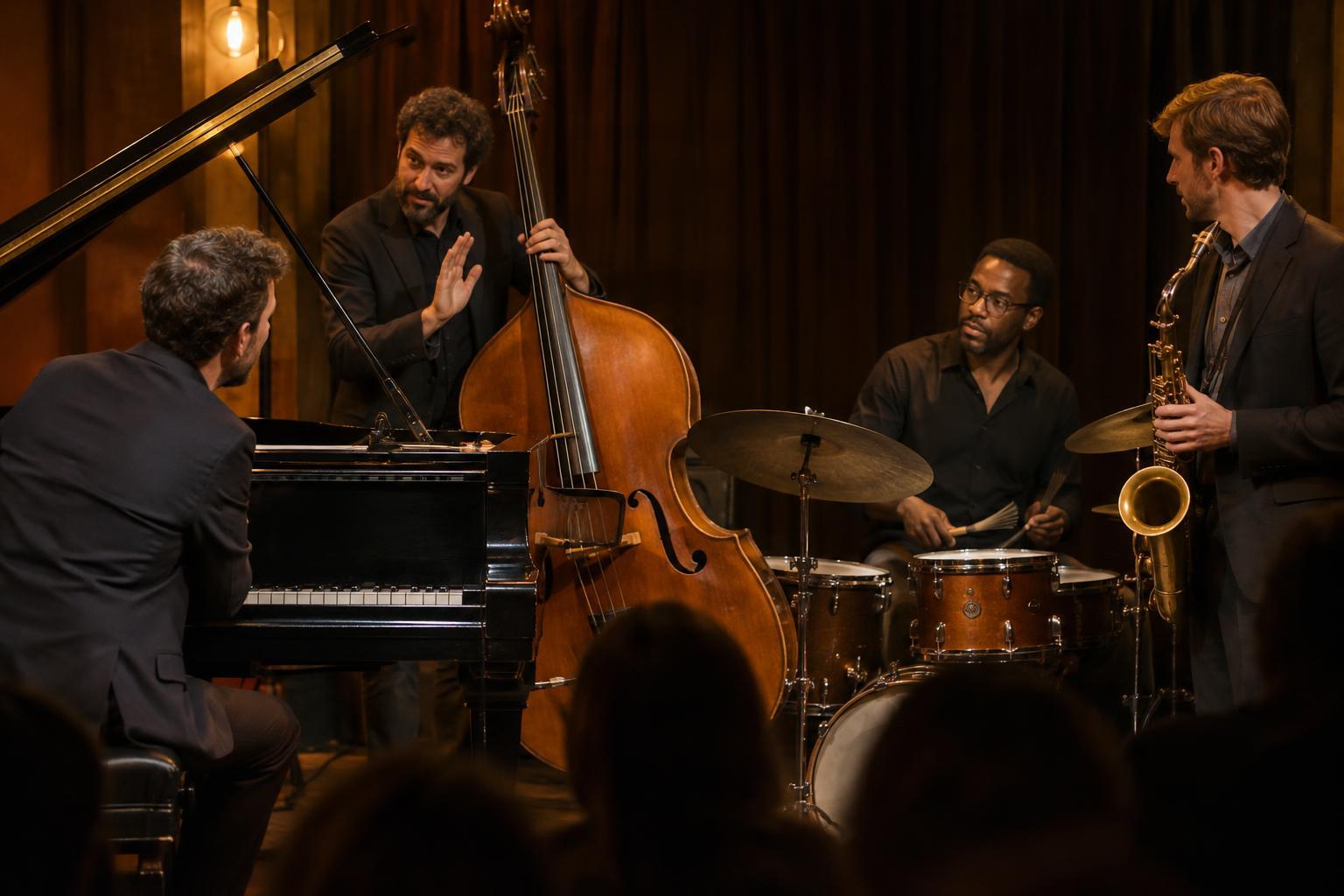
Watch a group of musicians closely and you may notice a glance across the stage just before a chorus, a raised hand at the end of a solo, or several players taking a breath together. These small actions can help an ensemble agree on what happens next without interrupting the music. They matter most when a transition needs to feel shared rather than merely simultaneous.
Not every gesture is a formal signal. A performer might turn toward another player simply to listen more closely or acknowledge an idea. The meaning of a cue depends on the group, the song and what the musicians have established in rehearsal. Rather than looking for a universal code, it helps to notice how a visible action lines up with a change you can hear.
Entrances begin before the first note
Starting together involves more than counting to four. A singer may inhale visibly before a phrase; an instrumentalist may lift a hand, bow or drumstick in a way that shows when the sound will begin. That preparatory motion gives other players a chance to anticipate the entrance instead of reacting after it happens. In a smaller group, a single breath or nod can be enough.
The size of a cue often suits the setting. A conductor may use broad movements so many performers can see the same instruction, while two musicians standing nearby may need only a glance. The cue also has to leave room for the music’s character. A gentle opening might call for a restrained signal; a forceful entrance may be easier to coordinate with a more decisive motion.
The music itself carries directions
Players do not rely on sight alone. A repeated bass figure might tell a singer that the next verse is approaching. A drum fill can mark a transition, while a held chord can create space for a soloist to finish a phrase. These sounds are part of the arrangement, but they can also function as practical landmarks. Musicians listen for them to confirm where they are in the song.
This is especially useful when the length of a section can vary. If a solo continues for another round, the rest of the group needs a way to stay together without making the change sound like a mistake. A familiar phrase, a look from the soloist or a musical accent may signal that it is time to move on. The exact method differs from one ensemble to another.
Cues help a group respond to surprises
Live performances rarely unfold with perfect predictability. A performer may hold a note longer than expected, an audience response may delay the next line, or a player may enter at a different moment than planned. A responsive ensemble listens for what actually happened, not just what was supposed to happen. Someone may sustain a chord, repeat a pattern or wait for a clear pickup before continuing.
That flexibility does not mean every player makes an independent decision. If several musicians try to redirect the group at once, the result can become less clear. Established roles can help: one performer may lead a particular transition, while others watch and support it. Rehearsal gives musicians a chance to learn those roles and to practice recovering when a cue is missed.
What to watch and hear as an audience member
At your next live performance, choose one transition to follow. Notice who looks up before the next section, whether anyone takes an audible or visible breath, and which instrument marks the change. Then listen to the result: do the sounds arrive sharply together, or does one musician invite the others in gradually? Neither approach is automatically better; each can serve the feel of the piece.
You can also watch an ending. Some songs finish on a fixed beat, while others slow down or leave the final note hanging. In a flexible ending, a gesture or shared breath may help the group decide when to release the sound. Paying attention to these moments reveals a quiet part of live performance: musicians are not only playing their parts, but continually making room for one another.