Three ways to make still images move
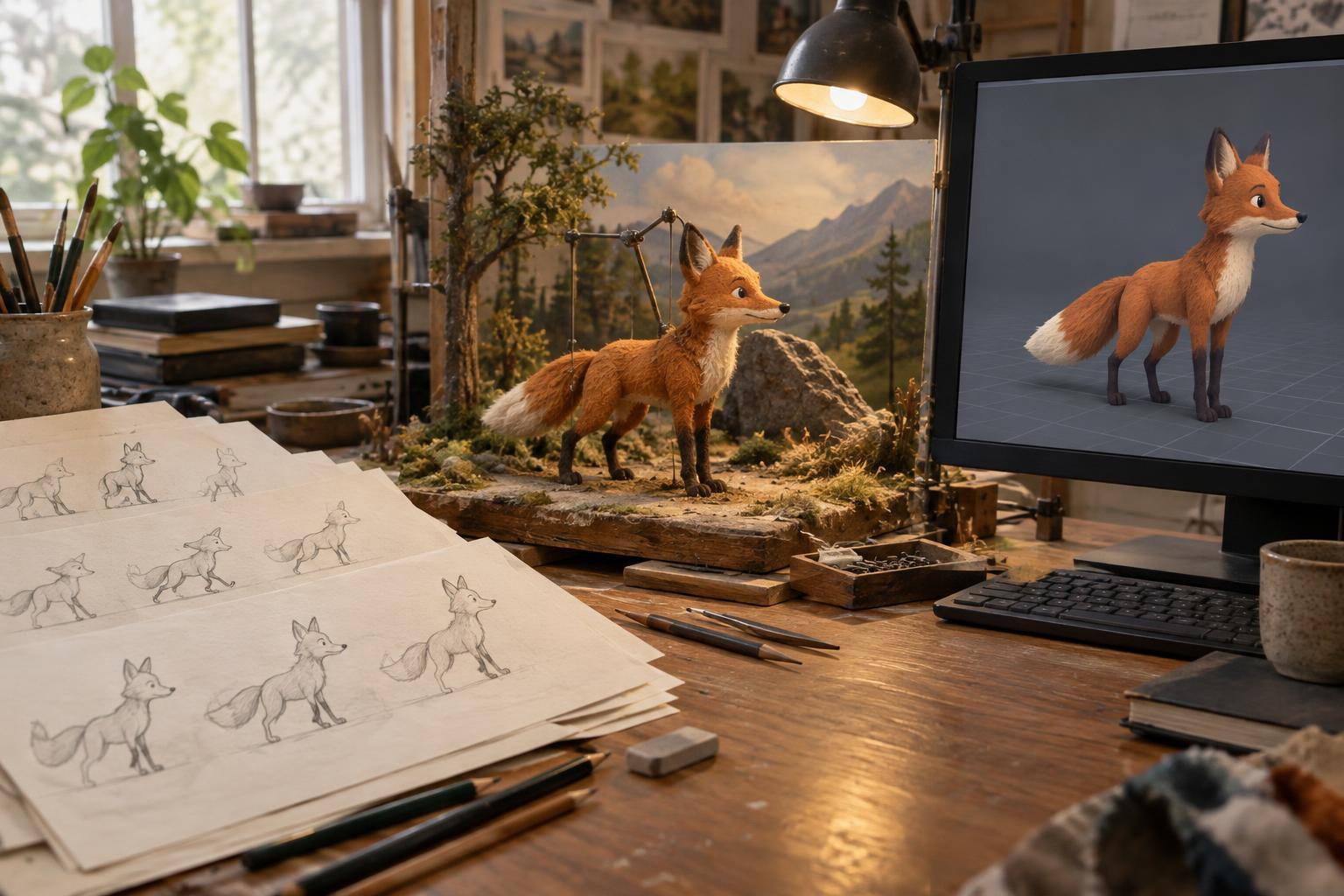
Animation creates the impression of movement by showing a sequence of images in which something changes from one image to the next. In hand-drawn animation, artists create successive drawings or poses. In stop-motion, they adjust physical objects and photograph them one frame at a time. In computer-generated imagery, or CGI, they build and animate elements within software, then produce images from that digital scene. All three methods depend on choices about timing, staging and performance; the difference is how those choices become visible frames.
The labels describe methods, not rigid visual styles. A hand-drawn film might use digital tools instead of paper, a stop-motion production might erase puppet supports on a computer, and a CGI character might be designed to look like a flat illustration. Films can combine methods so smoothly that viewers cannot identify every technique by sight alone.
Hand-drawn animation: movement through drawings
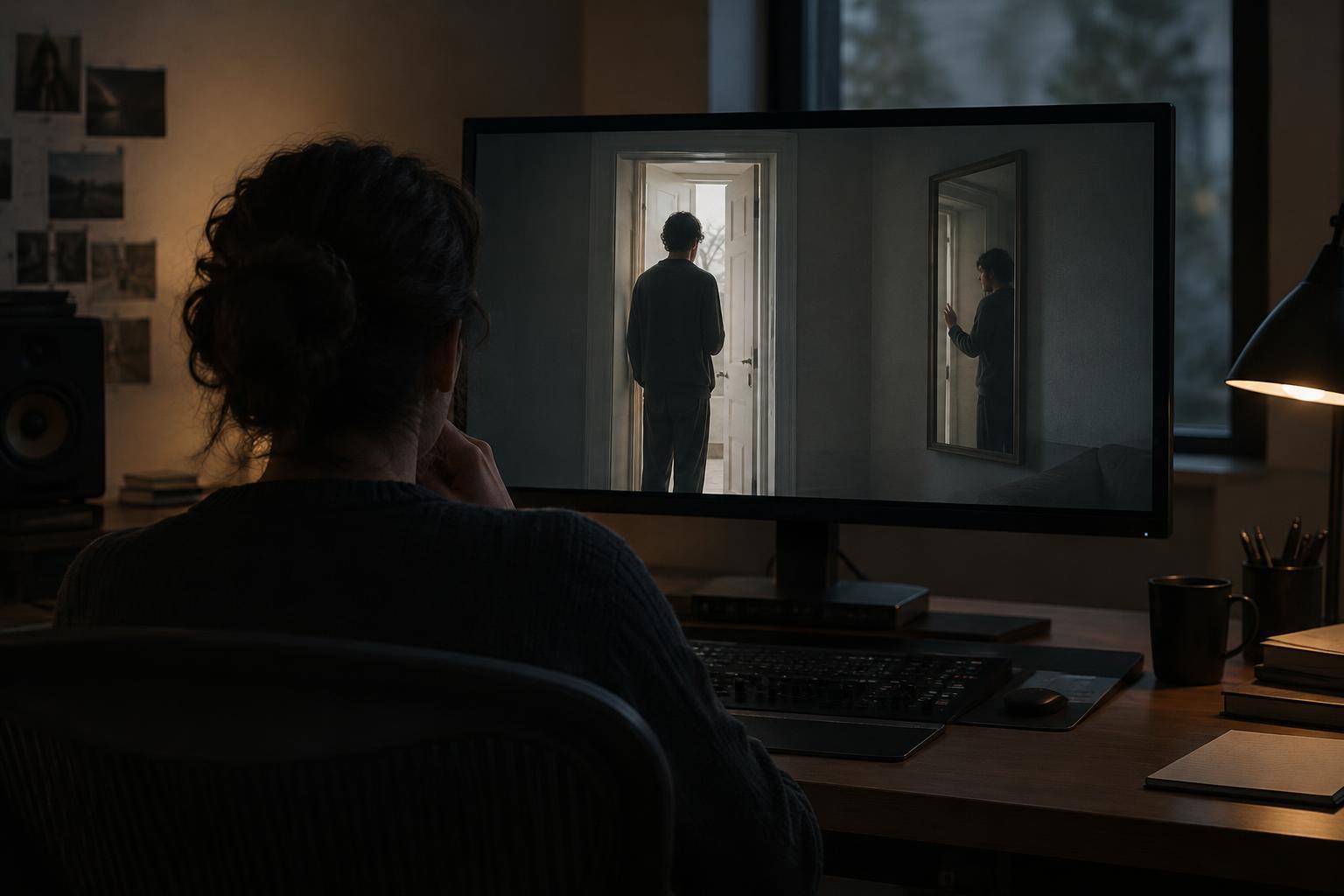
Hand-drawn animation begins with an artist deciding which poses best communicate an action. A character reaching for a door, for example, needs more than a drawing of an arm at the start and another at the end. The animator considers anticipation, the path of the hand, changes in expression and how long the character hesitates. Additional drawings connect the key poses, while the spacing between positions helps determine whether the reach feels cautious, eager or abrupt.
“Hand-drawn” does not necessarily mean every frame is made with pencil on paper. Artists may draw on tablets and assemble scenes digitally. Nor does it mean every part of an image must change in every frame: a held pose can give an audience time to read an emotion, while a carefully placed change in the eyes can make that stillness feel alive. The method offers direct control over shape. A face can stretch or simplify for emphasis without needing to obey the proportions of a physical object.
Stop-motion: performing with physical objects
Stop-motion uses things that exist in front of a camera: puppets, models, cut paper or everyday objects. Animators move them in small increments and photograph each new arrangement. Played in sequence, the photographs turn those adjustments into motion. A puppet may have an internal structure that holds a pose, along with replaceable parts or movable features for facial expression. Lighting, sets and surface materials are also physically present when the frame is captured.
That physical presence is a powerful part of stop-motion’s appeal, but it creates practical constraints. An animator must keep track of where a puppet was positioned, while the set and lighting need to remain consistent across a shot. A slight accidental bump can become a visible jump. At the same time, small variations in fabric, paint or the position of a handmade prop can lend the image a tactile quality. As with any animation method, those details are most effective when they support the scene rather than distract from it.
CGI: animating a digital scene
In CGI animation, artists typically create digital models of characters and environments, give characters controls for movement and expression, and pose them over time. Software can calculate positions between selected poses, but it does not decide whether the acting is convincing. Animators still refine timing, weight, eye direction and gestures. Other artists shape the scene’s surfaces, lighting and camera view before the final images are produced through rendering.
A digital character can be reused and viewed from many angles, which can be useful for complex camera movement or scenes involving elaborate environments. Yet flexibility does not make every change simple: altering a model, its controls or its lighting can affect work elsewhere in a production. CGI also encompasses a wide range of looks, from stylized forms to imagery designed to blend with live action. It is a way of constructing images, not a requirement that they appear realistic.
What matters most on screen
These methods offer different starting points for creative decisions. Hand-drawn animation can reshape a character from one drawing to the next. Stop-motion makes use of real materials and carefully controlled physical space. CGI allows artists to work within a digital scene that can be revised and viewed from different perspectives. None is automatically more expressive than the others; expression comes from how filmmakers use a method’s possibilities and work within its limits.
When watching an animated scene, look beyond its surface texture. Notice when a character moves, when they stop, and whether the camera lets a gesture finish before cutting away. A pause, a shift in posture or an unexpected burst of speed can tell a story in drawings, photographs of puppets or rendered images. The tools differ, but the central craft remains the same: turning deliberate changes from frame to frame into a performance an audience can understand.