A festival begins with a point of view
Film festivals vary widely in size and purpose. One may center local filmmakers, another may specialize in documentaries, and another may bring many forms of cinema together. That identity shapes what a festival invites, what its programmers look for and how it presents the finished lineup. Selection is not simply a search for the “best” films in the abstract. It is an attempt to assemble a program that makes sense for a particular event and its audience.
The practical limits matter, too. A festival has only so many screening slots, venues and staff hours. Programmers may need to balance feature films with shorts, established filmmakers with emerging voices, and familiar subjects with work that asks audiences to take a chance. Two films can both be accomplished yet serve similar roles in a lineup. Choosing one does not necessarily mean the other fell short.
How films reach the selection team
Many festivals accept submissions, while some also invite films or work with filmmakers and distributors to arrange screenings. Each festival sets its own rules. These may concern running time, completion status, screening format, rights or whether a film has already played in a particular place. A filmmaker considering a festival should read those rules closely rather than assume that practices are the same everywhere.
Submitted films are usually reviewed through a process that may involve screeners, programmers and discussions among a selection team. Reviewers might consider a film’s craft, clarity of purpose and effect on an audience, as well as how it fits the festival’s interests. For a short-film program, a title may also need to work alongside several others. There is no single checklist that can predict a decision: a film’s place in the eventual lineup is part of the judgment.
Building a lineup, not just a list
Once programmers have promising films, they must consider how the selections relate to one another. A lineup can offer contrasts in tone, form and perspective. It can also make room for connections: films about similar questions might appear in a themed shorts block, while a retrospective can place older work in conversation with newer films. These choices help an audience discover something beyond the title that first drew them in.
Scheduling is another kind of editorial decision. A film shown at an opening event reaches audiences in a different setting from one screened during a quieter afternoon. Runtime, venue capacity and the availability of filmmakers can affect placement. None of these details changes the film itself, but they can change the circumstances in which viewers meet it. A thoughtful schedule gives audiences possible paths through the program without requiring everyone to follow the same one.
What happens around the screening
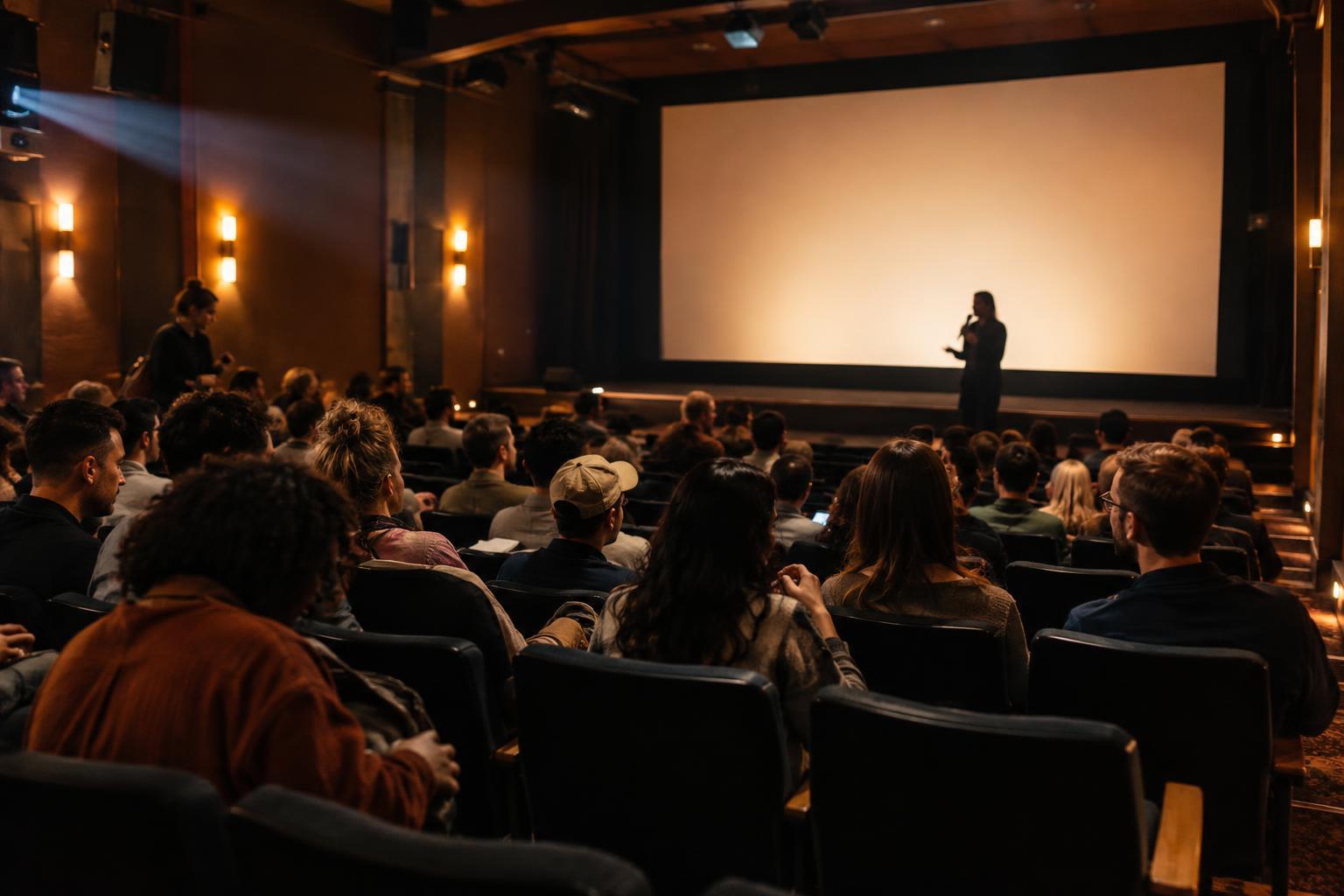
Presentation can begin before the lights go down. A program note may explain why a film was chosen or offer useful context without telling viewers what to think. An introduction can identify the people who made the work and set expectations for a discussion afterward. Festivals may also arrange conversations with filmmakers, critics or other guests, giving audiences a chance to hear how a film was made and compare that account with their own response.
Good presentation also depends on practical care. A screening needs a suitable picture and sound setup, clear information about its location and timing, and attention to the formats the film requires. Subtitles, captions and other accessibility provisions can shape who is able to participate; what a festival can offer varies, so clear advance information matters. Even the interval between screenings affects whether viewers have time to reflect, talk or simply get to the next venue.
How to watch a festival as a viewer
A festival selection can be a useful invitation, but it is not a universal verdict on quality. Programmers make choices within a particular mission and a limited number of slots. Viewers can treat the lineup as a map of possibilities: follow a filmmaker, try a short-film block, or pick a film outside a preferred genre. Reading the festival’s program descriptions can reveal why two apparently unrelated screenings might reward being seen together.
The most memorable part of a festival may be the exchange between film and audience. Watching with others, then hearing different reactions, can draw attention to details that might have passed unnoticed. Festivals create the conditions for that exchange by choosing films and deciding how to share them. The audience completes the experience by bringing curiosity, patience and its own point of view.