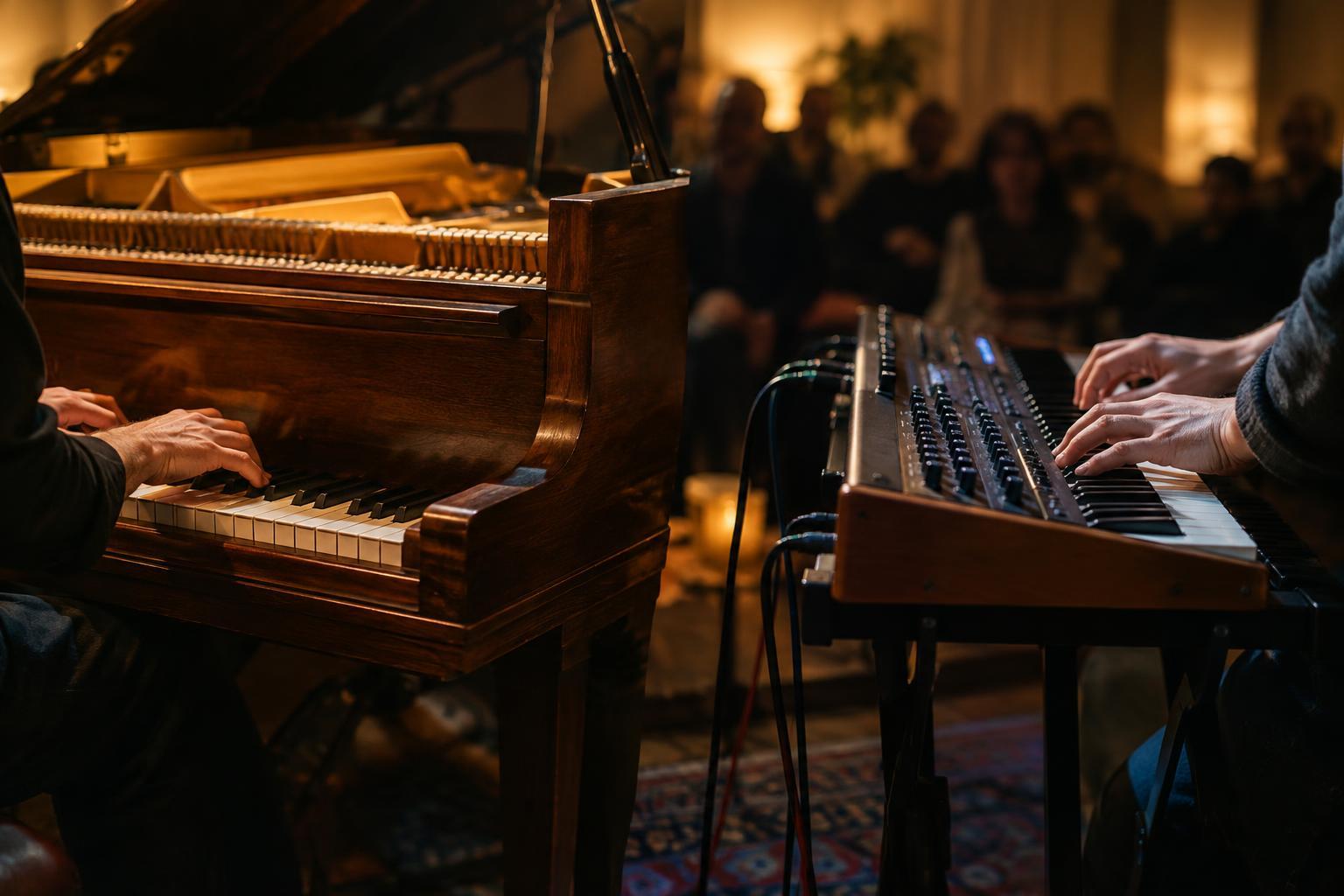
A new key, a new sense of direction
A key gives a song a tonal center: a note and set of relationships that make some chords feel settled and others feel as though they are leading somewhere. A key change moves that center. The melody may remain recognizable, but the musical ground beneath it has shifted. For a listener, that shift can feel like a turn in the story, even without any change in lyrics or tempo.
Momentum is not the same as speed. A song can keep the same beat and still seem to surge forward when a familiar phrase lands in a new key. It can also grow more reflective after a change if the new harmony creates space rather than pressure. The effect comes from expectation: once a song has taught us where “home” is, moving home can make the next passage feel like an event.
Why a familiar chorus can feel bigger
One conspicuous approach is to repeat a chorus in a higher key near the end of a song. The words and rhythmic shape stay familiar, so the listener recognizes the payoff immediately. At the same time, the melody sits in a different register and the chords take on a new position relative to what came before. That combination can make repetition feel like escalation rather than a simple replay.
The lift is not produced by the key change alone. A stronger vocal delivery, fuller backing parts, added percussion, or a pause just before the entrance can sharpen its impact. Conversely, a sparse arrangement might make the same upward move sound exposed or yearning. Moving higher may also place a melody in a more demanding part of a singer’s range, but whether that feels thrilling depends on the performer and the song. Height is a useful tool, not a guarantee of intensity.
The path into the change matters
Some key changes arrive with a clean break. A chord holds, the band briefly drops out, and the next phrase begins somewhere new. This can create a jolt of surprise, especially when the song has been cycling through a predictable pattern. Used at the right moment, the break gives the listener a breath before the music pushes onward.
Other changes are gradual. A chord can make sense in both the old key and the new one, acting as a bridge between them. A melody might linger on a note shared by both keys while the harmony changes underneath it. In these cases, the listener may feel a subtle shift in direction before noticing why. The momentum comes from transition rather than shock: each step seems to invite the next.
A brief visit to another key can also create tension without establishing a permanent new home. The song may wander away during a verse or bridge, then return to its original key for a satisfying arrival. That return can give a later chorus renewed weight, even if the chorus itself has not changed.
Key changes as performance decisions
For a singer, a key change alters where notes fall in the voice. A phrase that sounded conversational before may become more forceful or delicate in a new register. That can support a lyric’s progression: a restrained opening may give way to a more open delivery when the song’s emotional stakes rise. The most effective choice leaves room for expression rather than asking the performer to reach higher simply for spectacle.
Instrumentalists and arrangers shape the change, too. A bass line can guide the ear toward a new tonal center, while backing vocals can reveal a harmony that was only hinted at earlier. In a live performance, dynamics and timing may make the shift feel especially immediate. A well-placed silence or sustained note gives an audience time to sense that something is about to happen, making the arrival more powerful.
Listening for the turn
The next time a song seems to gather energy without speeding up, listen for what changes just before that feeling arrives. Does the chorus return higher? Does a bridge move away from the song’s familiar chords? Does the accompaniment thin out before the new section begins? These details help separate the effect of a key change from the effects of volume, rhythm, and texture.
A key change works best when it gives the song somewhere meaningful to go. It might provide a final push, make a return feel earned, or cast familiar words in a different light. Its value is not measured by how noticeable it is. Whether dramatic or nearly seamless, the shift can keep a performance moving by changing the listener’s sense of what comes next.