The instrument answers the player
A musician does not simply decide on a sound and produce it. They make a gesture, hear what comes back and adjust the next gesture. On an acoustic instrument, that exchange is often easy to see: a harder piano keystroke changes the force of a hammer; a violinist’s bow pressure alters the string’s response. The instrument’s materials and construction set limits, but they also give the player something to work against.
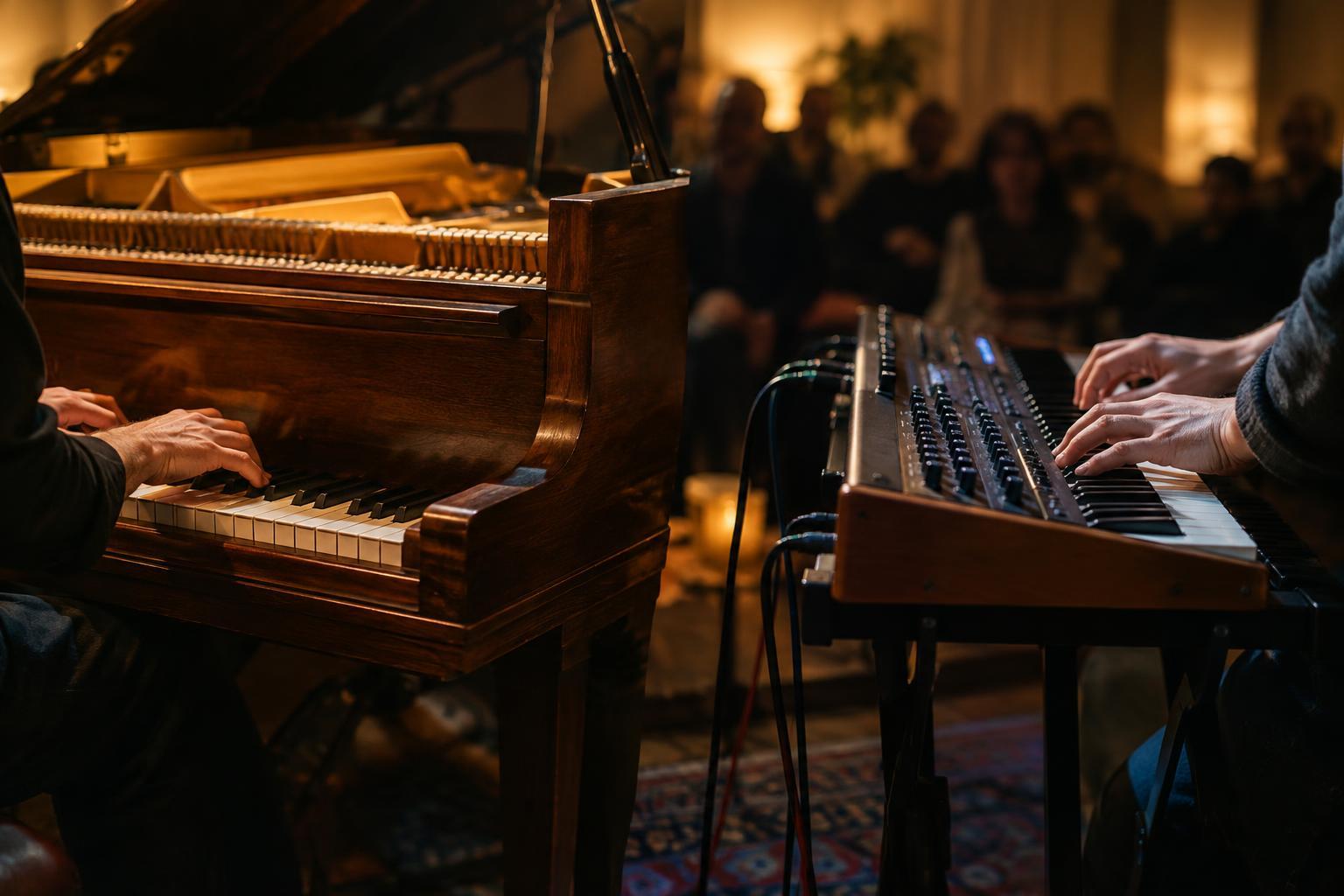
Electronic instruments can create an equally responsive exchange, though the response depends on their design and settings. A keyboard may react to how quickly a key is pressed, while a synthesizer knob can reshape a note after it begins. A sampler might turn one pad strike into a complex sound that would take several acoustic players to produce. None of these approaches is inherently more expressive. Each gives the performer a different set of decisions to make in the moment.
Touch, timing and the space between notes
Acoustic instruments often make small physical variations audible. A guitarist’s fingers may brush a string before a note, or a singer may take a breath that becomes part of a phrase. These sounds can draw attention to effort and proximity. They can also be unwanted, depending on the piece. Performers learn when to leave them in, soften them or use them deliberately.
Electronic setups offer other kinds of control over timing and texture. A sequencer can repeat a pattern with consistency, giving a player a steady framework to push against. Effects can hold a sound long after a key is released or cut it off abruptly. When a pattern is programmed, the performance does not disappear: it moves into choices about which sounds to trigger, when to change a pattern and how to respond to fellow musicians. A fixed pulse can make a tiny change feel dramatic.
What the room contributes
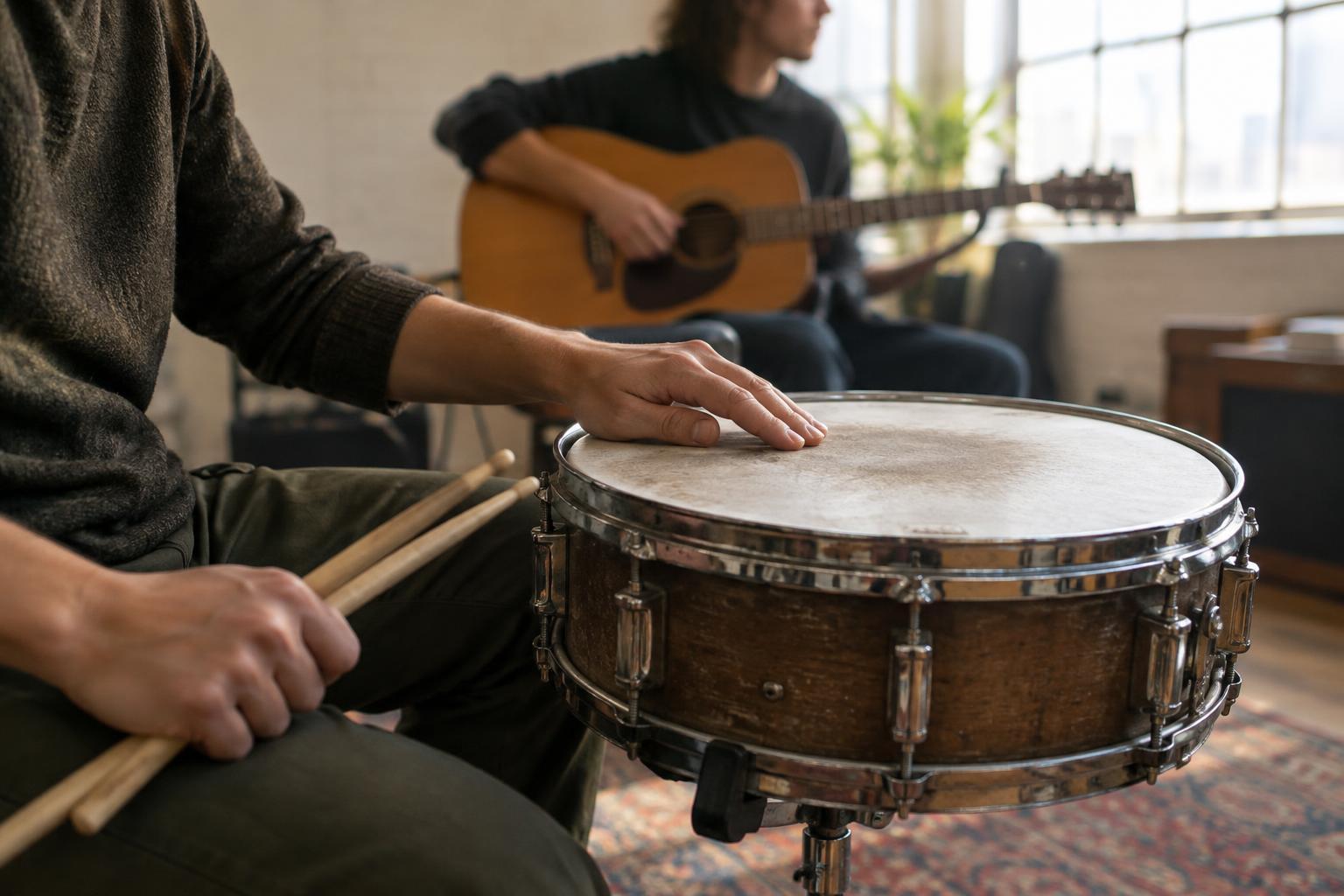
An acoustic instrument sends sound into the space around it. Its position, the room’s surfaces and the distance to the listener all affect the experience. A softly played drum may feel intimate nearby yet lose detail farther away. An unamplified ensemble may adjust its balance by listening across the stage and changing how it plays.
Electronic instruments generally reach an audience through speakers, so the sound system becomes part of the instrument’s public voice. Even an acoustic performance changes when microphones and speakers carry it across a large room. This does not make the result less authentic; it means that placement, levels and effects help shape what listeners hear. In either setting, a performer may adapt to the room rather than deliver exactly the same version of a piece every night.
What audiences can see
The visible movement of acoustic playing can help an audience follow a performance. A lifted drumstick signals an approaching hit; a horn player’s pause suggests a breath and a new phrase. Those gestures create anticipation before a sound arrives. Physical effort can also become part of a performer’s stage presence, even when the listener knows little about the instrument.
Electronic performance may make cause and effect less obvious. A small movement on a controller can produce a sweeping change, while a player who appears still may be listening closely before bringing in the next layer. Some performers make their process more visible by arranging pads and controls within view; others let the sound carry the drama. Looking for how a musician listens, cues collaborators or chooses a moment to intervene can be more revealing than measuring the size of their gestures.
The most interesting choices often cross the divide
Acoustic and electronic sounds are not opposing teams. A musician might process a live voice, play an electronic keyboard alongside a string group or build a beat from recorded hand percussion. In a mixed setup, the contrast can give each element a role: a repeating electronic texture might frame the irregular decay of a cymbal, while a sustained acoustic note might soften a sharply edited rhythm.
The useful question is not which kind of instrument is better, but what each one invites the performer to do. Listen for the notes a player bends, the sounds they let fade and the moments they leave empty. Then notice what changes when another instrument enters. Those choices—whether made with strings, keys, circuits or a combination—are where a performance takes shape.