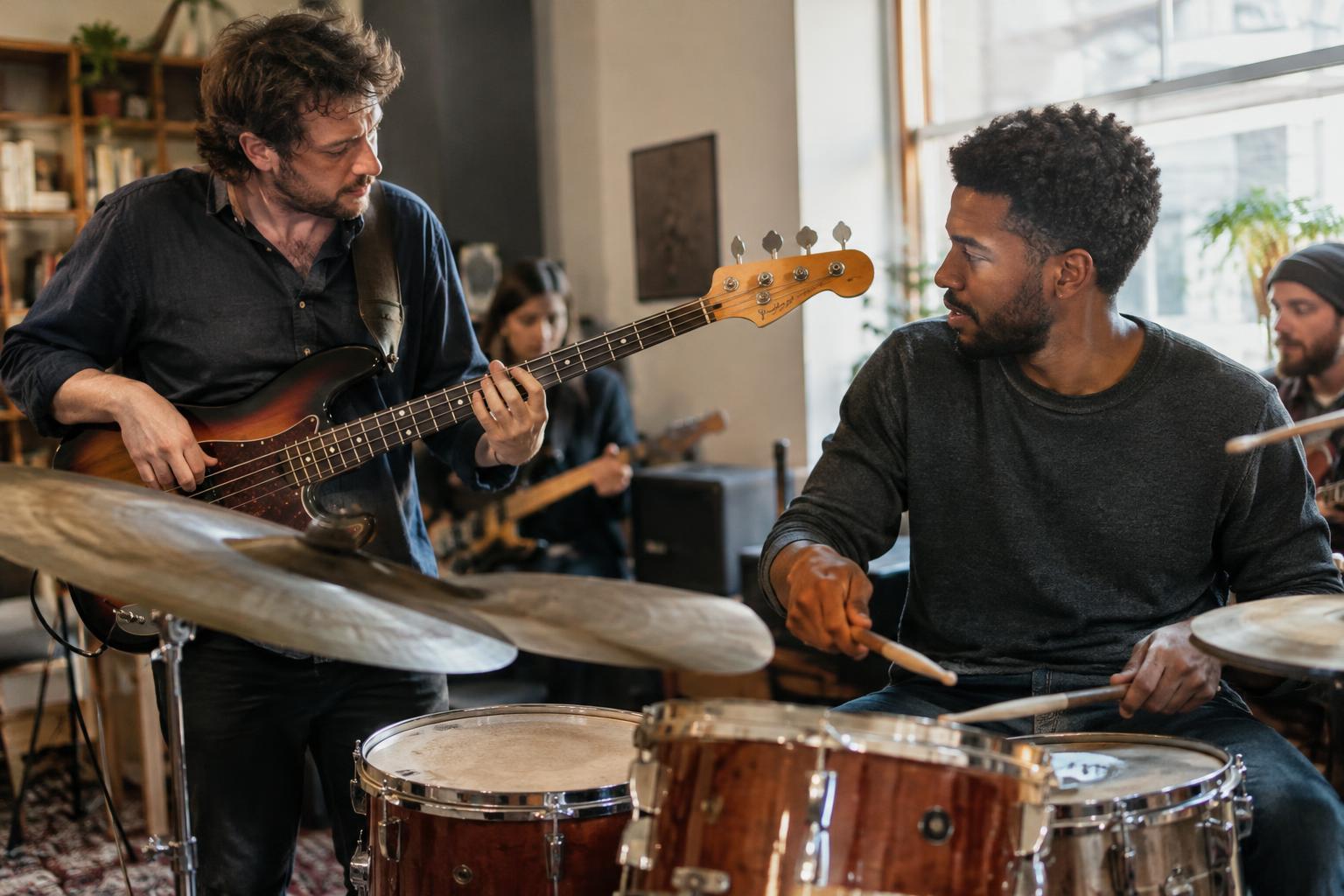
Start with the pulse
When a song catches your attention, the voice or melody may be the first thing you notice. To hear the ensemble differently, listen again and tap along at a comfortable, steady pace. That recurring pace is the pulse. The drums often make it easy to find, but they do not have to mark every pulse with a hit. A snare might emphasize certain beats, while a cymbal or hi-hat divides the space between them into smaller, regular sounds.
Try following one drum sound at a time. First notice the low thump of the kick drum, then the sharper sound of the snare, then any repeating cymbal pattern. Ask what each one makes you expect next. A familiar pattern can make the music feel settled; a missing hit or unexpected accent can make you lean forward. You do not need to count beats correctly to hear that effect. The useful question is whether the drummer reinforces your sense of where the music is going or briefly plays against it.
Follow the bass from note to note
Bass can be harder to pick out on small speakers, especially when its sound blends with the kick drum or other low instruments. Headphones or speakers with a clear low end may help, but you can also listen for the shape of the line rather than its deepest frequencies. Does a note repeat, hold for a long time, or move up and down? Does the bassist leave room after each note or keep a near-constant flow?
The bass often links the rhythmic feel to the harmony. Its notes can suggest which chord feels like home, while their timing affects how the groove moves. A long note under busy drums can make a passage feel spacious. Short, closely placed notes can add motion even when the drummer plays a simple pattern. Notice, too, what happens when the bass changes note just before another instrument changes chord: that small move can make the next moment feel anticipated rather than sudden.
Hear the conversation between them
A helpful listening exercise is to focus on the kick drum and bass together. Sometimes a bass note arrives with a kick hit, giving the low sound extra weight. Sometimes the bass lands between kick hits, filling a gap and creating a more restless feel. Neither approach is inherently tighter or better. What matters is the relationship the players establish and whether it suits the song.
Then listen for the spaces they leave each other. A bassist might sustain a note while the drummer adds quick accents; a drummer might keep a steady pattern while the bass line takes a more winding route. Even when the two parts differ, they can point toward the same pulse. Think of a conversation in which one person finishes a thought and the other picks it up. That kind of exchange can make a repeated passage feel alive without anyone playing more loudly.
Notice how the groove changes
Choose a song with a clear shift between verse and chorus, and compare the bass and drums in each part. The tempo may stay the same while the energy changes substantially. The drummer could move from restrained hits to a fuller cymbal sound. The bassist could switch from spaced notes to a more active line, or simply play the same pattern with a firmer attack. Listen for changes in density, volume and the amount of space between sounds.
Pay attention to transitions as well. A drum fill is a brief departure from a repeating pattern, often used to lead into a new section. The bass might join that movement, hold a note beneath it or fall silent for an instant. When the regular groove returns, the contrast helps mark the arrival. Try replaying just the few seconds before and after a transition. Hearing what disappears can be as revealing as hearing what gets added.
Bring the whole ensemble back in
After isolating the bass and drums in your attention, listen to the full performance again. Notice how their choices affect the singer, soloist or main melody. A steady foundation can give a vocalist room to stretch a phrase. A more active groove can make a simple melodic line feel urgent. In an ensemble, a part does not need to be prominent to change how every other part is heard.
You can use the same approach across styles without expecting bass and drums to perform identical jobs in every recording. Some arrangements put the pulse in hand percussion, a keyboard part or the movement of a string bass; others use programmed sounds rather than a conventional drum kit. Start with what you can hear: recurring sounds, low notes, accents and silences. As you recognize their relationships, the music becomes less like a melody with accompaniment and more like a set of performers shaping time together.