Why credit is part of the experience
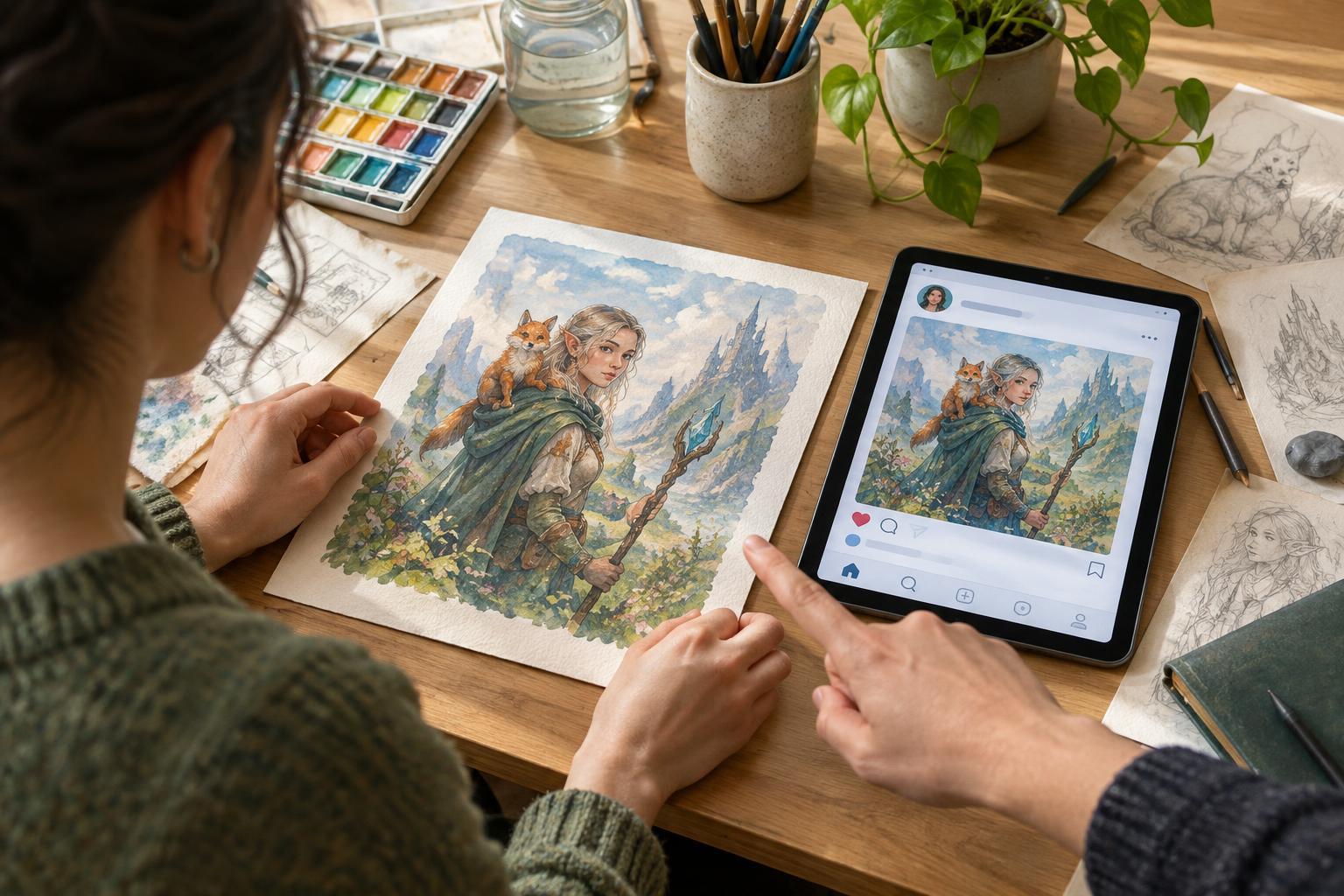
Fan art can give a character a new mood, imagine a scene from another angle, or turn a brief moment into something worth lingering over. When an image travels through a fan community, viewers may remember the work long after they forget where they first saw it. Clear credit gives them a way to find the person whose choices made it memorable.
That path matters because an artist’s original post may include context a copied image cannot carry: a caption, a series of related pieces, a link to a portfolio, or preferences about sharing. Crediting the creator is not a formality to tuck into tiny text. It is a way of keeping the work connected to the person who made it.
Share the original post when you can
The simplest approach is often to use a platform’s sharing feature or link directly to the artist’s original post. This keeps the creator’s name, caption, and any updates close to the image. Before sharing, check the post and profile for stated preferences. Some artists welcome resharing but ask people not to download and repost their files elsewhere; others prefer that their work stay on its original platform.
A credit line does not automatically grant permission to repost. If sharing requires uploading a new copy, ask first when you can, and make the request specific: say where the work would appear, whether it would be cropped, and whether the post has a promotional purpose. No reply is not a yes. You can still talk about why you enjoyed a piece without uploading its image.
Make attribution easy to follow
When an artist has agreed to a repost, put their chosen name and a direct link to their original post or preferred account in the main caption, where readers will see it. If a platform makes links difficult to open, include the clearest available handle as well. “Credit to the artist” is not useful credit; neither is a tag attached only to an image that may be downloaded without its caption.
Check that you have the right person. Fan art is frequently passed along in screenshots, compilations, and reaction posts, where the most visible account may be another sharer. Look for a signature, an original upload, or a link supplied by the artist before naming someone. If you cannot identify the creator confidently, hold off on reposting rather than turning a guess into the next link in a chain of mistakes.
Keep the work and its context intact
A small edit can change how a piece is understood. Cropping out a signature, removing a caption, adding text over the image, or placing it beside an unrelated message may make the artist’s intent harder to recognize. Ask before making changes, and share the complete work where the format allows. If a detail needs explanation, add your own note outside the image rather than treating the artwork as a blank template.
Context also includes boundaries beyond the picture itself. An artist might share a piece with one fandom circle but not want it featured in a large promotional account or used to advertise an event. If you are organizing a gallery, newsletter, or community roundup, explain its purpose when requesting permission. For accessibility, a concise image description can help more people engage with the work; it should complement, not replace, the artist’s name and link.
Build habits that help artists stay visible
Community accounts and moderators can make thoughtful sharing easier by setting a clear rule: link to original posts, credit prominently, and remove reposts when a creator asks. For group projects, keep track of each contributor’s preferred name, link, and sharing terms before publishing. That small bit of organization prevents a familiar problem: credits being lost when a post is copied from one platform to another.
Fans can help in ordinary conversations, too. If you see an uncredited piece, ask for the artist’s name or offer a verified link without piling on. If you made the mistake, correct the post visibly or take it down, depending on what the artist wants and what the platform permits. The goal is not a perfect-looking caption. It is a sharing culture in which discovering an artwork also makes it easier to discover its creator.