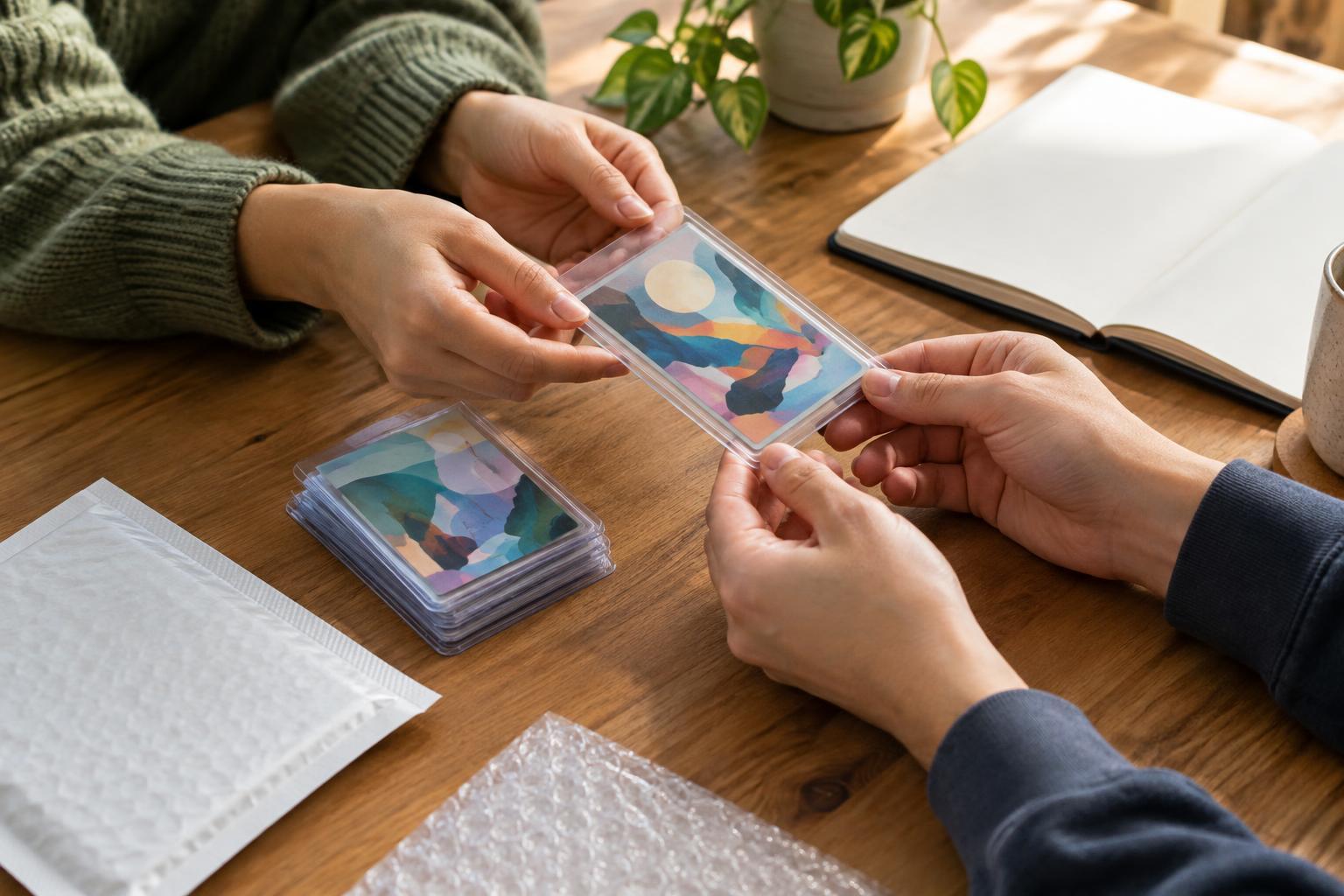
Decide what you want from a trade
Trading is most satisfying when both people know what they are trying to accomplish. You might be looking for the last card in a film set, a different variant of a concert poster, or an item tied to a favorite stage production. Before posting an offer, make two short lists: what you are willing to part with and what you would be happy to receive. Mark anything you would trade only for a specific item. This keeps an exciting conversation from turning into an agreement you regret.
Think beyond an item’s apparent rarity. Condition, personal significance, and how easily you could replace it all matter. A worn program may be special to one fan because it recalls a performance they attended, while another fan may prefer an untouched copy. You do not need to persuade someone that your priorities are the right ones. A workable trade is one both people can accept without pressure.
Describe the item you actually have
A useful listing names the item, its edition or variant if known, and everything included with it. Describe visible wear plainly: creases, fading, scratches, missing inserts, damaged packaging, or marks on a signature. If you are unsure whether something is an official release or an authentic autograph, say so rather than guessing. A description that leaves room for uncertainty is more useful than a confident claim you cannot support.
Take clear photos in even light, including the front, back, edges, and any flaw you mention. For boxed items, show the seal or opened contents as appropriate. If an object has an identifying number, consider whether displaying it publicly is necessary; you can share relevant details privately when discussing the trade. Photos let another fan assess condition, but they should accompany, not replace, a written description.
Agree on the details before sending anything
Move from a casual “interested?” to a precise agreement. State which item each person will send, whether accessories or original packaging are included, who will cover postage, which shipping method you will use, and when each person expects to send their parcel. If either person is adding money to balance a trade, clarify that too before anyone commits. Keep the agreement in the messaging system where you met, or in another place both parties can refer to.
Comparison can help, but there is no universal formula for a fair swap. Condition and demand vary, and asking prices are not necessarily completed trades. If the exchange feels uneven, propose a change or decline politely. It is reasonable to ask questions and take time to decide, especially for an item that would be hard to replace. Neither fan owes the other a deal simply because a conversation has begun.
Protect the item and your privacy
Packing should match the collectible. Place paper goods in a protective sleeve or clean wrapping, then support them with rigid material so they cannot bend. Cushion fragile objects and fill empty space in the box so they cannot shift. Avoid putting tape directly on a collectible or its original packaging. Photograph the packed item before closing the parcel, and share tracking details if you agreed to use a tracked service.
Be equally careful with personal information. Use the trading platform’s tools when they suit the exchange, and share an address only when you are ready to ship. If a trade requires an in-person handoff, choose a public place and make the arrangement clear in advance. Review a community’s trading rules, and be wary of pressure to act immediately, switch channels unexpectedly, or accept terms that differ from those you discussed.
Close the loop and build a better community
Once a parcel arrives, check the item and let the other trader know it reached you. If something is wrong, describe the issue calmly, include photos, and refer back to the original agreement. A delay or a damaged package does not automatically tell you what happened; start by establishing the facts. If you used a platform with a dispute process, follow its rules and keep relevant messages and shipping records.
A successful trade is more than an exchange of objects. Clear descriptions, patient answers, careful packing, and a simple arrival confirmation make it easier for fans to trust one another. If your community allows feedback, leave an account of the transaction that is specific and fair. That reputation helps future traders understand what to expect—and keeps collecting a shared pleasure rather than a source of unnecessary surprises.