A copy is not the whole film
It is tempting to think of film preservation as a simple transfer: scan a reel, save the file and put it somewhere safe. A digital copy can make a film easier to study and screen, but it cannot answer every question about what has been preserved. Which print was used? Was it complete? Did its colors reflect the original release, or had they changed over time? What happened to the sound between recording and exhibition? The file holds the results of choices made during transfer, including choices that may not be obvious to a viewer.
A film may also exist in several meaningful forms. A work can have different edits, sound mixes, subtitles or versions prepared for particular screenings. Treating one file as the definitive film can obscure that history. Preservation begins by identifying what materials survive and what each one can tell us, rather than assuming the most convenient copy is the most faithful.
The physical materials still matter
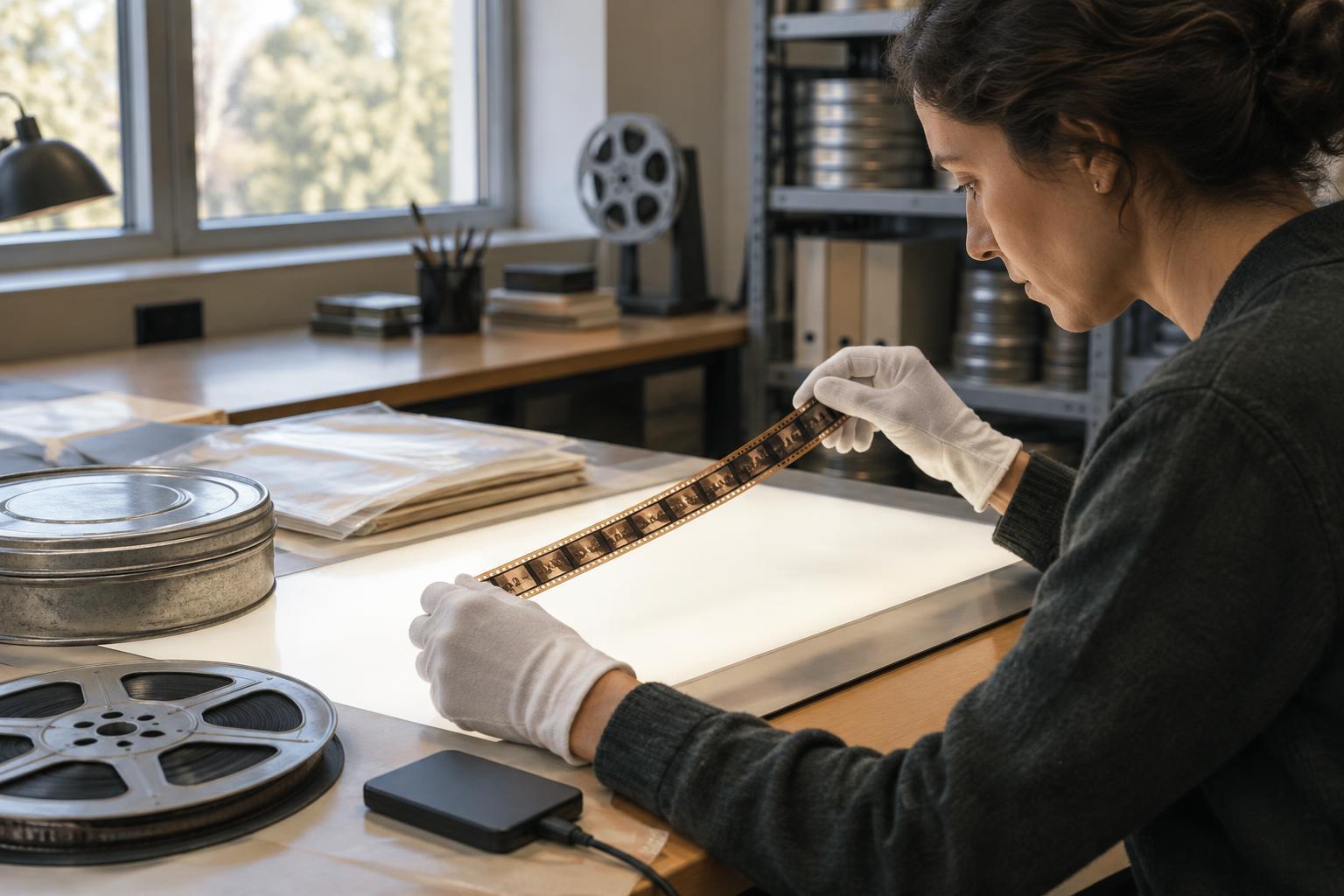
Film prints, negatives and sound elements need suitable storage and careful handling. Even when they are too fragile for routine projection, they can retain details that a previous transfer missed. A future scan may recover more information, or a different surviving element may reveal frames and sounds absent from an earlier copy. Keeping original materials, where possible, leaves room to revisit decisions as methods improve.
This work is not simply about seeking the sharpest image. A release print can carry evidence of how audiences encountered a movie, while production elements may offer a closer look at how it was made. Scratches, splices and labels can help explain an element’s journey, though they are not necessarily features to reproduce in every screening copy. Knowing the difference helps archivists and restorers avoid treating all signs of age as either flaws or precious artifacts.
Digital files require continuing care
A digital file does not wear down each time it is played in the way a physical print can, but it is not self-preserving. Storage devices can fail, files can be altered or lost, and the software needed to read a format may become difficult to use. A durable plan generally calls for more than one copy, checks that the data remains unchanged, and periodic decisions about storage and formats. Simply placing a file on a drive and leaving it untouched is a form of hope, not maintenance.
The file’s description matters too. Useful records can identify the source element, transfer settings, running time, aspect ratio, sound format and any repairs made. Without that context, someone years later might have a playable image but no reliable way to judge whether it is cropped, slowed, incomplete or intended as a restoration rather than a record of the source.
Restoration involves interpretation
Turning surviving material into a version people can watch often requires judgment. If a shot is damaged, another print might supply missing frames. If colors have shifted, a team may compare available elements and production records before adjusting the image. Some choices are clear; others remain uncertain because the evidence is limited. Responsible preservation makes those choices traceable instead of presenting a polished result as though it emerged without intervention.
The same care applies to presentation. Image shape, projection speed, sound level and subtitles all affect how a performance lands. A close-up can feel different when it is cropped; a musical passage can change character if its timing is off. Preserving a film therefore includes preserving enough information to present it thoughtfully, even when a perfect reconstruction of an earlier viewing experience is impossible.
Survival and access are related, but not identical
A film kept safely but never described or made available can become hard to discover. At the same time, an online viewing copy is not a substitute for secure preservation materials. Access copies may be compressed for convenient playback, and rights or other restrictions may affect where and how a film can be shown. Preservation and access serve different needs, but each gives the other purpose: a film is worth caring for because people may want to watch, study and discuss it.
That is why film preservation is best understood as an ongoing practice rather than a finished file. It protects materials, records decisions and prepares for future questions that today’s caretakers may not anticipate. For audiences, the result is more than a cleaner picture. It is a better chance to encounter the performances, design and storytelling choices that made a film matter in the first place.