Two labels, different questions
A familiar film may return to theaters or home viewing with a sharper image, steadier color or clearer sound. It might be advertised as restored, remastered or both. Those words are related, but they do not promise the same work. Restoration generally aims to address damage, deterioration or missing elements in the available materials. Remastering generally means creating a new version for presentation or distribution, often using a higher-quality source or different technical specifications.
The distinction is not a strict dividing line. A team might scan film elements, repair scratches and then create a new master for theaters and home viewing. Another release might be called a remaster even though little visible repair was needed. For viewers, the useful question is less “Which label sounds better?” and more “What source was used, what was changed, and how was this version prepared to be seen?”
What restoration tries to recover
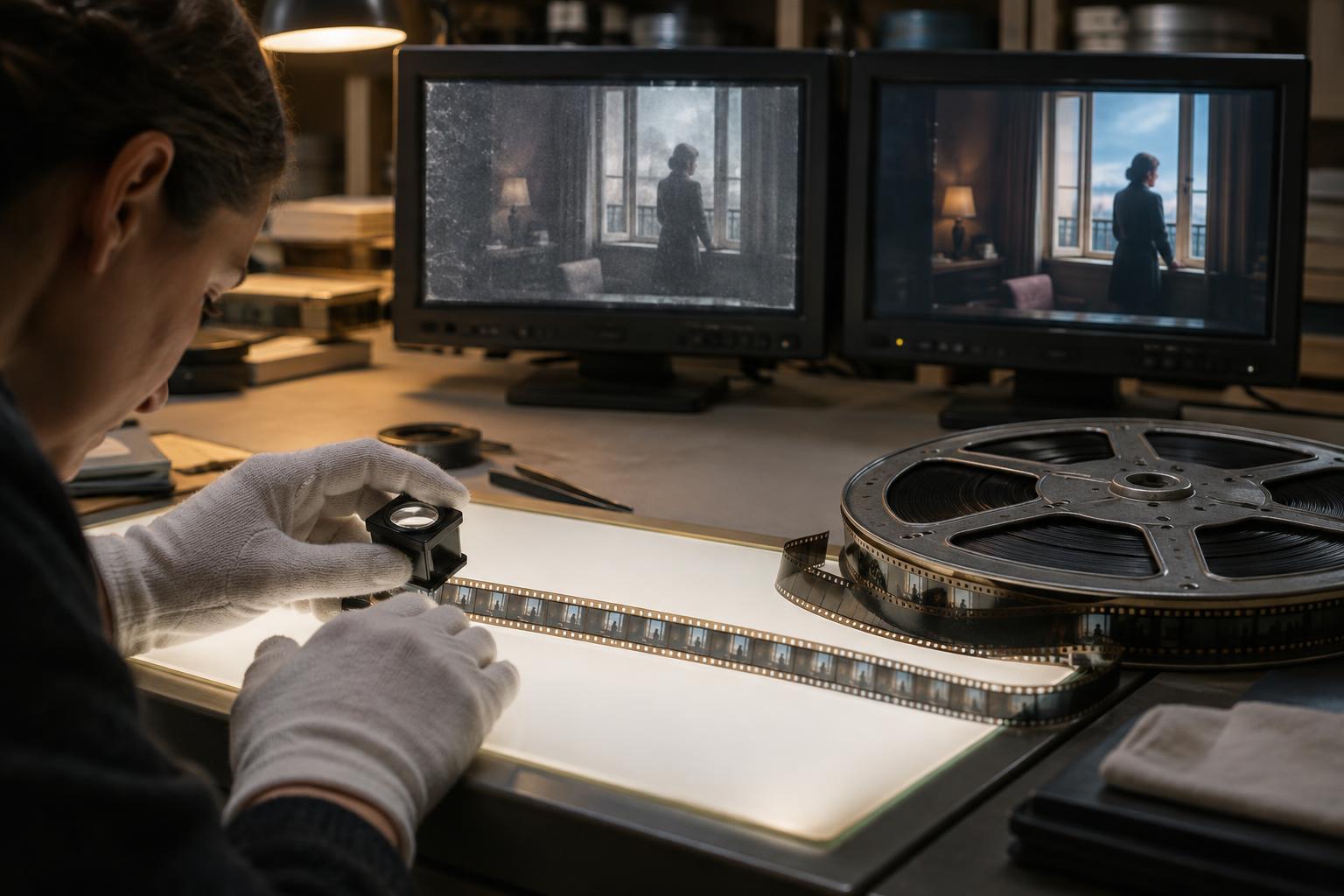
Films survive in physical and digital forms that vary in condition. A film print may have dirt, scratches, fading or damaged frames. Sound elements may carry hiss, pops or gaps. Restoration work can involve locating suitable materials, scanning or transferring them, stabilizing the picture, cleaning visible defects and repairing audio. When an image or sound is missing, there may be no perfect answer; the team may need to work from another surviving element with different qualities.
The goal is usually to make the film easier to experience without drawing attention to the repairs. A scratch that once crossed an actor’s face may disappear, while a shaky frame becomes steady enough for the performance to hold your attention. Yet some marks are part of how a film was made, not signs of damage. Film grain, optical effects and deliberate softness are not automatically problems to erase. Careful restoration depends on recognizing that difference.
What a new master can change
Remastering concerns the version prepared for a particular way of watching. A new master may come from a fresh scan, a revised color grade or a different audio mix. It may be made to meet the requirements of a cinema screening, a disc or a streaming service. Even when the underlying film has not changed, choices about brightness, contrast, color and sound levels can make scenes feel different from a version you remember.
These choices are especially noticeable in dark scenes, bright highlights and skin tones. A new presentation may reveal details that were hard to see in an older copy, but more detail is not always a better match for the intended look. Aggressive sharpening can make edges appear harsh; heavy noise reduction can make textures look unnaturally smooth. Audio can likewise gain clarity while losing some of its original character if it is altered too forcefully.
Why the same film can have several legitimate looks
There may be no single reference that settles every visual decision. An original camera element, a release print and an earlier home-viewing edition can differ. The way a film appeared in a theater also depended on projection and the print in use. Restoration and remastering teams therefore make judgments about which materials best represent the work and how to translate them into a new format.
Framing is one choice worth noticing. A version that shows more image at the edges is not necessarily more faithful: the composition may have been intended for a particular aspect ratio. Conversely, an edition that crops the picture to fill a screen can remove information the filmmakers meant viewers to see. Sound versions can vary too, from a mix prepared for a cinema to one adapted for home playback. Differences between editions do not always mean that one is defective; they may reflect different sources or presentation goals.
How to watch with a more informed eye
When considering a new edition, look for a plain-language description of its source and process. Does it say which film elements were used? Does it distinguish repairs from changes in color, framing or sound? A label alone cannot tell you how extensive the work was. If you can compare editions, use the same scene rather than relying on memory: faces, shadow detail, fine textures and quiet dialogue can reveal meaningful differences.
It also helps to consider your own viewing setup. Screen settings, speakers, compression and room lighting can affect what you see and hear. A darker image on one device may not be a problem with the master. Ultimately, restoration and remastering are not contests to make an old film look new. At their best, they give viewers a clearer opportunity to notice the choices already there: the light in a close-up, the rhythm of an edit and the texture of a performance.